Piperaceae
String of Turtles: Pet-Safe Plant
Peperomia prostrata
An easy, beginner-friendly plant that likes bright indirect light, infrequent watering and a fast-draining mix. It tolerates being forgotten far better than being overwatered.
Every 8 days
Partial shade
10° - 29°C
50% - 70%
Categories
What is String of Turtles?
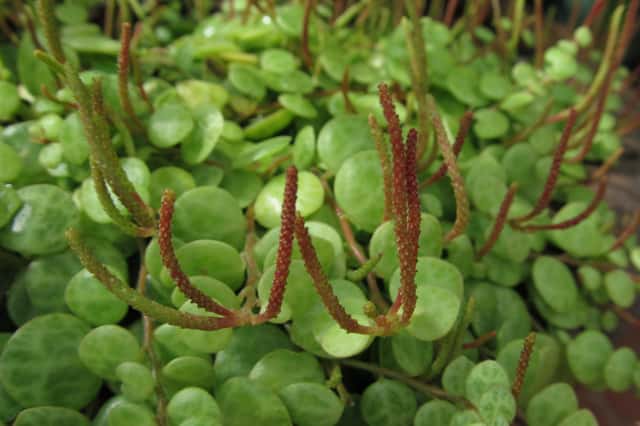
String of Turtles (Peperomia prostrata) is a easy-care plant from the Piperaceae family. String of Turtles is a slow-growing South American trailing succulent prized for its small, round, fleshy leaves marked with turtle-shell-like patterns. Its thin, wiry stems cascade gracefully, making it a favorite for hanging baskets, terrariums and tabletop displays.
String of Turtles grows up to 10cm, spread of 30cm, watering every 8 days, 10°C – 29°C, 50–70% humidity. It is suitable for indoor environments and safe for pets.
Unlike many tropical plants, String of Turtles tolerates watering mistakes. Best for beginners. Unlike many popular species, String of Turtles is safe to keep around pets. Without adequate drainage, root rot can develop within 16 days.
How to Care for String of Turtles?
TLDR: String of Turtles needs Partial shade, watering every 8 days, and temperatures between 10-29°C with 50-70% humidity.
How Often Should You Water String of Turtles?
Let the top inch of soil dry out completely before watering again, roughly every 7-10 days. It would rather be too dry than too wet.
How Much Light Does String of Turtles Need?
Give it bright, indirect light, such as near a sheer-curtained window. Direct sun scorches the leaves, while too little light fades the silvery pattern and causes leggy growth.
What Is the Best Soil for String of Turtles?
Use a light, very well-draining mix of equal parts peat, perlite and orchid bark; a slightly acidic to neutral pH (6.0-7.0) works best.
Care Schedule
Fertilize
Every 30 days
Repot
Every 912 days
What Is String of Turtles and Where Does It Come From?
String of Turtles is a slow-growing South American trailing succulent prized for its small, round, fleshy leaves marked with turtle-shell-like patterns. Its thin, wiry stems cascade gracefully, making it a favorite for hanging baskets, terrariums and tabletop displays.
How to Propagate String of Turtles?
Stem cutting
- Cut 3-4 inch stem segments with at least 2-3 nodes
- Let the cut end callous for a few hours before planting
- 1 Take the cutting
Use clean scissors to snip a healthy stem segment with leaves attached.
- 2 Root in soil or water
Place the cutting in lightly moist, well-draining mix or in water until roots form.
- 3 Wait for roots
Keep in bright indirect light and moderate humidity until new growth appears.
Materials needed:
How Big Does String of Turtles Grow?
TLDR: String of Turtles can reach up to 10cm tall with Slow growth rate.
Max height
10cm
Spread
30cm
Growth rate
Slow
Foliage
Evergreen
Plant Uses
Ornamental
Great for decoration
Is your plant showing symptoms?
Click on the symptom to discover possible causes:
What Diseases Commonly Affect String of Turtles?
TLDR: String of Turtles is susceptible to 5 known diseases. Monitor regularly for early detection.
Mealybugs
Mealybugs are small, soft-bodied insects covered with a white, waxy, cottony material. They are common pests of houseplants and outdoor plants in mild climates. These sap-sucking insects feed on plant tissue, causing damage, stunted growth, and can lead to plant death if left untreated. They produce sticky honeydew which attracts sooty mold.
Spider Mites
Spider mites are tiny arachnids (less than 1/20 inch long) related to spiders and ticks that feed on plant sap. They thrive in hot, dry conditions and can cause significant damage to ornamental and vegetable plants. During severe infestations, crop losses can reach 14% or higher as these pests disrupt vital plant processes including photosynthesis, carbon dioxide absorption, and transpiration.
Fungus Gnats
Fungus gnats are small, gray-to-black mosquito-like insects (1/8 to 1/10 inches long) commonly found in indoor plants. Adult gnats are mostly a nuisance, but their larvae feed on plant roots and organic matter in soil, potentially causing serious damage to young or vulnerable plants. The larvae are translucent white with distinctive black heads and can leave slime trails on the soil surface in heavy infestations.
Root Rot
Root rot is a serious fungal disease that affects the root system of plants, causing them to decay and die. It is primarily caused by overwatering, poor drainage, or soil-borne fungi such as Pythium, Phytophthora, Rhizoctonia, and Fusarium. The disease thrives in waterlogged conditions where roots are deprived of oxygen, making them susceptible to fungal infection.
Meaning & Symbolism
Its shell-patterned leaves symbolize protection, resilience and quiet, steady endurance.
Compare with similar plants
| Attribute | Difficulty | Light | Watering | Pet Safe |
|---|---|---|---|---|
| Field Maple | Easy | Bright indirect | 14d | ✓ |
| Silver Birch | Easy | Direct sun | 14d | ✓ |
| Cushion Bush | Easy | Direct sun | 14d | ✓ |
| Peruvian peppertree | Easy | Direct sun | 14d | ⚠️ |
Choose & Compare
Sources & References
- String of Turtles (Peperomia prostrata): Complete Care Guide - Healthy Houseplants
- Toxic and Non-toxic Plants: Trailing Peperomia - ASPCA
- Peperomia prostrata (String of Turtles) - World of Succulents
- Peperomia prostrata - NC State Extension Gardener Plant Toolbox
- String of Turtles (Peperomia prostrata): All You Need To Know - Gardenia.net





