Saxifragaceae
Foamflower (Tiarella cordifolia) Care Guide
Tiarella cordifolia
Foamflower thrives in full to partial shade with rich, humus-laden, well-drained soil kept consistently moist. It is a low-maintenance plant once established, tolerant of some drought but prone to root rot in soggy conditions. Little to no fertilizer is needed in good soil, and pruning is largely limited to removing spent flower stalks.
Every 7 days
Low light
5° - 24°C
40% - 70%
Categories
What is Foamflower?
Foamflower (Tiarella cordifolia) is a easy-care plant from the Saxifragaceae family. Tiarella cordifolia, commonly known as foamflower, is a low-growing herbaceous perennial native to the woodlands of eastern North America, from Nova Scotia south through the Appalachian Mountains to Alabama. It forms a dense mat of heart-shaped, hairy-stalked leaves that often display attractive bur...
Foamflower grows up to 30cm, spread of 45cm, watering every 7 days, 5°C – 24°C, 40–70% humidity. It is not suitable for indoor environments and safe for pets.
Unlike many tropical plants, Foamflower tolerates watering mistakes. Best for beginners. Unlike many popular species, Foamflower is safe to keep around pets.
How to Care for Foamflower?
TLDR: Foamflower needs Low light, watering every 7 days, and temperatures between 5-24°C with 40-70% humidity.
How Often Should You Water Foamflower?
Water about once a week to keep the soil evenly moist but never waterlogged; increase frequency during hot, dry spells and reduce watering in fall and winter.
How Much Light Does Foamflower Need?
Provide dappled or full shade with only brief morning sun exposure; too much direct afternoon sun can scorch the delicate leaves.
What Is the Best Soil for Foamflower?
Plant in light, well-draining soil rich in organic matter, with a slightly acidic pH between 5.5 and 6.5; amend heavy soils with compost before planting.
What Pot Should You Use for Foamflower?
If grown in containers, choose a wide, shallow pot with ample drainage holes to mimic its natural woodland spread and prevent waterlogged roots.
What Is Foamflower and Where Does It Come From?
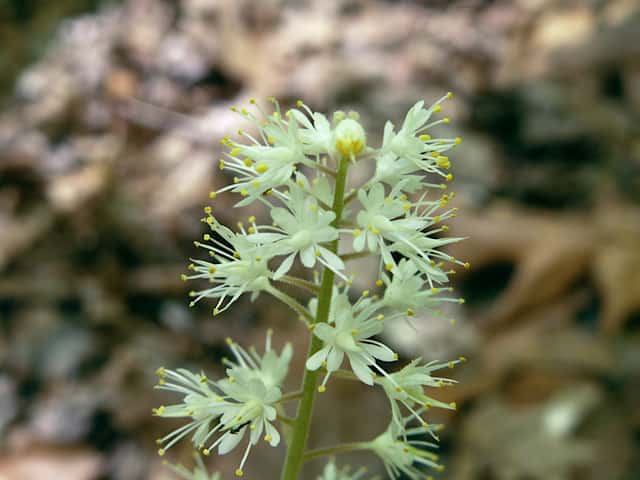
Tiarella cordifolia, commonly known as foamflower, is a low-growing herbaceous perennial native to the woodlands of eastern North America, from Nova Scotia south through the Appalachian Mountains to Alabama. It forms a dense mat of heart-shaped, hairy-stalked leaves that often display attractive burgundy veining and takes on a bronze-red hue in cooler months. In mid to late spring, upright flower spikes rise above the foliage, covered in tiny, star-shaped white or pale pink blossoms that give the plant its foamy, frothy appearance. Foamflower spreads slowly by rhizomes and stolons, making it a popular choice for woodland gardens, shaded borders, and as a naturalizing ground cover beneath trees and shrubs.
How to Propagate Foamflower?
Clump Division
Divide every 3-4 years to keep clumps vigorous and to create new plants for other shaded areas of the garden.
- 1 Dig up an established clump that is at least 2-3 years old in early spring or autumn
- 2 Gently separate the rhizomes and rooted stolons by hand or with a clean knife
- 3 Replant divisions immediately in prepared, humus-rich soil at the same depth as before
- 4 Water thoroughly and keep soil consistently moist until new growth appears
Materials needed:
Seed Sowing
Fresh seed germinates best; older seed may need a period of cold stratification.
- 1 Sow seeds on the surface of prepared, moist soil in early autumn or early spring
- 2 Press seeds lightly into the soil without covering, since they need light to germinate
- 3 Keep the seedbed consistently moist and in a shaded location
- 4 Thin seedlings once they develop their first true leaves
Materials needed:
How Big Does Foamflower Grow?
TLDR: Foamflower can reach up to 30cm tall with Medium growth rate.
Max height
30cm
Spread
45cm
Growth rate
Medium
Foliage
Semi-evergreen
Plant Uses
Ground Cover
Soil coverage
Ornamental
Great for decoration
Is your plant showing symptoms?
Click on the symptom to discover possible causes:
What Diseases Commonly Affect Foamflower?
TLDR: Foamflower is susceptible to 6 known diseases. Monitor regularly for early detection.
Root Rot
Root rot is a serious fungal disease that affects the root system of plants, causing them to decay and die. It is primarily caused by overwatering, poor drainage, or soil-borne fungi such as Pythium, Phytophthora, Rhizoctonia, and Fusarium. The disease thrives in waterlogged conditions where roots are deprived of oxygen, making them susceptible to fungal infection.
Rust
Rust is a common fungal disease caused by fungi in the order Pucciniales that affects a wide variety of plants. The disease gets its name from the characteristic orange, yellow, or reddish-brown pustules that appear on leaves, resembling metal rust. This obligate fungal parasite requires living plants to survive and can cause significant economic losses in agricultural crops.
Powdery Mildew
Powdery mildew is a common fungal disease caused by various fungi species including Erysiphe, Podosphaera, Oïdium, and Leveillula. It affects over 10,000 plant species worldwide. The disease thrives in warm, dry climates with high humidity and appears as a distinctive white powdery coating on plant surfaces.
Mealybugs
Mealybugs are small, soft-bodied insects covered with a white, waxy, cottony material. They are common pests of houseplants and outdoor plants in mild climates. These sap-sucking insects feed on plant tissue, causing damage, stunted growth, and can lead to plant death if left untreated. They produce sticky honeydew which attracts sooty mold.
Fun Facts
Foamflower's genus name Tiarella means "small tiara," a nod to the shape of its seed capsules.
The plant's frothy flower spikes are what give it the common name "foamflower."
It has received the Royal Horticultural Society's Award of Garden Merit for its garden performance.
Frequently asked questions
Is foamflower toxic to cats or dogs?
How much sun does foamflower need?
How often should I water foamflower?
How do I propagate foamflower?
Compare with similar plants
| Attribute | Difficulty | Light | Watering | Pet Safe |
|---|---|---|---|---|
| Field Maple | Easy | Bright indirect | 14d | ✓ |
| Silver Birch | Easy | Direct sun | 14d | ✓ |
| Common Blanketflower | Easy | Direct sun | 10d | ✓ |
| Cushion Bush | Easy | Direct sun | 14d | ✓ |





