Crassulaceae
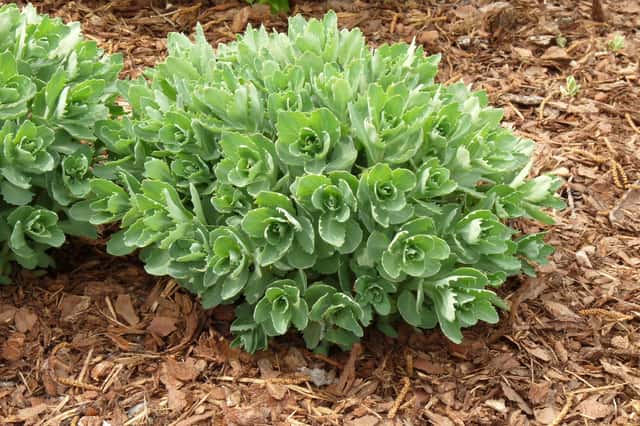
Showy Stonecrop (Hylotelephium spectabile)
Hylotelephium spectabile
Extremely low-maintenance and tough. Thrives in full sun with well-drained soil and infrequent watering. Tolerates severe frost, drought, and poor soils. Ideal for borders, rock gardens, and containers.
Every 14 days
Direct sun
-40° - 30°C
30% - 60%
Categories
What is Showy Stonecrop?
Showy Stonecrop (Hylotelephium spectabile) is a easy-care plant from the Crassulaceae family. Hylotelephium spectabile, commonly known as Showy Stonecrop or Ice Plant, is a hardy succulent perennial native to China and Korea. It forms upright, clumping mounds of fleshy, blue-green leaves topped with flat-topped clusters of star-shaped pink flowers in late summer and fall — a magnet for butte...
Showy Stonecrop grows up to 70cm, spread of 60cm, watering every 14 days, -40°C – 30°C, 30–60% humidity. It is not suitable for indoor environments and safe for pets.
Unlike many tropical plants, Showy Stonecrop tolerates watering mistakes. Best for beginners. Unlike many popular species, Showy Stonecrop is safe to keep around pets.
How to Care for Showy Stonecrop?
TLDR: Showy Stonecrop needs Direct sun, watering every 14 days, and temperatures between -40-30°C with 30-60% humidity.
How Often Should You Water Showy Stonecrop?
Water only when the soil is completely dry — approximately every 10-14 days in summer. Use the soak-and-dry method. Avoid overwatering as wet soil quickly causes root rot.
How Much Light Does Showy Stonecrop Need?
Requires at least 6 hours of full sun daily. Plant in an open, sunny location. Insufficient light causes leggy growth and poor flowering.
What Is the Best Soil for Showy Stonecrop?
Use well-draining succulent/cactus mix or combine standard potting soil with 30% coarse sand or perlite. Avoid rich, heavy soils — low fertility is preferred.
What Pot Should You Use for Showy Stonecrop?
Terracotta or ceramic pots with drainage holes for outdoor container growing. Avoid pots without drainage.
Care Schedule
Fertilize
Every 90 days
What Is Showy Stonecrop and Where Does It Come From?
Hylotelephium spectabile, commonly known as Showy Stonecrop or Ice Plant, is a hardy succulent perennial native to China and Korea. It forms upright, clumping mounds of fleshy, blue-green leaves topped with flat-topped clusters of star-shaped pink flowers in late summer and fall — a magnet for butterflies and bees.
How to Propagate Showy Stonecrop?
Stem Cutting
Take cuttings in spring or summer for best success. Do not water immediately after planting — let the cut callous first.
- 1 Cut a healthy stem 8-10 cm long with sterilized scissors
- 2 Remove lower leaves, leaving 2-3 at the top
- 3 Allow the cut end to callous for 1-2 days in a dry location
- 4 Plant in dry succulent mix and wait 1 week before first watering
Materials needed:
Clump Division
Divide every 3-4 years to rejuvenate and maintain vigor.
- 1 In spring, lift the plant or dig around the clump
- 2 Divide the rhizome into sections with at least 2-3 shoots each
- 3 Replant each division in well-drained soil and water lightly
Materials needed:
How Big Does Showy Stonecrop Grow?
TLDR: Showy Stonecrop can reach up to 70cm tall with Medium growth rate.
Max height
70cm
Spread
60cm
Growth rate
Medium
Foliage
Deciduous
Warning: Toxic Plant
This plant can be toxic if ingested. Keep out of reach of:
Plant Uses
Ornamental
Great for decoration
Is your plant showing symptoms?
Click on the symptom to discover possible causes:
What Diseases Commonly Affect Showy Stonecrop?
TLDR: Showy Stonecrop is susceptible to 8 known diseases. Monitor regularly for early detection.
Root Rot
Root rot is a serious fungal disease that affects the root system of plants, causing them to decay and die. It is primarily caused by overwatering, poor drainage, or soil-borne fungi such as Pythium, Phytophthora, Rhizoctonia, and Fusarium. The disease thrives in waterlogged conditions where roots are deprived of oxygen, making them susceptible to fungal infection.
Overwatering
Overwatering occurs when plants receive too much water, depriving roots of oxygen and causing root rot. This environmental stress is one of the most common causes of houseplant death, as waterlogged soil prevents roots from breathing and functioning properly.
Southern Blight
Southern blight is a devastating soilborne fungal disease caused by Athelia rolfsii (formerly Sclerotium rolfsii), affecting over 500 plant species including vegetables, ornamentals, and fruit crops. The fungus survives in soil through resting structures called sclerotia that resemble mustard seeds and can remain viable for years.
Aphids
Aphids are small, soft-bodied, pear-shaped insects (1/16 to 1/8 inch long) that feed by sucking nutrient-rich sap from plants. They reproduce rapidly and can quickly weaken plants, causing distorted growth and transmitting plant viruses. Aphids come in various colors including green, black, red, yellow, brown, and gray. They secrete honeydew, a sticky substance that attracts ants and encourages sooty mold growth.
Meaning & Symbolism
Symbol of resilience and autumn beauty; its pink blooms attract pollinators and represent the harvest season transition.
Fun Facts
One of the most frost-hardy succulents in the world, surviving temperatures down to -40°C.
Its pink flower clusters are a prime feeding station for monarch butterflies during autumn migration.
Reclassified from Sedum to Hylotelephium in 1977, though still widely sold as Sedum spectabile.
Dried seed heads persist through winter, adding structural beauty to the garden even under snow.
Frequently asked questions
How often should I water Showy Stonecrop?
Can Showy Stonecrop survive frost?
Is Hylotelephium spectabile toxic?
How do I propagate Showy Stonecrop?
Does it need fertilizer?
Compare with similar plants
| Attribute | Difficulty | Light | Watering | Pet Safe |
|---|---|---|---|---|
| Field Maple | Easy | Bright indirect | 14d | ✓ |
| Silver Birch | Easy | Direct sun | 14d | ✓ |
| Cushion Bush | Easy | Direct sun | 14d | ✓ |
| Peruvian peppertree | Easy | Direct sun | 14d | ⚠️ |





