Crassulaceae
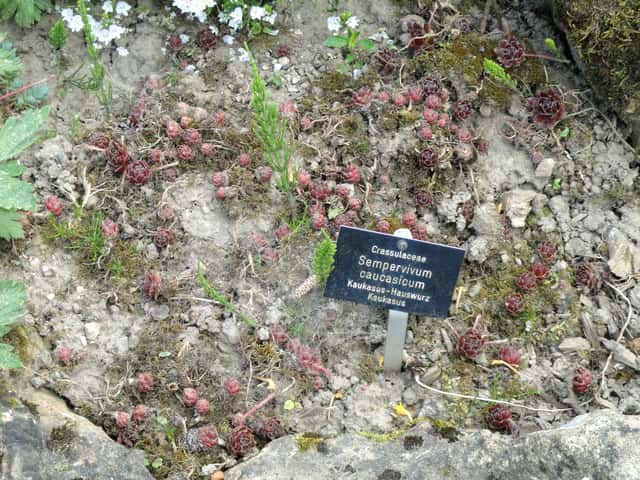
Caucasian Houseleek (Sempervivum caucasicum)
Sempervivum caucasicum
A virtually indestructible alpine succulent that thrives on neglect. Water sparingly, provide full sun, and use gritty well-draining soil. Perfect for rock gardens, alpine troughs, and green roofs.
Every 14 days
Bright indirect
-34° - 35°C
30% - 50%
Categories
What is Caucasian Houseleek?
Caucasian Houseleek (Sempervivum caucasicum) is a easy-care plant from the Crassulaceae family. Sempervivum caucasicum is a rosette-forming alpine succulent native to the Caucasus mountains of Georgia, Armenia, and Russia. It produces dense clusters of fleshy, pointed leaves arranged in tight rosettes, spreading via offsets to form low-growing mats. Extremely cold-hardy, it survives temperatur...
Caucasian Houseleek grows up to 15cm, spread of 30cm, watering every 14 days, -34°C – 35°C, 30–50% humidity. It is suitable for indoor environments and safe for pets.
Unlike many tropical plants, Caucasian Houseleek tolerates watering mistakes. Best for beginners. Unlike many popular species, Caucasian Houseleek is safe to keep around pets. Without adequate drainage, root rot can develop within 28 days.
How to Care for Caucasian Houseleek?
TLDR: Caucasian Houseleek needs Bright indirect, watering every 14 days, and temperatures between -34-35°C with 30-50% humidity.
How Often Should You Water Caucasian Houseleek?
Water every 14 days during spring and summer, allowing soil to dry completely between waterings. Reduce watering significantly in autumn and winter. Never let water sit in the rosette center — this causes rot.
How Much Light Does Caucasian Houseleek Need?
Requires full sun for at least 6 hours per day. Grows best in bright, direct outdoor light. In low-light conditions, rosettes etiolate and lose their compact form.
What Is the Best Soil for Caucasian Houseleek?
Use a gritty, well-draining mix: 50% succulent/cactus compost with 50% perlite, coarse sand, or gravel. Avoid dense or moisture-retaining soils. Slightly acidic to neutral pH (6.0–7.5) is ideal.
What Pot Should You Use for Caucasian Houseleek?
Terracotta pot or alpine trough with drainage holes. Avoid plastic pots that retain moisture. Shallow, wide containers suit the spreading rosette habit best.
Care Schedule
Fertilize
Every 90 days
What Is Caucasian Houseleek and Where Does It Come From?
Sempervivum caucasicum is a rosette-forming alpine succulent native to the Caucasus mountains of Georgia, Armenia, and Russia. It produces dense clusters of fleshy, pointed leaves arranged in tight rosettes, spreading via offsets to form low-growing mats. Extremely cold-hardy, it survives temperatures down to -34°C and thrives in rocky, well-draining soils with minimal care.
How to Propagate Caucasian Houseleek?
Offset Division
Offsets root easily without any rooting hormone. Plant at soil level, not buried deep. Spring is the ideal season.
- 1 Wait until offsets (chicks) reach about 2-3 cm in diameter
- 2 Gently detach the offset from the mother rosette by hand or with a clean knife
- 3 Leave the offset to callous for 1-2 days in a dry spot
- 4 Plant in gritty, well-draining soil and water lightly after 1 week
Materials needed:
Seed Propagation
Seed propagation is slower but produces genetic variation. Use fresh seeds for best results.
- 1 Sow seeds on the surface of fine, well-draining compost
- 2 Do not cover seeds — they need light to germinate
- 3 Keep lightly moist at 18-21°C until germination
- 4 Thin seedlings and transplant once large enough to handle
Materials needed:
How Big Does Caucasian Houseleek Grow?
TLDR: Caucasian Houseleek can reach up to 15cm tall with Slow growth rate.
Max height
15cm
Spread
30cm
Growth rate
Slow
Foliage
Evergreen
Plant Uses
Ornamental
Great for decoration
Ground Cover
Soil coverage
Is your plant showing symptoms?
Click on the symptom to discover possible causes:
What Diseases Commonly Affect Caucasian Houseleek?
TLDR: Caucasian Houseleek is susceptible to 4 known diseases. Monitor regularly for early detection.
Root Rot
Root rot is a serious fungal disease that affects the root system of plants, causing them to decay and die. It is primarily caused by overwatering, poor drainage, or soil-borne fungi such as Pythium, Phytophthora, Rhizoctonia, and Fusarium. The disease thrives in waterlogged conditions where roots are deprived of oxygen, making them susceptible to fungal infection.
Mealybugs
Mealybugs are small, soft-bodied insects covered with a white, waxy, cottony material. They are common pests of houseplants and outdoor plants in mild climates. These sap-sucking insects feed on plant tissue, causing damage, stunted growth, and can lead to plant death if left untreated. They produce sticky honeydew which attracts sooty mold.
Aphids
Aphids are small, soft-bodied, pear-shaped insects (1/16 to 1/8 inch long) that feed by sucking nutrient-rich sap from plants. They reproduce rapidly and can quickly weaken plants, causing distorted growth and transmitting plant viruses. Aphids come in various colors including green, black, red, yellow, brown, and gray. They secrete honeydew, a sticky substance that attracts ants and encourages sooty mold growth.
Slugs and Snails
Slugs and snails are mollusks that feed on plant tissue, causing irregular holes in leaves and damage to young seedlings. They are most active at night and in moist conditions, leaving characteristic silvery slime trails. These pests can quickly devastate gardens, especially during wet seasons.
Meaning & Symbolism
Symbol of resilience, longevity, and protection. Traditionally planted on rooftops across Europe to ward off lightning strikes and fire.
Fun Facts
Sempervivum means "always alive" in Latin — a name earned by its ability to survive extreme cold, drought, and neglect.
The mother rosette dies after flowering (monocarpy), but dozens of offsets carry on the colony indefinitely.
Historically, houseleeks were planted on thatched rooftops across medieval Europe to protect homes from lightning and fire.
Sempervivum caucasicum can survive temperatures as low as -34°C, making it one of the most cold-hardy succulents in existence.
Frequently asked questions
How often should I water Sempervivum caucasicum?
Is Sempervivum caucasicum safe for pets?
Can I grow Caucasian Houseleek indoors?
Why is my Sempervivum dying after flowering?
What soil is best for Sempervivum caucasicum?
Compare with similar plants
| Attribute | Difficulty | Light | Watering | Pet Safe |
|---|---|---|---|---|
| Field Maple | Easy | Bright indirect | 14d | ✓ |
| Silver Birch | Easy | Direct sun | 14d | ✓ |
| Cushion Bush | Easy | Direct sun | 14d | ✓ |
| Peruvian peppertree | Easy | Direct sun | 14d | ⚠️ |