Brassicaceae
Shepherd's Purse: The Edible, Medicinal Weed with Heart-Shaped Pods
Capsella bursa-pastoris
Shepherd's Purse is very low-maintenance. It thrives in full sun to partial shade and tolerates a wide range of soils. Water moderately — it is drought-tolerant once established. No fertilization is usually needed. Allow it to self-seed if you want it to naturalize in a garden bed.
Every 7 days
Direct sun
-15° - 35°C
40% - 70%
Categories
What is Shepherd's Purse?
Shepherd's Purse (Capsella bursa-pastoris) is a easy-care plant from the Brassicaceae family. Capsella bursa-pastoris, commonly known as Shepherd's Purse, is a fast-growing annual weed in the mustard family (Brassicaceae), native to eastern Europe and Asia Minor but now naturalized worldwide. It is easily recognized by its distinctive heart-shaped (triangular) seed pods that resemble the pou...
Shepherd's Purse grows up to 50cm, spread of 30cm, watering every 7 days, -15°C – 35°C, 40–70% humidity. It is not suitable for indoor environments and safe for pets.
Unlike many tropical plants, Shepherd's Purse tolerates watering mistakes. Best for beginners. Unlike many popular species, Shepherd's Purse is safe to keep around pets.
How to Care for Shepherd's Purse?
TLDR: Shepherd's Purse needs Direct sun, watering every 7 days, and temperatures between -15-35°C with 40-70% humidity.
How Often Should You Water Shepherd's Purse?
Water every 5–10 days depending on weather. Shepherd's Purse is drought-tolerant but appreciates consistent moisture during germination and early growth. Avoid waterlogging, which can cause root rot.
How Much Light Does Shepherd's Purse Need?
Prefers full sun to light shade. In garden settings, place in a bright spot with at least 6 hours of direct sunlight for best leaf production and flowering.
What Is the Best Soil for Shepherd's Purse?
Grows in almost any well-draining soil — loamy, sandy, or clay. Prefers a slightly acidic to neutral pH (6.0–7.5) and moderately fertile ground. No special soil amendments needed.
What Pot Should You Use for Shepherd's Purse?
Any container or ground bed with drainage. Terra cotta pots work well for keeping moisture balanced if growing indoors for culinary use.
What Is Shepherd's Purse and Where Does It Come From?
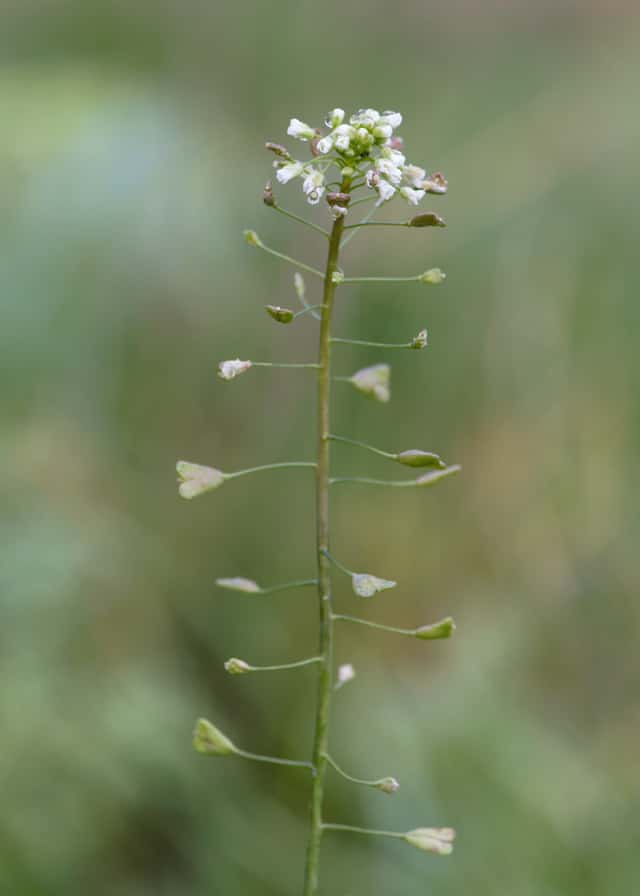
Capsella bursa-pastoris, commonly known as Shepherd's Purse, is a fast-growing annual weed in the mustard family (Brassicaceae), native to eastern Europe and Asia Minor but now naturalized worldwide. It is easily recognized by its distinctive heart-shaped (triangular) seed pods that resemble the pouches historically carried by shepherds. The plant produces a basal rosette of lobed leaves and erect stems bearing clusters of tiny white flowers. It thrives in disturbed ground, roadsides, gardens, and agricultural fields.
How to Propagate Shepherd's Purse?
Direct Seed Sowing
Shepherd's Purse self-seeds readily. Avoid covering seeds deeply as they need light for germination.
- 1 Scatter seeds on disturbed, bare soil in spring or autumn
- 2 Press lightly — seeds need light to germinate
- 3 Water gently and keep moist until germination
- 4 Thin seedlings to 10 cm apart if growing for harvest
Materials needed:
How Big Does Shepherd's Purse Grow?
TLDR: Shepherd's Purse can reach up to 50cm tall with Fast growth rate.
Max height
50cm
Spread
30cm
Growth rate
Fast
Foliage
Deciduous
Plant Uses
Edible
Can be consumed
Medicinal
Medicinal properties
Ground Cover
Soil coverage
Medicinal Uses
- Used to stop bleeding (haemostatic) — a tea from dried herb was traditionally used for nosebleeds, heavy menstruation, and wounds
- Approved by German Commission E for nosebleeds and minor wounds
- Contains compounds with anti-inflammatory and diuretic properties
- Used in traditional Chinese medicine for eye inflammation and blood pressure regulation
- May have goitrogenic effects — moderate intake recommended for people with thyroid conditions
Culinary Uses
- Young leaves eaten raw in salads — mild, slightly peppery flavor
- Mature leaves used in soups, stir-fries, and cooked dishes — similar to mustard greens
- Young taproot has a horseradish-like flavor, can be grated as a condiment
- Seeds used as a spicy seasoning, whole or ground
- Widely used in East Asian cuisine — Japanese, Chinese, and Korean recipes feature it in dumplings, congee, and bread
Is your plant showing symptoms?
Click on the symptom to discover possible causes:
What Diseases Commonly Affect Shepherd's Purse?
TLDR: Shepherd's Purse is susceptible to 8 known diseases. Monitor regularly for early detection.
Downy Mildew
Downy mildew is a fungal-like disease caused by oomycetes (water molds) that thrives in cool, wet conditions. It affects a wide range of plants, causing yellowing leaves with fuzzy white-gray growth underneath, leading to defoliation and reduced yields if left untreated.
Aphids
Aphids are small, soft-bodied, pear-shaped insects (1/16 to 1/8 inch long) that feed by sucking nutrient-rich sap from plants. They reproduce rapidly and can quickly weaken plants, causing distorted growth and transmitting plant viruses. Aphids come in various colors including green, black, red, yellow, brown, and gray. They secrete honeydew, a sticky substance that attracts ants and encourages sooty mold growth.
Mosaic Virus
Mosaic virus is a group of plant viruses that cause mottled, patchy patterns on leaves and can affect a wide variety of plants. The virus creates characteristic yellow, white, and green mosaic patterns, often accompanied by stunted growth and deformed plant parts. This highly contagious disease spreads rapidly through insect vectors and contaminated tools.
Overwatering
Overwatering occurs when plants receive too much water, depriving roots of oxygen and causing root rot. This environmental stress is one of the most common causes of houseplant death, as waterlogged soil prevents roots from breathing and functioning properly.
Meaning & Symbolism
Known in England and Scotland as "Mother's Heart," the name comes from a children's game of bursting the seed pods — said to symbolize breaking the mother's heart. The heart-shaped pods give the plant a tender, poignant symbolism across folk cultures.
Fun Facts
Shepherd's Purse is one of the most common plants on Earth — found on every continent except Antarctica
The heart-shaped seed pods give it the common name "Shepherd's Purse," resembling the leather pouches once carried by shepherds
It can complete its entire life cycle in 6 weeks under warm conditions
Dried leaves contain extraordinarily high levels of vitamin A and iron compared to most leafy vegetables
Frequently asked questions
Is Shepherd's Purse edible?
Is Shepherd's Purse safe for cats and dogs?
How do I grow Shepherd's Purse?
What are the medicinal uses of Shepherd's Purse?
Is Shepherd's Purse a weed?
Compare with similar plants
| Attribute | Difficulty | Light | Watering | Pet Safe |
|---|---|---|---|---|
| Field Maple | Easy | Bright indirect | 14d | ✓ |
| Silver Birch | Easy | Direct sun | 14d | ✓ |
| Common Blanketflower | Easy | Direct sun | 10d | ✓ |
| Cushion Bush | Easy | Direct sun | 14d | ✓ |





