Asteraceae
Rush skeletonweed: Edible Plant
Chondrilla juncea
Rush skeletonweed is an extremely low-maintenance and resilient plant. It requires full sun, is drought-tolerant, and prefers poor, sandy soil. It needs infrequent watering—only when the soil has completely dried out. It requires almost no fertilization. It is suitable for outdoor cultivation; the basal foliage dies back in winter and regrows in spring.
Every 14 days
Direct sun
5° - 35°C
30% - 60%
Categories
What is Rush skeletonweed?
Rush skeletonweed (Chondrilla juncea) is a easy-care plant from the Asteraceae family. Chondrilla juncea (rush skeletonweed) is a perennial herbaceous plant in the Asteraceae family, native to Europe, Asia, and North Africa. It is easily recognizable by its characteristic thin, wiry stems and small, yellow dandelion-like flowers. Its flowering stems, which emerge from basal leaves, ca...
Rush skeletonweed grows up to 1.0m, spread of 30cm, watering every 14 days, 5°C – 35°C, 30–60% humidity. It is not suitable for indoor environments and safe for pets.
Unlike many tropical plants, Rush skeletonweed tolerates watering mistakes. Best for beginners. Unlike many popular species, Rush skeletonweed is safe to keep around pets.
How to Care for Rush skeletonweed?
TLDR: Rush skeletonweed needs Direct sun, watering every 14 days, and temperatures between 5-35°C with 30-60% humidity.
How Often Should You Water Rush skeletonweed?
A bi-weekly watering schedule is sufficient; the plant is highly drought-tolerant. Always wait until the soil is completely dry between waterings. Overwatering leads to root rot. Supplemental watering is not necessary during rainy periods.
How Much Light Does Rush skeletonweed Need?
At least 6 hours of direct sunlight daily is required for healthy growth. It does not tolerate shade—plant it in a sunny, open area. A south-facing, open location is ideal.
What Is the Best Soil for Rush skeletonweed?
It prefers sandy, well-draining, nutrient-poor soil. It best tolerates pH levels between 6.0 and 7.5. It does not develop properly in heavy, clayey, or waterlogged soils. Mix sand or gravel into the planting medium to improve drainage.
What Pot Should You Use for Rush skeletonweed?
It is best grown in the ground. If growing in a pot, choose a deep terracotta container with excellent drainage holes to prevent the roots from sitting in water.
Care Schedule
Fertilize
Every 90 days
What Is Rush skeletonweed and Where Does It Come From?
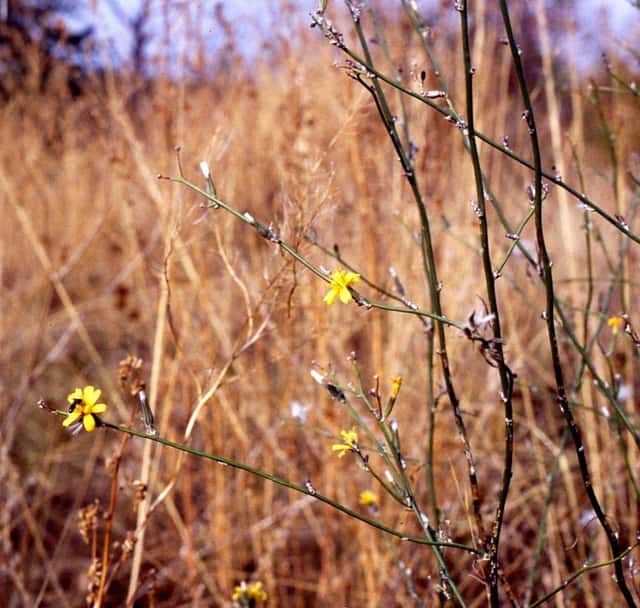
Chondrilla juncea (rush skeletonweed) is a perennial herbaceous plant in the Asteraceae family, native to Europe, Asia, and North Africa. It is easily recognizable by its characteristic thin, wiry stems and small, yellow dandelion-like flowers. Its flowering stems, which emerge from basal leaves, can grow up to 100 cm tall. It thrives in dry, sandy soils, along roadsides, in fields, and on pastures. It spreads rapidly through both seeds and root suckers.
How to Propagate Rush skeletonweed?
How Big Does Rush skeletonweed Grow?
TLDR: Rush skeletonweed can reach up to 1.0m tall with Fast growth rate.
Max height
1.0m
Spread
30cm
Growth rate
Fast
Foliage
Deciduous
Plant Uses
Edible
Can be consumed
Medicinal
Medicinal properties
Medicinal Uses
- A source of antioxidant compounds; experimental studies suggest it possesses xanthine oxidase inhibitory properties, which may be effective in treating hyperuricemia and gout.
Culinary Uses
- In Mediterranean folk cuisine (especially on the island of Crete and in Albanian communities in southern Italy), fresh leaves and shoots are consumed raw in salads or cooked.
- In Eastern Anatolia, a traditional chewing gum is produced from the plant's milky sap.
Is your plant showing symptoms?
Click on the symptom to discover possible causes:
What Diseases Commonly Affect Rush skeletonweed?
TLDR: Rush skeletonweed is susceptible to 5 known diseases. Monitor regularly for early detection.
Rust
Rust is a common fungal disease caused by fungi in the order Pucciniales that affects a wide variety of plants. The disease gets its name from the characteristic orange, yellow, or reddish-brown pustules that appear on leaves, resembling metal rust. This obligate fungal parasite requires living plants to survive and can cause significant economic losses in agricultural crops.
Aphids
Aphids are small, soft-bodied, pear-shaped insects (1/16 to 1/8 inch long) that feed by sucking nutrient-rich sap from plants. They reproduce rapidly and can quickly weaken plants, causing distorted growth and transmitting plant viruses. Aphids come in various colors including green, black, red, yellow, brown, and gray. They secrete honeydew, a sticky substance that attracts ants and encourages sooty mold growth.
Spider Mites
Spider mites are tiny arachnids (less than 1/20 inch long) related to spiders and ticks that feed on plant sap. They thrive in hot, dry conditions and can cause significant damage to ornamental and vegetable plants. During severe infestations, crop losses can reach 14% or higher as these pests disrupt vital plant processes including photosynthesis, carbon dioxide absorption, and transpiration.
Root Rot
Root rot is a serious fungal disease that affects the root system of plants, causing them to decay and die. It is primarily caused by overwatering, poor drainage, or soil-borne fungi such as Pythium, Phytophthora, Rhizoctonia, and Fusarium. The disease thrives in waterlogged conditions where roots are deprived of oxygen, making them susceptible to fungal infection.
Compare with similar plants
| Attribute | Difficulty | Light | Watering | Pet Safe |
|---|---|---|---|---|
| Field Maple | Easy | Bright indirect | 14d | ✓ |
| Silver Birch | Easy | Direct sun | 14d | ✓ |
| Cushion Bush | Easy | Direct sun | 14d | ✓ |
| Wild Lettuce | Medium | Direct sun | 7d | ⚠️ |





