Plantaginaceae
Asian Plantain (Plantago asiatica): East Asia's Healing Herb
Plantago asiatica
Asian Plantain is a robust, easy-to-grow herb ideal for medicinal and culinary gardens. It thrives in full sun to partial shade, well-draining loamy soil, and regular but moderate watering. It grows quickly and can be harvested periodically — young leaves are best for both medicinal use and culinary applications.
Every 7 days
Bright indirect
-10° - 35°C
40% - 70%
Categories
What is Asian Plantain?
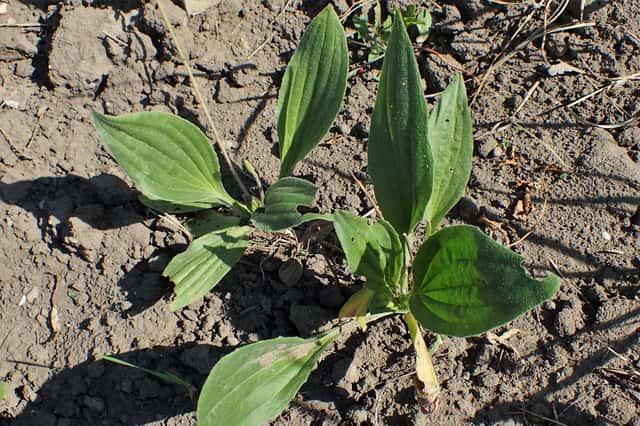
Asian Plantain (Plantago asiatica) is a easy-care plant from the Plantaginaceae family. Asian Plantain (Plantago asiatica) is a perennial herb of the Plantaginaceae family, native to East Asia — China, Japan, and Korea. It forms a basal rosette of broadly ovate to elliptic leaves measuring 4–12 cm, deep green with prominent veins. It produces erect flower spikes of 20–45 cm bearing num...
Asian Plantain grows up to 60cm, spread of 30cm, watering every 7 days, -10°C – 35°C, 40–70% humidity. It is not suitable for indoor environments and safe for pets.
Unlike many tropical plants, Asian Plantain tolerates watering mistakes. Best for beginners. Unlike many popular species, Asian Plantain is safe to keep around pets.
How to Care for Asian Plantain?
TLDR: Asian Plantain needs Bright indirect, watering every 7 days, and temperatures between -10-35°C with 40-70% humidity.
How Often Should You Water Asian Plantain?
Water Asian Plantain every 7 days, allowing the top layer of soil to dry slightly between waterings. During hot spells, check soil moisture more frequently. Avoid waterlogging, as root rot is the main risk in overly moist conditions.
How Much Light Does Asian Plantain Need?
Place in full sun or partial shade — ideally receiving 10,000 to 60,000 lux. In gardens, open sunny spots promote vigorous growth. When growing in containers indoors, position near the brightest window available.
What Is the Best Soil for Asian Plantain?
Prefers loamy, well-draining soil. Amend with perlite or coarse sand to prevent compaction. Tolerates a wide pH range of 5.5 to 7.5, adapting easily to most garden soils.
What Pot Should You Use for Asian Plantain?
Terracotta or ceramic pots with drainage holes are ideal for container growing. For garden planting, growing directly in the ground is preferred, as the plant develops more vigorously with room to expand its root system.
Care Schedule
Fertilize
Every 90 days
What Is Asian Plantain and Where Does It Come From?
Asian Plantain (Plantago asiatica) is a perennial herb of the Plantaginaceae family, native to East Asia — China, Japan, and Korea. It forms a basal rosette of broadly ovate to elliptic leaves measuring 4–12 cm, deep green with prominent veins. It produces erect flower spikes of 20–45 cm bearing numerous small white flowers. Exceptionally resilient, it colonizes disturbed habitats such as roadsides and vacant lots. Revered in Traditional Chinese Medicine for millennia as Cheqiancao (车前草), it possesses well-documented diuretic, anti-inflammatory, and expectorant properties.
How to Propagate Asian Plantain?
Direct sowing
Seeds germinate best at temperatures between 15°C and 25°C. Do not bury seeds deeply as they need some light to germinate.
- 1 Collect or purchase mature Plantago asiatica seeds.
- 2 Prepare substrate with loamy soil and perlite (3:1 ratio).
- 3 Sow seeds on the surface, covering lightly with a thin layer of substrate.
- 4 Keep slightly moist in an area with indirect light until germination.
- 5 Transplant seedlings when they have 2-3 true leaves.
Materials needed:
Clump division
Perform division in early spring before active growth begins. Use sterilized tools to prevent disease transmission.
- 1 Select a healthy, established clump.
- 2 Dig around the plant and carefully lift the entire clump.
- 3 Divide the root mass into 2-4 sections using a clean, sharp knife.
- 4 Replant each division immediately in prepared soil.
- 5 Water well after planting and keep in partial shade for one week.
Materials needed:
How Big Does Asian Plantain Grow?
TLDR: Asian Plantain can reach up to 60cm tall with Fast growth rate.
Max height
60cm
Spread
30cm
Growth rate
Fast
Foliage
Semi-evergreen
Plant Uses
Medicinal
Medicinal properties
Edible
Can be consumed
Medicinal Uses
- Diuretic — promotes urine production and supports urinary tract health
- Anti-inflammatory — reduces inflammation in respiratory and mucosal tissues
- Expectorant — facilitates clearance of secretions from the airways
- Antitussive — relieves both dry and productive cough
- Hemostatic — supports blood clotting when applied topically to minor wounds
- Hepatoprotective — studies suggest liver-protective activity
Culinary Uses
- Young raw leaves in salads
- Cooked leaves in soups, stir-fries, or with meat dishes
- Blanched leaves as a side dish in East Asian cuisine
- Seeds as a natural thickener in recipes
Is your plant showing symptoms?
Click on the symptom to discover possible causes:
What Diseases Commonly Affect Asian Plantain?
TLDR: Asian Plantain is susceptible to 4 known diseases. Monitor regularly for early detection.
Powdery Mildew
Powdery mildew is a common fungal disease caused by various fungi species including Erysiphe, Podosphaera, Oïdium, and Leveillula. It affects over 10,000 plant species worldwide. The disease thrives in warm, dry climates with high humidity and appears as a distinctive white powdery coating on plant surfaces.
Aphids
Aphids are small, soft-bodied, pear-shaped insects (1/16 to 1/8 inch long) that feed by sucking nutrient-rich sap from plants. They reproduce rapidly and can quickly weaken plants, causing distorted growth and transmitting plant viruses. Aphids come in various colors including green, black, red, yellow, brown, and gray. They secrete honeydew, a sticky substance that attracts ants and encourages sooty mold growth.
Spider Mites
Spider mites are tiny arachnids (less than 1/20 inch long) related to spiders and ticks that feed on plant sap. They thrive in hot, dry conditions and can cause significant damage to ornamental and vegetable plants. During severe infestations, crop losses can reach 14% or higher as these pests disrupt vital plant processes including photosynthesis, carbon dioxide absorption, and transpiration.
Root Rot
Root rot is a serious fungal disease that affects the root system of plants, causing them to decay and die. It is primarily caused by overwatering, poor drainage, or soil-borne fungi such as Pythium, Phytophthora, Rhizoctonia, and Fusarium. The disease thrives in waterlogged conditions where roots are deprived of oxygen, making them susceptible to fungal infection.
Meaning & Symbolism
In East Asian cultures, Asian Plantain symbolizes quiet resilience and natural healing. Known as Cheqiancao in Chinese, it embodies the power of humble plants to sustain and heal, thriving vigorously even in inhospitable terrain.
Fun Facts
Asian Plantain has been used in Traditional Chinese Medicine for over 2,000 years, cited in classics such as the Shennong Bencao Jing.
It grows spontaneously along roadsides and disturbed ground, considered a weed in many regions but a medicinal treasure in others.
Its seeds have mucilaginous properties similar to psyllium, aiding digestion and cholesterol management.
In Japan, young leaves appear in traditional spring dishes and are prized for their mild flavour and tender texture.
Frequently asked questions
How often should I water Asian Plantain?
Is Asian Plantain toxic to pets?
Can I grow Asian Plantain in a pot?
What are the main medicinal uses of this plant?
When does Asian Plantain flower?
Compare with similar plants
| Attribute | Difficulty | Light | Watering | Pet Safe |
|---|---|---|---|---|
| Field Maple | Easy | Bright indirect | 14d | ✓ |
| Silver Birch | Easy | Direct sun | 14d | ✓ |
| Cushion Bush | Easy | Direct sun | 14d | ✓ |
| Peruvian peppertree | Easy | Direct sun | 14d | ⚠️ |





