Plantaginaceae
Broadleaf Plantain: Ground Cover Plant
Plantago major
Broadleaf Plantain is an extremely undemanding plant, suitable for sunny to partially shaded locations in the garden or naturalized areas. It requires little care, tolerates drought well, and thrives in almost any soil. Ideal for wildflower meadows, herb gardens, and naturalistic gardens.
Every 7 days
Partial shade
-28° - 35°C
30% - 70%
Categories
What is Broadleaf Plantain?
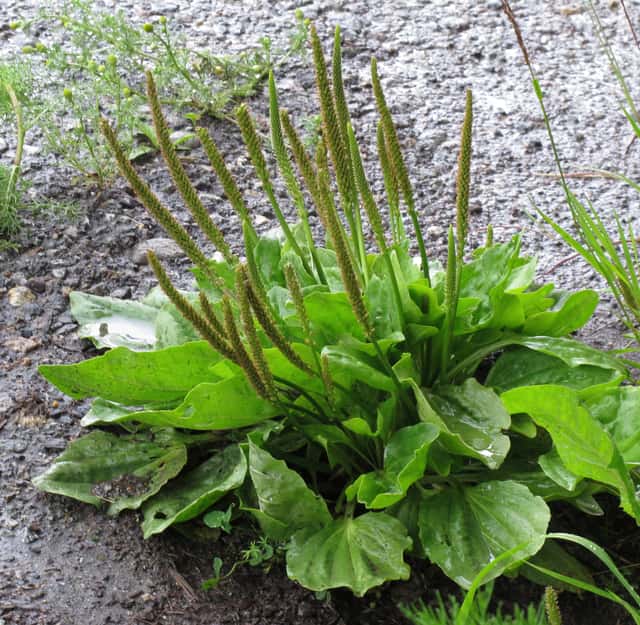
Broadleaf Plantain (Plantago major) is a easy-care plant from the Plantaginaceae family. Broadleaf Plantain (Plantago major) is a robust, perennial wild plant from the Plantain family (Plantaginaceae). It forms a flat rosette of broad, oval leaves with characteristic parallel veins and grows in meadows, pastures, roadsides, and compacted soil worldwide. From May to September, narrow, up...
Broadleaf Plantain grows up to 45cm, spread of 20cm, watering every 7 days, -28°C – 35°C, 30–70% humidity. It is not suitable for indoor environments and safe for pets.
Unlike many tropical plants, Broadleaf Plantain tolerates watering mistakes. Best for beginners. Unlike many popular species, Broadleaf Plantain is safe to keep around pets.
How to Care for Broadleaf Plantain?
TLDR: Broadleaf Plantain needs Partial shade, watering every 7 days, and temperatures between -28-35°C with 30-70% humidity.
How Often Should You Water Broadleaf Plantain?
Established plants only require additional water during prolonged dry spells. The soil should be allowed to dry out slightly between waterings. Absolutely avoid waterlogging, as the roots can be sensitive to excessive moisture.
How Much Light Does Broadleaf Plantain Need?
Full sun to partial shade. Broadleaf Plantain grows best in a sunny location with at least 4 hours of direct sunlight daily. It also grows in partial shade, but is more susceptible to powdery mildew there.
What Is the Best Soil for Broadleaf Plantain?
Tolerates a wide range of soils – from sandy to loamy and compacted. Prefers neutral to slightly acidic pH (6.0–7.0). Copes well with nutrient-poor soils and requires no fertilization.
What Pot Should You Use for Broadleaf Plantain?
For container cultivation, deep, well-draining pots with drainage holes are suitable. A mixture of garden soil and sand is ideal. Since the plant develops an extensive root system, larger pots of at least 20 cm in diameter are recommended.
What Is Broadleaf Plantain and Where Does It Come From?
Broadleaf Plantain (Plantago major) is a robust, perennial wild plant from the Plantain family (Plantaginaceae). It forms a flat rosette of broad, oval leaves with characteristic parallel veins and grows in meadows, pastures, roadsides, and compacted soil worldwide. From May to September, narrow, upright flower spikes appear with small, inconspicuous yellowish-green flowers. As one of the best-known medicinal herbs in folk medicine, it has been used for centuries for skin wounds, insect bites, coughs, and respiratory complaints. The young leaves are edible and rich in silicic acid, mucilage, tannins, and flavonoids.
How to Propagate Broadleaf Plantain?
How Big Does Broadleaf Plantain Grow?
TLDR: Broadleaf Plantain can reach up to 45cm tall with Fast growth rate.
Max height
45cm
Spread
20cm
Growth rate
Fast
Foliage
Deciduous
Plant Uses
Medicinal
Medicinal properties
Edible
Can be consumed
Ground Cover
Soil coverage
Medicinal Uses
- Wound care and skin treatment: fresh crushed leaves or poultices for insect bites, small wounds, and skin irritations
- Respiratory issues and coughs: Tea made from dried leaves relieves coughs, bronchitis, and sore throats thanks to mucilage and iridoid glycosides
- Anti-inflammatory: Flavonoids and tannins have anti-inflammatory effects on mucous membrane irritations
- Traditional folk medicine: external application for burns, bruises, and nail bed infections
Culinary Uses
- Young, tender leaves raw in salads or as a wild herb ingredient
- Older leaves steamed or used as a vegetable in soups and stews
- Seeds historically used as a flour substitute or bird feed
- Leaf tea as a soothing herbal beverage
Is your plant showing symptoms?
Click on the symptom to discover possible causes:
What Diseases Commonly Affect Broadleaf Plantain?
TLDR: Broadleaf Plantain is susceptible to 5 known diseases. Monitor regularly for early detection.
Powdery Mildew
Powdery mildew is a common fungal disease caused by various fungi species including Erysiphe, Podosphaera, Oïdium, and Leveillula. It affects over 10,000 plant species worldwide. The disease thrives in warm, dry climates with high humidity and appears as a distinctive white powdery coating on plant surfaces.
Root Rot
Root rot is a serious fungal disease that affects the root system of plants, causing them to decay and die. It is primarily caused by overwatering, poor drainage, or soil-borne fungi such as Pythium, Phytophthora, Rhizoctonia, and Fusarium. The disease thrives in waterlogged conditions where roots are deprived of oxygen, making them susceptible to fungal infection.
Spider Mites
Spider mites are tiny arachnids (less than 1/20 inch long) related to spiders and ticks that feed on plant sap. They thrive in hot, dry conditions and can cause significant damage to ornamental and vegetable plants. During severe infestations, crop losses can reach 14% or higher as these pests disrupt vital plant processes including photosynthesis, carbon dioxide absorption, and transpiration.
Aphids
Aphids are small, soft-bodied, pear-shaped insects (1/16 to 1/8 inch long) that feed by sucking nutrient-rich sap from plants. They reproduce rapidly and can quickly weaken plants, causing distorted growth and transmitting plant viruses. Aphids come in various colors including green, black, red, yellow, brown, and gray. They secrete honeydew, a sticky substance that attracts ants and encourages sooty mold growth.
Meaning & Symbolism
Since ancient times, Broadleaf Plantain has symbolized strength, healing, and protection. In Celtic and Germanic tradition, it was considered one of the nine sacred herbs and protected travelers on paths – a fact reflected in its German name 'Wegerich', meaning 'path-dweller'.
Compare with similar plants
| Attribute | Difficulty | Light | Watering | Pet Safe |
|---|---|---|---|---|
| Field Maple | Easy | Bright indirect | 14d | ✓ |
| Silver Birch | Easy | Direct sun | 14d | ✓ |
| Cushion Bush | Easy | Direct sun | 14d | ✓ |
| Peruvian peppertree | Easy | Direct sun | 14d | ⚠️ |





