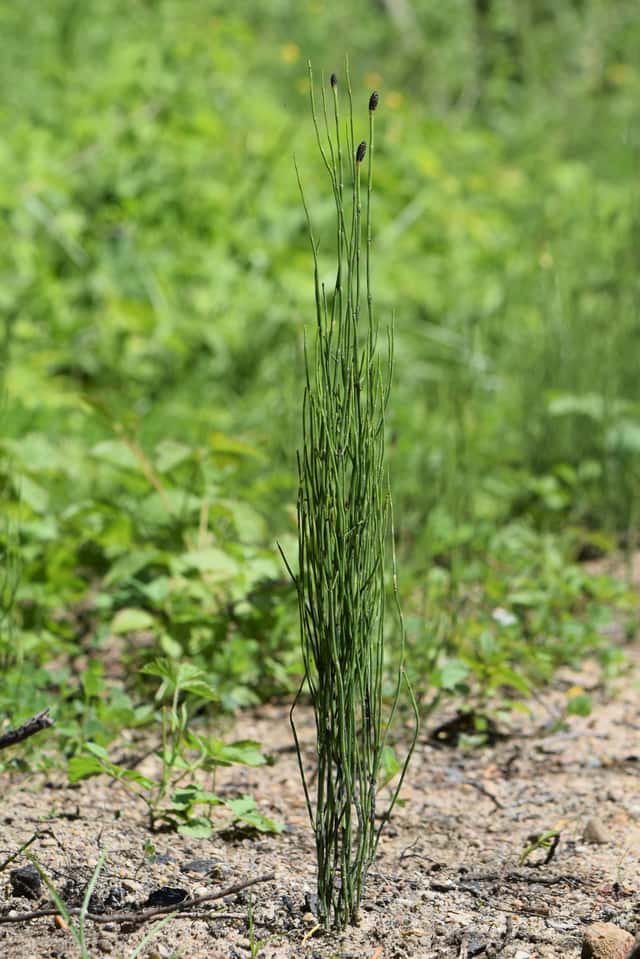
Equisetaceae
Marsh Horsetail — Equisetum palustre
Equisetum palustre
Keep consistently moist or waterlogged. Thrives in partial shade to full sun. Avoid dry conditions. No fertilizer needed. Control spread as it can become invasive.
Every 3 days
Partial shade
-30° - 30°C
60% - 100%
Categories
What is Marsh Horsetail?
Marsh Horsetail (Equisetum palustre) is a medium-care plant from the Equisetaceae family. Equisetum palustre, commonly known as Marsh Horsetail, is a primitive vascular plant from the ancient Equisetaceae family — a lineage dating back over 300 million years. Native to cool, wet regions of Eurasia and North America, it thrives in marshes, bogs, stream banks, and other waterlogged habitat...
Marsh Horsetail grows up to 60cm, spread of 50cm, watering every 3 days, -30°C – 30°C, 60–100% humidity. It is not suitable for indoor environments and not safe for pets.
Without precautions, ingestion can cause irritation in pets. Keep out of reach of cats and dogs.
How to Care for Marsh Horsetail?
TLDR: Marsh Horsetail needs Partial shade, watering every 3 days, and temperatures between -30-30°C with 60-100% humidity.
How Often Should You Water Marsh Horsetail?
Water frequently — every 2–4 days or keep submerged in shallow water. This is a true wetland plant that thrives with roots permanently in water.
How Much Light Does Marsh Horsetail Need?
Tolerates full sun to partial shade. Outdoors in a bright spot or dappled shade is ideal. Avoid deep shade which stunts growth.
What Is the Best Soil for Marsh Horsetail?
Use peaty, moisture-retentive soil or submerge in shallow water. Tolerates clay, loam, and sandy soils. No need for well-draining mixes.
What Pot Should You Use for Marsh Horsetail?
Wide, shallow container or pond basket submerged at the edge of a water feature. Use a heavy loam or clay-based mix without drainage holes.
What Is Marsh Horsetail and Where Does It Come From?
Equisetum palustre, commonly known as Marsh Horsetail, is a primitive vascular plant from the ancient Equisetaceae family — a lineage dating back over 300 million years. Native to cool, wet regions of Eurasia and North America, it thrives in marshes, bogs, stream banks, and other waterlogged habitats. Its jointed, reed-like stems rise 10–60 cm and bear whorls of slender branches. WARNING: All parts are toxic to livestock, particularly horses and cattle, due to thiaminase and the alkaloid palustrine which destroy vitamin B1.
How Big Does Marsh Horsetail Grow?
TLDR: Marsh Horsetail can reach up to 60cm tall with Medium growth rate.
Max height
60cm
Spread
50cm
Growth rate
Medium
Foliage
Evergreen
Warning: Toxic Plant
This plant can be toxic if ingested. Keep out of reach of:
Plant Uses
Ornamental
Great for decoration
Medicinal
Medicinal properties
Medicinal Uses
- Traditional use as a diuretic and wound-healing herb (historical)
Is your plant showing symptoms?
Click on the symptom to discover possible causes:
What Diseases Commonly Affect Marsh Horsetail?
TLDR: Marsh Horsetail is susceptible to 3 known diseases. Monitor regularly for early detection.
Root Rot
Root rot is a serious fungal disease that affects the root system of plants, causing them to decay and die. It is primarily caused by overwatering, poor drainage, or soil-borne fungi such as Pythium, Phytophthora, Rhizoctonia, and Fusarium. The disease thrives in waterlogged conditions where roots are deprived of oxygen, making them susceptible to fungal infection.
Slugs and Snails
Slugs and snails are mollusks that feed on plant tissue, causing irregular holes in leaves and damage to young seedlings. They are most active at night and in moist conditions, leaving characteristic silvery slime trails. These pests can quickly devastate gardens, especially during wet seasons.
Mollusca
Mollusca (snails and slugs) are soft-bodied pests that feed mostly at night and in damp weather. They chew irregular holes in leaves, flowers, and fruit and often leave shiny slime trails. Seedlings, tender greens (like lettuce), hostas, strawberries, and many shade- or moisture-loving plants are frequent targets. Look for ragged leaf edges, missing seedlings, and damage low on the plant or at soil level. Cool, wet conditions, heavy mulch, and cluttered ground cover give them ideal hiding places.
Meaning & Symbolism
Represents ancient resilience — a living fossil connecting modern landscapes to the Carboniferous era. Symbol of persistence and the power of primitive life.
Fun Facts
Equisetum palustre is a living fossil — its family Equisetaceae appeared over 300 million years ago during the Carboniferous period.
The plant's stems are coated in microscopic silica crystals, historically used to scour pots and polish metal.
Marsh Horsetail contains two distinct toxins: thiaminase (destroys vitamin B1) and palustrine (an alkaloid), making it more dangerous than other horsetail species.
Frequently asked questions
Is Marsh Horsetail toxic to pets?
Can I grow Marsh Horsetail indoors?
How do I stop Marsh Horsetail from spreading?
Compare with similar plants
| Attribute | Difficulty | Light | Watering | Pet Safe |
|---|---|---|---|---|
| Dark Fieldcap | Medium | Low light | 2d | ⚠️ |
| Azalea | Medium | Partial shade | 3d | ⚠️ |
| Bougainvillea | Medium | Direct sun | 7d | ⚠️ |
| Wild Lettuce | Medium | Direct sun | 7d | ⚠️ |



