Geraniaceae
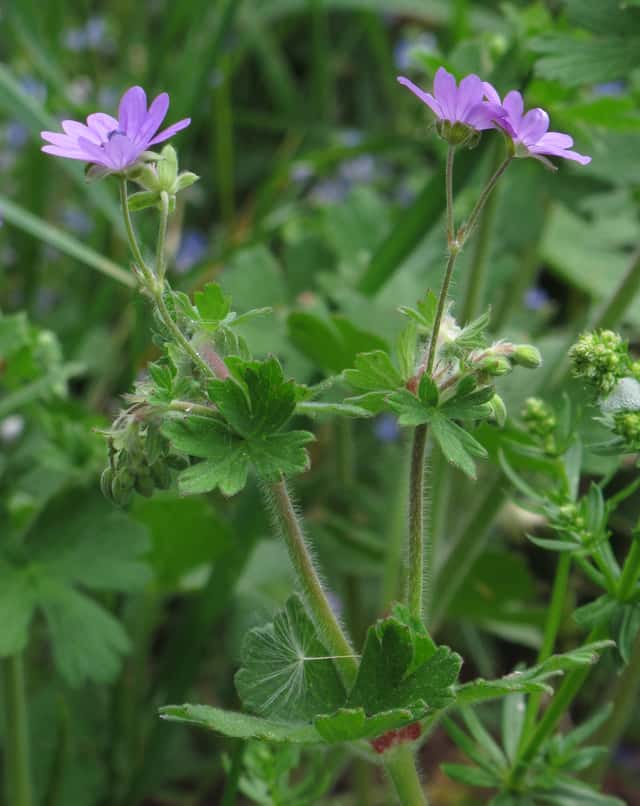
Hedgerow Cranesbill (Geranium pyrenaicum)
Geranium pyrenaicum
An easy-care, low-maintenance perennial perfect for cottage gardens, wildflower meadows, and borders. Thrives in full sun to partial shade with well-drained soil. Water weekly during dry spells; established plants are drought tolerant. No regular pruning needed though deadheading can prolong flowering.
Every 7 days
Partial shade
-20° - 30°C
40% - 70%
Categories
What is Hedgerow Cranesbill?
Hedgerow Cranesbill (Geranium pyrenaicum) is a easy-care plant from the Geraniaceae family. Geranium pyrenaicum, commonly known as Hedgerow Cranesbill, is a semi-evergreen hardy perennial native to southern Europe and the Pyrenees. It produces a profusion of small, vivid purple-pink to blue flowers with deeply notched petals from late spring through autumn. The plant forms a bushy, spreadi...
Hedgerow Cranesbill grows up to 50cm, spread of 60cm, watering every 7 days, -20°C – 30°C, 40–70% humidity. It is not suitable for indoor environments and safe for pets.
Unlike many tropical plants, Hedgerow Cranesbill tolerates watering mistakes. Best for beginners. Unlike many popular species, Hedgerow Cranesbill is safe to keep around pets.
How to Care for Hedgerow Cranesbill?
TLDR: Hedgerow Cranesbill needs Partial shade, watering every 7 days, and temperatures between -20-30°C with 40-70% humidity.
How Often Should You Water Hedgerow Cranesbill?
Water once a week during dry periods. Once established, Hedgerow Cranesbill is quite drought tolerant and does not need watering in regular rainfall. Avoid waterlogging.
How Much Light Does Hedgerow Cranesbill Need?
Prefers full sun to partial shade. In hot climates, afternoon shade helps maintain vigorous flowering. Tolerates a wide range of aspects including north-facing positions.
What Is the Best Soil for Hedgerow Cranesbill?
Grows well in chalk, clay, loam, or sandy soil as long as it is well-drained. Prefers a neutral to slightly alkaline pH (6.0–7.5). Enrich poor soils with compost at planting.
What Pot Should You Use for Hedgerow Cranesbill?
Terracotta or stone container with good drainage holes if growing in pots. The plant is more suited to open garden beds.
Care Schedule
Fertilize
Every 30 days
What Is Hedgerow Cranesbill and Where Does It Come From?
Geranium pyrenaicum, commonly known as Hedgerow Cranesbill, is a semi-evergreen hardy perennial native to southern Europe and the Pyrenees. It produces a profusion of small, vivid purple-pink to blue flowers with deeply notched petals from late spring through autumn. The plant forms a bushy, spreading mound of rounded, lobed leaves and is prized for its long flowering season, tolerance of varied soils, and wildlife value as a pollinator plant.
How Big Does Hedgerow Cranesbill Grow?
TLDR: Hedgerow Cranesbill can reach up to 50cm tall with Medium growth rate.
Max height
50cm
Spread
60cm
Growth rate
Medium
Foliage
Semi-evergreen
Plant Uses
Ornamental
Great for decoration
Ground Cover
Soil coverage
Is your plant showing symptoms?
Click on the symptom to discover possible causes:
What Diseases Commonly Affect Hedgerow Cranesbill?
TLDR: Hedgerow Cranesbill is susceptible to 8 known diseases. Monitor regularly for early detection.
Powdery Mildew
Powdery mildew is a common fungal disease caused by various fungi species including Erysiphe, Podosphaera, Oïdium, and Leveillula. It affects over 10,000 plant species worldwide. The disease thrives in warm, dry climates with high humidity and appears as a distinctive white powdery coating on plant surfaces.
Downy Mildew
Downy mildew is a fungal-like disease caused by oomycetes (water molds) that thrives in cool, wet conditions. It affects a wide range of plants, causing yellowing leaves with fuzzy white-gray growth underneath, leading to defoliation and reduced yields if left untreated.
Gray Mold (Botrytis Blight)
Gray mold, caused by the fungus Botrytis cinerea, is a widespread necrotrophic pathogen affecting over 1,400 plant species. It thrives in cool, humid conditions and attacks weakened or aging plant tissues, causing soft rot and characteristic gray fuzzy growth.
Aphids
Aphids are small, soft-bodied, pear-shaped insects (1/16 to 1/8 inch long) that feed by sucking nutrient-rich sap from plants. They reproduce rapidly and can quickly weaken plants, causing distorted growth and transmitting plant viruses. Aphids come in various colors including green, black, red, yellow, brown, and gray. They secrete honeydew, a sticky substance that attracts ants and encourages sooty mold growth.
Meaning & Symbolism
Symbol of wildness and natural beauty; associated with pollinators and cottage garden charm.
Fun Facts
Geranium pyrenaicum is an RHS Plants for Pollinators selection, attracting bees and butterflies throughout its long flowering season.
Despite its common name "hedgerow cranesbill," it is not native to Britain but has naturalised widely across the UK, often found along roadsides and hedgerows.
The seed pod of cranesbills resembles a crane's bill — that's how the entire Geranium genus got its name (from Greek "geranos," meaning crane).
It can flower almost continuously from late spring to the first frosts, making it one of the longest-blooming hardy geraniums.
Compare with similar plants
| Attribute | Difficulty | Light | Watering | Pet Safe |
|---|---|---|---|---|
| Field Maple | Easy | Bright indirect | 14d | ✓ |
| Silver Birch | Easy | Direct sun | 14d | ✓ |
| Cushion Bush | Easy | Direct sun | 14d | ✓ |
| Peruvian peppertree | Easy | Direct sun | 14d | ⚠️ |





