Asteraceae
Eastern Daisy Fleabane: Ground Cover Plant
Erigeron annuus
Erigeron annuus is a low-maintenance wildflower that thrives with minimal intervention. Plant in a sunny location with well-draining loamy soil. Water every 7 days when young; established plants are highly drought-tolerant. Feed lightly every two weeks during the growing season with a balanced fertilizer. Deadhead spent flowers to extend bloom time or allow self-seeding for naturalization. No pruning required; cut back after the first frost.
Every 7 days
Direct sun
-40° - 30°C
30% - 50%
Categories
What is Eastern Daisy Fleabane?
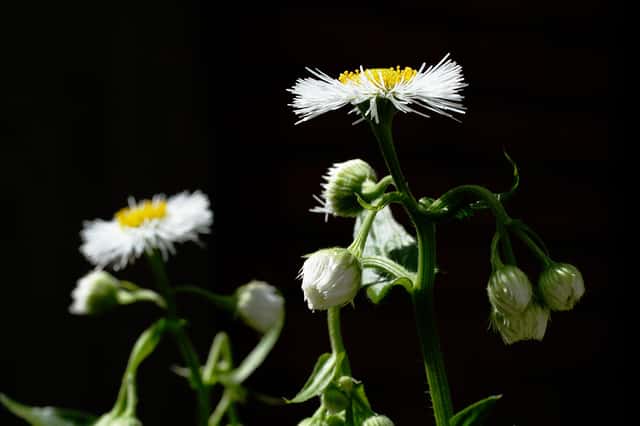
Eastern Daisy Fleabane (Erigeron annuus) is a easy-care plant from the Asteraceae family. Erigeron annuus, commonly known as Eastern Daisy Fleabane or Annual Fleabane, is a wildflower native to North America and widely naturalized across Europe and Asia. A member of the Asteraceae family, it produces abundant small daisy-like flowers with white to pale-lavender ray florets surrounding a...
Eastern Daisy Fleabane grows up to 1.5m, spread of 45cm, watering every 7 days, -40°C – 30°C, 30–50% humidity. It is not suitable for indoor environments and safe for pets.
Unlike many tropical plants, Eastern Daisy Fleabane tolerates watering mistakes. Best for beginners. Unlike many popular species, Eastern Daisy Fleabane is safe to keep around pets.
How to Care for Eastern Daisy Fleabane?
TLDR: Eastern Daisy Fleabane needs Direct sun, watering every 7 days, and temperatures between -40-30°C with 30-50% humidity.
How Often Should You Water Eastern Daisy Fleabane?
Water young plants every 7 days until established. Once established, Erigeron annuus is drought-tolerant and rarely needs supplemental watering except during prolonged dry spells. Avoid waterlogged soil, which can lead to root rot.
How Much Light Does Eastern Daisy Fleabane Need?
Provide full sun (6+ hours of direct sunlight per day). Erigeron annuus performs best in open, sunny locations such as meadows, roadsides, or garden borders. It will tolerate partial shade but may become leggy and produce fewer flowers in lower light conditions.
What Is the Best Soil for Eastern Daisy Fleabane?
Thrives in average to poor loamy or well-draining soils with a pH of 5.0–8.0. Does not require rich or amended soil — in fact, overly fertile soils can promote lush foliage at the expense of flowers. Good drainage is essential to prevent root rot.
What Pot Should You Use for Eastern Daisy Fleabane?
Not typically grown in pots. Best suited for open garden beds, meadow plantings, or wildflower patches where it can self-seed freely. If container growing is desired, use a large terracotta or unglazed clay pot with excellent drainage.
Care Schedule
Fertilize
Every 14 days
What Is Eastern Daisy Fleabane and Where Does It Come From?
Erigeron annuus, commonly known as Eastern Daisy Fleabane or Annual Fleabane, is a wildflower native to North America and widely naturalized across Europe and Asia. A member of the Asteraceae family, it produces abundant small daisy-like flowers with white to pale-lavender ray florets surrounding a bright yellow disk center. It thrives in disturbed soils, meadows, roadsides, and open woodland edges. Growing up to 150 cm tall, it is an fast-growing annual or biennial that freely self-seeds and naturalizes readily. Historically valued in herbal medicine and as a natural insect repellent, it is also a valuable nectar source for pollinators.
How Big Does Eastern Daisy Fleabane Grow?
TLDR: Eastern Daisy Fleabane can reach up to 1.5m tall with Fast growth rate.
Max height
1.5m
Spread
45cm
Growth rate
Fast
Foliage
Deciduous
Plant Uses
Ornamental
Great for decoration
Medicinal
Medicinal properties
Edible
Can be consumed
Ground Cover
Soil coverage
Medicinal Uses
- Used as a diuretic and digestive aid in traditional herbal medicine
- Leaf extracts studied for antioxidant and neuroprotective properties (caffeic acid content)
- Applied in Traditional Chinese Medicine to treat indigestion, enteritis, hepatitis, and malaria
- Used historically as an expectorant and to reduce fever
Culinary Uses
- Young leaves edible when cooked (hairy texture makes them unpleasant raw)
- Used as a potherb in some traditional cuisines
- Leaves can be added to soups or stews
Is your plant showing symptoms?
Click on the symptom to discover possible causes:
What Diseases Commonly Affect Eastern Daisy Fleabane?
TLDR: Eastern Daisy Fleabane is susceptible to 8 known diseases. Monitor regularly for early detection.
Southern Blight
Southern blight is a devastating soilborne fungal disease caused by Athelia rolfsii (formerly Sclerotium rolfsii), affecting over 500 plant species including vegetables, ornamentals, and fruit crops. The fungus survives in soil through resting structures called sclerotia that resemble mustard seeds and can remain viable for years.
Leaf Spot
Leaf spot is a common fungal disease caused by various pathogens including Alternaria, Ascochyta, Colletotrichum, Septoria, and Venturia. It primarily affects leaves, causing discolored spots that can lead to premature leaf drop if left untreated.
Rust
Rust is a common fungal disease caused by fungi in the order Pucciniales that affects a wide variety of plants. The disease gets its name from the characteristic orange, yellow, or reddish-brown pustules that appear on leaves, resembling metal rust. This obligate fungal parasite requires living plants to survive and can cause significant economic losses in agricultural crops.
Powdery Mildew
Powdery mildew is a common fungal disease caused by various fungi species including Erysiphe, Podosphaera, Oïdium, and Leveillula. It affects over 10,000 plant species worldwide. The disease thrives in warm, dry climates with high humidity and appears as a distinctive white powdery coating on plant surfaces.
Meaning & Symbolism
Erigeron annuus symbolizes pioneer spirit and resilience, thriving in disturbed and marginal ground where few other plants can establish. In folk tradition, the name "fleabane" reflects its historical use as a natural insect repellent, and the plant has long been associated with protection and purification.
Compare with similar plants
| Attribute | Difficulty | Light | Watering | Pet Safe |
|---|---|---|---|---|
| Field Maple | Easy | Bright indirect | 14d | ✓ |
| Silver Birch | Easy | Direct sun | 14d | ✓ |
| Cushion Bush | Easy | Direct sun | 14d | ✓ |
| Wild Lettuce | Medium | Direct sun | 7d | ⚠️ |
Choose & Compare
Sources & References
- Daisy Fleabane (Erigeron Annuus) Plant Care – Plantiary
- Erigeron Annuus: Growing The Annual Fleabane Daisy – Plant Care Today
- Erigeron (Common Fleabane) – NC State Extension
- Daisy Fleabane – Edible Wild Food
- Erigeron annuus – Wikipedia
- Erigeron Plant Care Guide – GardenersHQ
- Ultimate Guide to Solving Erigeron Problems – Greg App





