Araceae
Black Gold Philodendron (Philodendron melanochrysum): Complete Care Guide
Philodendron melanochrysum
Medium-care plant requiring bright indirect light, watering every 7 days (when top 3-4 cm of soil are dry), high humidity of 60-80%, and temperatures of 18-29°C. Fertilize monthly in spring and summer with diluted balanced liquid fertilizer. Repot every 2 years.
Every 7 days
Partial shade
18° - 29°C
60% - 80%
Categories
What is Black Gold Philodendron?
Black Gold Philodendron (Philodendron melanochrysum) is a medium-care plant from the Araceae family. Philodendron melanochrysum, commonly known as the Black Gold Philodendron, is a stunning tropical climbing plant native to the rainforests of Colombia. Its large, velvety, deep green leaves shimmer with golden iridescence when light catches them, earning it the evocative name "black gold." Mature le...
Black Gold Philodendron grows up to 3.6m, spread of 120cm, watering every 7 days, 18°C – 29°C, 60–80% humidity. It is suitable for indoor environments and not safe for pets.
Without precautions, ingestion can cause irritation in pets. Keep out of reach of cats and dogs. Without adequate drainage, root rot can develop within 14 days.
How to Care for Black Gold Philodendron?
TLDR: Black Gold Philodendron needs Partial shade, watering every 7 days, and temperatures between 18-29°C with 60-80% humidity.
How Often Should You Water Black Gold Philodendron?
Water approximately every 7 days, but always check the soil first — wait until the top 3-4 inches feel dry. Always ensure excellent drainage to prevent root rot, the most common problem with this species. Reduce watering frequency in autumn and winter to every 10-14 days.
How Much Light Does Black Gold Philodendron Need?
Provide bright, indirect light — near an east or west-facing window is ideal. Avoid direct sunlight, which will scorch the velvety leaves and cause brown patches or fading. In low light conditions, the characteristic golden shimmer fades and growth slows significantly.
What Is the Best Soil for Black Gold Philodendron?
Use a well-draining, airy mix: combine bark chips, perlite, and peat moss or coco coir. Avoid compacted soils. Aim for a pH between 6.0 and 7.0. Adding activated charcoal helps prevent bacterial buildup at the roots.
What Pot Should You Use for Black Gold Philodendron?
Terracotta or ceramic pot with drainage holes. Terracotta allows soil to dry more evenly, preventing waterlogging. Provide a moss pole, trellis, or totem for the plant to climb — this encourages the development of larger, more spectacular mature leaves.
Care Schedule
Fertilize
Every 30 days
Misting
Every 2 days
Repot
Every 730 days
What Is Black Gold Philodendron and Where Does It Come From?
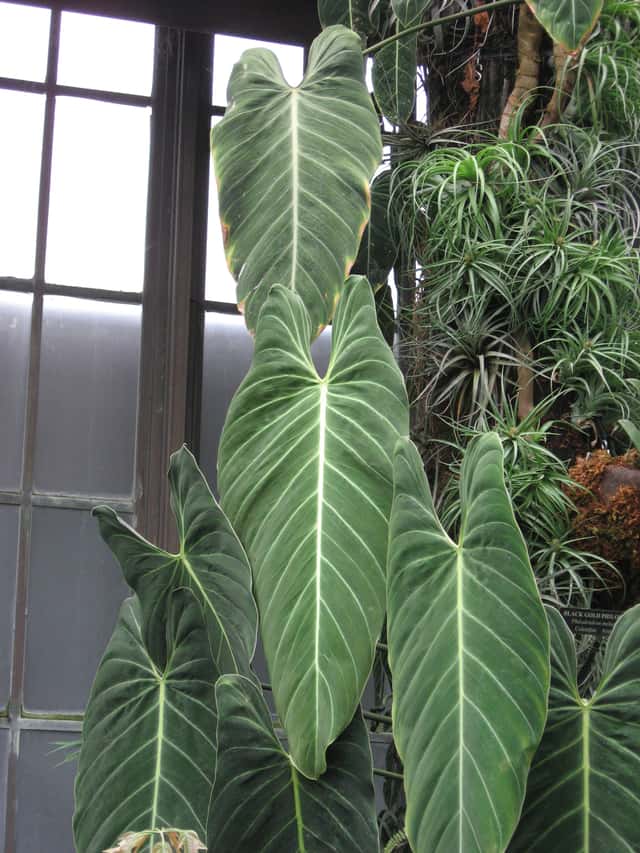
Philodendron melanochrysum, commonly known as the Black Gold Philodendron, is a stunning tropical climbing plant native to the rainforests of Colombia. Its large, velvety, deep green leaves shimmer with golden iridescence when light catches them, earning it the evocative name "black gold." Mature leaves can reach up to 60 cm in length, displaying a breathtaking combination of dark, almost black-green color with prominent golden-yellow veins. This hemiepiphytic climber is one of the most sought-after collector plants in the aroid world.
How to Propagate Black Gold Philodendron?
Stem Cutting
Spring or early summer are the best times to propagate. Use filtered or distilled water if propagating in water, and change it every 5-7 days to prevent rot.
- 1 Select a healthy stem with at least 2 nodes and 1-2 leaves
- 2 Cut just below the lower node with clean, sterilized scissors
- 3 Allow the cut end to callous for 1-2 hours
- 4 Place the cutting in water or a moist medium (perlite + peat)
- 5 Keep in a warm spot with high humidity (70%+) and indirect light
- 6 Roots develop in 3-4 weeks; transplant once they reach 3-5 cm
Materials needed:
Air Layering
Keep the sphagnum moss consistently moist throughout the process. Best for larger specimens when you want to keep the original plant intact.
- 1 Choose a healthy, mature stem with several nodes
- 2 Make a small upward cut below a node, removing a 2-3 cm strip of bark
- 3 Apply rooting hormone to the exposed area
- 4 Wrap the wound with moist sphagnum moss
- 5 Cover the moss with clear plastic wrap, securing both ends tightly
- 6 Once roots are visible through the plastic, cut below and transplant
Materials needed:
How Big Does Black Gold Philodendron Grow?
TLDR: Black Gold Philodendron can reach up to 3.6m tall with Medium growth rate.
Max height
3.6m
Spread
1.2m
Growth rate
Medium
Foliage
Evergreen
Warning: Toxic Plant
This plant can be toxic if ingested. Keep out of reach of:
Plant Uses
Ornamental
Great for decoration
Is your plant showing symptoms?
Click on the symptom to discover possible causes:
What Diseases Commonly Affect Black Gold Philodendron?
TLDR: Black Gold Philodendron is susceptible to 13 known diseases. Monitor regularly for early detection.
Root Rot
Root rot is a serious fungal disease that affects the root system of plants, causing them to decay and die. It is primarily caused by overwatering, poor drainage, or soil-borne fungi such as Pythium, Phytophthora, Rhizoctonia, and Fusarium. The disease thrives in waterlogged conditions where roots are deprived of oxygen, making them susceptible to fungal infection.
Bacterial Leaf Spot
Bacterial leaf spot is a plant disease caused by bacteria in the Xanthomonas and Pseudomonas genera that affects various ornamental and edible plants. The bacteria infect leaves through wounds or natural openings, causing characteristic lesions that can lead to premature leaf drop and plant weakening.
Phytophthora Blight
Devastating fungal disease caused by Phytophthora species (primarily P. capsici and P. infestans), famously responsible for the Irish Potato Famine in the 1840s. Affects all plant parts including roots, stems, leaves, and fruits in warm, wet conditions. The pathogen is technically an oomycete (water mold) that thrives in saturated soils and can survive in soil for 5+ years.
Spider Mites
Spider mites are tiny arachnids (less than 1/20 inch long) related to spiders and ticks that feed on plant sap. They thrive in hot, dry conditions and can cause significant damage to ornamental and vegetable plants. During severe infestations, crop losses can reach 14% or higher as these pests disrupt vital plant processes including photosynthesis, carbon dioxide absorption, and transpiration.
Meaning & Symbolism
Symbolizes exotic elegance, tropical luxury, and collector prestige. In plant culture, the Black Gold Philodendron represents the beauty of biodiversity and the allure of rare, hard-to-find botanical specimens from South American rainforests.
Fun Facts
The name "melanochrysum" comes from Greek: "melas" (black) + "chrysos" (gold) — perfectly describing its black-green leaves with golden shimmer.
In its native Colombian rainforest, leaves can grow up to 1 meter long as the plant climbs tall trees toward the forest canopy.
Juvenile plants have reddish-bronze leaves that gradually transform into the iconic dark velvet appearance as they mature.
It was first formally described by botanists Linden and André in the 19th century after botanical expeditions to Colombia.
Frequently asked questions
How often should I water my Black Gold Philodendron?
Is Black Gold Philodendron toxic to pets?
Why are my Black Gold Philodendron leaves not getting big?
What humidity does Black Gold Philodendron need?
Why are the leaves of my Black Gold Philodendron turning yellow?
Compare with similar plants
| Attribute | Difficulty | Light | Watering | Pet Safe |
|---|---|---|---|---|
| Azalea | Medium | Partial shade | 3d | ⚠️ |
| Wild Lettuce | Medium | Direct sun | 7d | ⚠️ |
| Cape Primrose | Medium | Partial shade | 7d | ✓ |
| Honey Locust | Medium | Direct sun | 14d | ✓ |
Choose & Compare
Sources & References
- Plantophiles - Philodendron Melanochrysum Care
- Sprouts and Stems - Easy Philodendron Melanochrysum Care
- Plantly - Philodendron Melanochrysum Plant Care Guide
- Homes Pursuit - Philodendron melanochrysum Care and Propagation
- Gardenia.net - Philodendron melanochrysum Plant Care 101
- Bonjour Green - How to Grow & Care for Philodendron Melanochrysum