Bromeliaceae
How to Grow and Care for Lutheria (Flaming Sword Bromeliad)
Lutheria
Lutheria thrives in bright indirect light and high humidity. Keep the central cup filled with fresh water and refresh it every 7–10 days. Use a well-draining bromeliad or orchid mix. Avoid overwatering the soil. Fertilize monthly during the growing season with a diluted bromeliad fertilizer.
Every 10 days
Partial shade
18° - 28°C
60% - 80%
Categories
What is Flaming Sword Bromeliad?
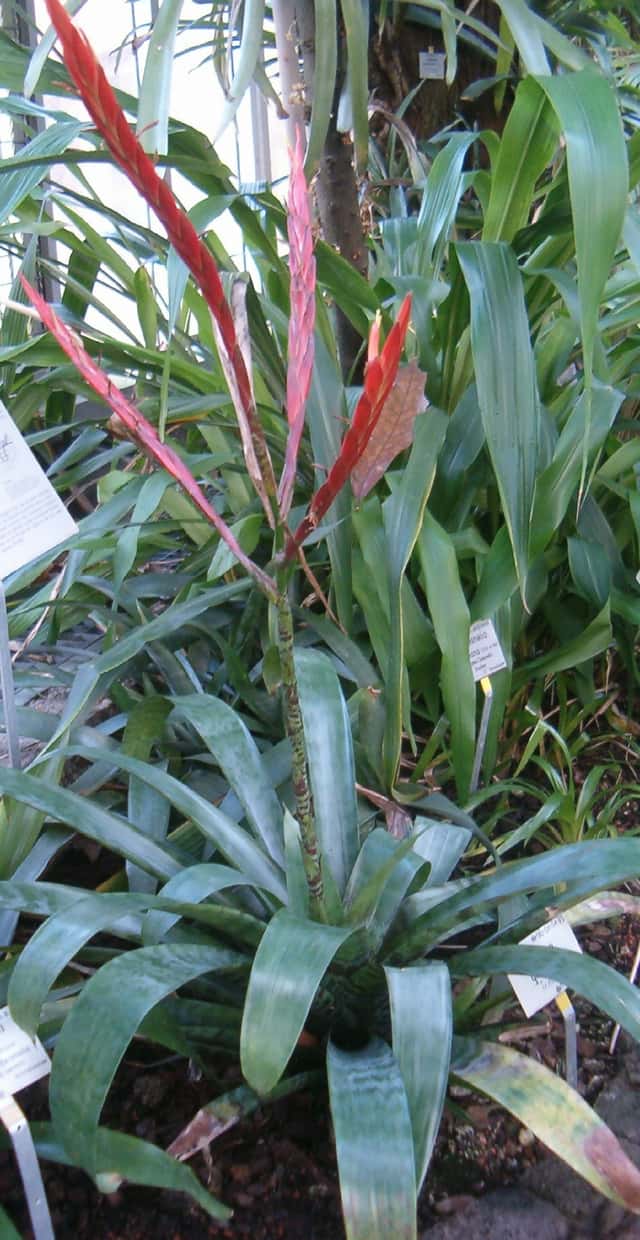
Flaming Sword Bromeliad (Lutheria) is a medium-care plant from the Bromeliaceae family. Lutheria is a genus of striking epiphytic bromeliads native to the tropical forests of Venezuela and Trinidad. Best known for its dramatic sword-shaped flower bract that blazes red, orange, and yellow, Lutheria splendens is the most popular species grown as an ornamental houseplant. As an epiphyte,...
Flaming Sword Bromeliad grows up to 90cm, spread of 60cm, watering every 10 days, 18°C – 28°C, 60–80% humidity. It is suitable for indoor environments and safe for pets.
Unlike many popular species, Flaming Sword Bromeliad is safe to keep around pets. Without adequate drainage, root rot can develop within 20 days.
How to Care for Flaming Sword Bromeliad?
TLDR: Flaming Sword Bromeliad needs Partial shade, watering every 10 days, and temperatures between 18-28°C with 60-80% humidity.
How Often Should You Water Flaming Sword Bromeliad?
Fill the central rosette cup with water and refresh every 7–10 days. Water the potting mix sparingly — only when the top 2–3 cm are dry. Never let water stagnate in the cup for more than 10 days as it causes bacterial rot.
How Much Light Does Flaming Sword Bromeliad Need?
Place in bright indirect light, ideally within 60–90 cm of an east- or north-facing window. Avoid direct afternoon sun, which scorches the banded foliage. Low light causes slow growth and pale leaf coloration.
What Is the Best Soil for Flaming Sword Bromeliad?
Use a commercial bromeliad or orchid mix for excellent drainage and aeration. A blend of peat moss, perlite, and coarse bark works well. Avoid heavy potting soil that retains too much moisture around the roots.
What Pot Should You Use for Flaming Sword Bromeliad?
Use a shallow terracotta or plastic pot with drainage holes. Terracotta helps prevent overwatering by absorbing excess moisture. Ensure the pot is only slightly larger than the root ball — bromeliads prefer snug containers.
Care Schedule
Fertilize
Every 30 days
Misting
Every 7 days
Repot
Every 365 days
What Is Flaming Sword Bromeliad and Where Does It Come From?
Lutheria is a genus of striking epiphytic bromeliads native to the tropical forests of Venezuela and Trinidad. Best known for its dramatic sword-shaped flower bract that blazes red, orange, and yellow, Lutheria splendens is the most popular species grown as an ornamental houseplant. As an epiphyte, it grows anchored to trees rather than soil, absorbing water and nutrients through its central cup and leaf scales.
How to Propagate Flaming Sword Bromeliad?
Pup Division
The mother plant dies after flowering but produces 2–5 pups. Each pup will eventually flower once it reaches maturity, typically after 1–3 years.
- 1 Wait until pups (offshoots) are at least one-third the size of the mother plant
- 2 Using a clean, sharp knife, cut the pup away from the base of the mother plant
- 3 Allow the cut end to callous for 1–2 hours
- 4 Plant the pup in a small pot with well-draining bromeliad mix
- 5 Keep warm and humid until established
Materials needed:
How Big Does Flaming Sword Bromeliad Grow?
TLDR: Flaming Sword Bromeliad can reach up to 90cm tall with Slow growth rate.
Max height
90cm
Spread
60cm
Growth rate
Slow
Foliage
Evergreen
Plant Uses
Ornamental
Great for decoration
Is your plant showing symptoms?
Click on the symptom to discover possible causes:
What Diseases Commonly Affect Flaming Sword Bromeliad?
TLDR: Flaming Sword Bromeliad is susceptible to 9 known diseases. Monitor regularly for early detection.
Root Rot
Root rot is a serious fungal disease that affects the root system of plants, causing them to decay and die. It is primarily caused by overwatering, poor drainage, or soil-borne fungi such as Pythium, Phytophthora, Rhizoctonia, and Fusarium. The disease thrives in waterlogged conditions where roots are deprived of oxygen, making them susceptible to fungal infection.
Crown Rot
Crown rot is a serious fungal disease that attacks the crown (base) of the plant where the stem meets the soil. It is caused by various fungal pathogens including Phytophthora, Fusarium, and Rhizoctonia. The disease thrives in waterlogged conditions and can quickly spread to kill the entire plant if not addressed promptly.
Mealybugs
Mealybugs are small, soft-bodied insects covered with a white, waxy, cottony material. They are common pests of houseplants and outdoor plants in mild climates. These sap-sucking insects feed on plant tissue, causing damage, stunted growth, and can lead to plant death if left untreated. They produce sticky honeydew which attracts sooty mold.
Scale Insects
Scale insects are small sap-sucking pests that appear as brown, shell-like bumps on plant stems and leaves. There are over 25 species, divided into armored (hard) and unarmored (soft) scales. They feed by piercing plant tissue and extracting sap, which weakens the plant and can lead to yellowing, stunted growth, and even death if left untreated. They also excrete honeydew, which attracts ants and promotes sooty mold growth.
Meaning & Symbolism
In South American tropical cultures, bromeliads symbolize exotic beauty, resilience, and the spirit of the rainforest. Lutheria's fiery bracts are associated with passion and vitality.
Fun Facts
Lutheria blooms only once in its lifetime — after flowering, the mother plant dies but leaves behind pups that carry on the next generation.
Lutheria absorbs water through its central cup and specialized leaf structures called trichomes, not primarily through its roots.
The 'Flaming Sword' name refers to the dramatic sword-shaped red bract that can last for several months.
Lutheria splendens was previously classified as Vriesea splendens before molecular phylogenetics reorganized the Bromeliaceae family.
Frequently asked questions
How often should I water Lutheria?
Is Lutheria toxic to pets?
Why is my Lutheria not blooming?
What do I do after Lutheria flowers?
Can Lutheria grow in low light?
Compare with similar plants
| Attribute | Difficulty | Light | Watering | Pet Safe |
|---|---|---|---|---|
| Dark Fieldcap | Medium | Low light | 2d | ⚠️ |
| Azalea | Medium | Partial shade | 3d | ⚠️ |
| Bougainvillea | Medium | Direct sun | 7d | ⚠️ |
| Wild Lettuce | Medium | Direct sun | 7d | ⚠️ |



