Primulaceae
Coral Berry: Medicinal Uses & Care Tips
Ardisia crenata
Ardisia crenata is a relatively easy-to-maintain houseplant: it thrives in bright but filtered light, requires regular watering to keep the soil consistently moist without waterlogging, prefers medium-to-high humidity, and temperatures between 15 and 26°C (59-79°F). It grows slowly and does not require frequent pruning; a light pinching after flowering helps maintain a compact shape.
Every 7 days
Partial shade
15° - 26°C
50% - 70%
Categories
What is Coral Berry?
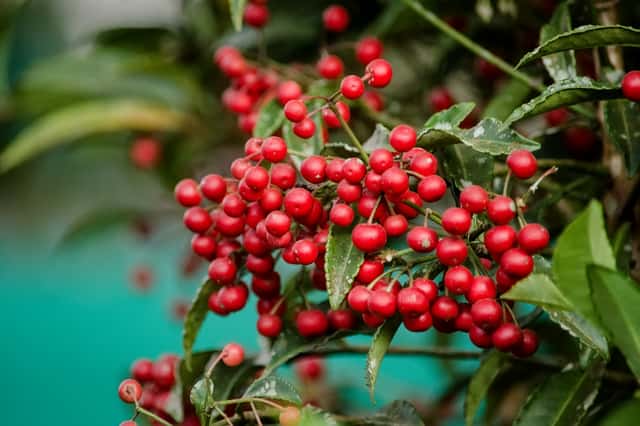
Coral Berry (Ardisia crenata) is a easy-care plant from the Primulaceae family. An evergreen shrub native to East Asia (China, Japan, Taiwan), Ardisia crenata is primarily cultivated for its striking coral-red berries, which remain decorative on the plant for several months, often through the winter. The leaves are glossy, leathery, and have wavy-crenate margins; in summer, sma...
Coral Berry grows up to 90cm, spread of 50cm, watering every 7 days, 15°C – 26°C, 50–70% humidity. It is suitable for indoor environments and not safe for pets.
Unlike many tropical plants, Coral Berry tolerates watering mistakes. Best for beginners. Without precautions, ingestion can cause irritation in pets. Keep out of reach of cats and dogs. Without adequate drainage, root rot can develop within 14 days.
How to Care for Coral Berry?
TLDR: Coral Berry needs Partial shade, watering every 7 days, and temperatures between 15-26°C with 50-70% humidity.
How Often Should You Water Coral Berry?
Water when the top 2-3 cm (1 inch) of soil feels dry, keeping the substrate uniformly moist during spring and summer; reduce watering by about a third in autumn and winter. Always discard excess water from the saucer to prevent root rot.
How Much Light Does Coral Berry Need?
Prefers a very bright location but with filtered or indirect sunlight; an east- or west-facing window is ideal. Avoid direct sun during the hottest hours of the day, as it can scorch the leaves.
What Is the Best Soil for Coral Berry?
Use a well-draining and slightly acidic soil (pH 5.5-6.5), such as a mix of universal potting soil, leaf mold (or peat), and silica sand or perlite in equal parts to promote drainage and prevent waterlogging.
What Pot Should You Use for Coral Berry?
Prefers terracotta pots with plenty of drainage holes, which promote root aeration and reduce the risk of waterlogging. Given its slow growth, a very large pot is not necessary: repotting every 2-3 years into a slightly larger container is generally sufficient.
Care Schedule
Fertilize
Every 30 days
Misting
Every 7 days
Rotate
Every 14 days
Repot
Every 1095 days
What Is Coral Berry and Where Does It Come From?
An evergreen shrub native to East Asia (China, Japan, Taiwan), Ardisia crenata is primarily cultivated for its striking coral-red berries, which remain decorative on the plant for several months, often through the winter. The leaves are glossy, leathery, and have wavy-crenate margins; in summer, small white or pink star-shaped flowers appear in drooping clusters, followed by the characteristic berries. It is widely popular as a Christmas gift in Europe, but caution is advised: all parts of the plant, particularly the berries, are toxic if ingested by humans or pets and can cause gastrointestinal distress.
How Big Does Coral Berry Grow?
TLDR: Coral Berry can reach up to 90cm tall with Slow growth rate.
Max height
90cm
Spread
50cm
Growth rate
Slow
Foliage
Evergreen
Warning: Toxic Plant
This plant can be toxic if ingested. Keep out of reach of:
Plant Uses
Ornamental
Great for decoration
Medicinal
Medicinal properties
Medicinal Uses
- In traditional Chinese medicine, the dried root (known as 'zhu sha gen') is used in preparations for sore throats and inflammation; however, this is a traditional ethnobotanical use, not a home remedy: the entire plant is toxic if ingested and should not be used without expert supervision.
Is your plant showing symptoms?
Click on the symptom to discover possible causes:
What Diseases Commonly Affect Coral Berry?
TLDR: Coral Berry is susceptible to 12 known diseases. Monitor regularly for early detection.
Root Rot
Root rot is a serious fungal disease that affects the root system of plants, causing them to decay and die. It is primarily caused by overwatering, poor drainage, or soil-borne fungi such as Pythium, Phytophthora, Rhizoctonia, and Fusarium. The disease thrives in waterlogged conditions where roots are deprived of oxygen, making them susceptible to fungal infection.
Overwatering
Overwatering occurs when plants receive too much water, depriving roots of oxygen and causing root rot. This environmental stress is one of the most common causes of houseplant death, as waterlogged soil prevents roots from breathing and functioning properly.
Crown Rot
Crown rot is a serious fungal disease that attacks the crown (base) of the plant where the stem meets the soil. It is caused by various fungal pathogens including Phytophthora, Fusarium, and Rhizoctonia. The disease thrives in waterlogged conditions and can quickly spread to kill the entire plant if not addressed promptly.
Powdery Mildew
Powdery mildew is a common fungal disease caused by various fungi species including Erysiphe, Podosphaera, Oïdium, and Leveillula. It affects over 10,000 plant species worldwide. The disease thrives in warm, dry climates with high humidity and appears as a distinctive white powdery coating on plant surfaces.
Meaning & Symbolism
In the language of flowers, Ardisia crenata symbolizes good luck and prosperity. In Japan, where it is called 'manryo' (literally 'ten thousand ryo,' an ancient coin), it is traditionally exchanged and used as a decoration during the New Year to wish for wealth. In the West, it has become a typical Christmas plant due to its red berries resembling holiday decorations.
Compare with similar plants
| Attribute | Difficulty | Light | Watering | Pet Safe |
|---|---|---|---|---|
| Field Maple | Easy | Bright indirect | 14d | ✓ |
| Silver Birch | Easy | Direct sun | 14d | ✓ |
| Cushion Bush | Easy | Direct sun | 14d | ✓ |
| Peruvian peppertree | Easy | Direct sun | 14d | ⚠️ |
Choose & Compare
Sources & References
- An ULTIMATE Guide to Coral Berries (Ardisia Crenata) - UK Houseplants
- Coral Berry (Ardisia crenata): Complete Care Guide - Healthy Houseplants
- Ardisia crenata, coltivazione, cura, parassiti
- Come coltivare e curare l'ardisia crenata? — idealista/news
- Ethnobotanical study of Zhuang medicinal herbs of Ardisia - Journal of Pharmacy and Pharmacology
- Ardisia crenata - Wikipedia