Myrtaceae
Stalked Jabuticaba (Plinia trunciflora): Complete Growing Guide
Plinia trunciflora
Plant in full sun in fertile, well-drained, slightly acidic soil. Water weekly and fertilize every 3 months. Slow-growing but extremely long-lived and productive once established.
Every 7 days
Bright indirect
8° - 35°C
60% - 85%
Categories
What is Stalked Jabuticaba?
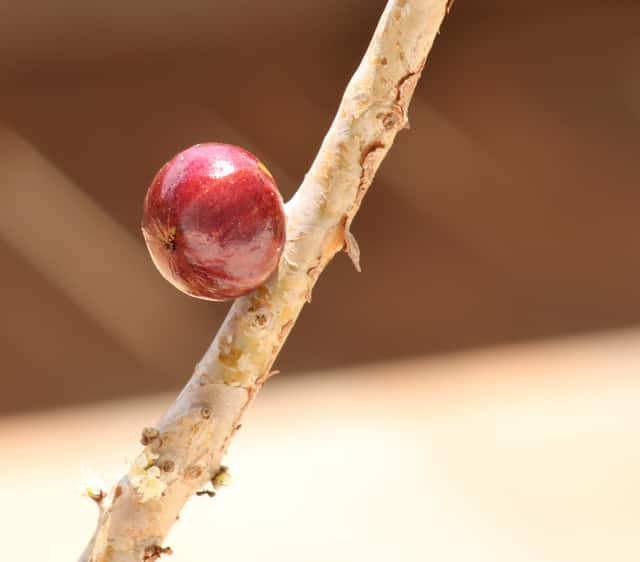
Stalked Jabuticaba (Plinia trunciflora) is a medium-care plant from the Myrtaceae family. Stalked Jabuticaba (Plinia trunciflora) is a native Brazilian fruit tree from the Atlantic Forest, belonging to the Myrtaceae family. It is distinguished by its glossy black fruits hanging on long stalks (peduncles) directly from the trunk and branches — a phenomenon known as cauliflory. The fruits...
Stalked Jabuticaba grows up to 15.0m, spread of 600cm, watering every 7 days, 8°C – 35°C, 60–85% humidity. It is not suitable for indoor environments and safe for pets.
Unlike many popular species, Stalked Jabuticaba is safe to keep around pets.
How to Care for Stalked Jabuticaba?
TLDR: Stalked Jabuticaba needs Bright indirect, watering every 7 days, and temperatures between 8-35°C with 60-85% humidity.
How Often Should You Water Stalked Jabuticaba?
Water weekly, especially during dry periods. The species is moderately drought-tolerant, but regular watering improves fruit production. Avoid waterlogged soil.
How Much Light Does Stalked Jabuticaba Need?
Prefers full sun for best fruit production. Tolerates partial shade, but fruiting is reduced. Plant in a location with at least 6 hours of direct sunlight per day.
What Is the Best Soil for Stalked Jabuticaba?
Plant in loamy to clay-loam soil, fertile, deep, and well-drained with pH between 4.8 and 6.0. Enrich with organic matter at planting and annually.
What Pot Should You Use for Stalked Jabuticaba?
Not recommended for containers due to its large size. For ornamental use in smaller spaces, young plants can be kept temporarily in large containers (minimum 100 liters).
Care Schedule
Fertilize
Every 90 days
What Is Stalked Jabuticaba and Where Does It Come From?
Stalked Jabuticaba (Plinia trunciflora) is a native Brazilian fruit tree from the Atlantic Forest, belonging to the Myrtaceae family. It is distinguished by its glossy black fruits hanging on long stalks (peduncles) directly from the trunk and branches — a phenomenon known as cauliflory. The fruits have a sweet flavor reminiscent of coffee. The tree can reach up to 15 meters in its natural habitat, with a globose canopy and pendant branches.
How to Propagate Stalked Jabuticaba?
Seeds
Seeds must be planted within 10 days of collection as they lose viability rapidly. Do not let them dry out.
- 1 Collect fresh seeds from ripe fruits
- 2 Plant immediately as seeds are recalcitrant (lose viability quickly)
- 3 Use moist, well-drained substrate
- 4 Keep in a shaded, humid location
- 5 Expect germination in 35-60 days
Materials needed:
Air Layering
Keep the moss consistently moist. Best performed in spring during active growth.
- 1 Select a healthy branch 1-2 cm in diameter
- 2 Make a 3 cm ring by removing the bark
- 3 Apply rooting hormone to the exposed area
- 4 Cover with moist sphagnum moss and clear plastic
- 5 Wait 60-90 days for roots to develop
- 6 Cut below the rooted section and transplant
Materials needed:
Stem Cutting
Cuttings have a low success rate. Air layering is the preferred vegetative propagation method.
- 1 Take semi-hardwood cuttings 15-20 cm long
- 2 Remove leaves from the lower third
- 3 Apply rooting hormone powder
- 4 Plant in moist, well-drained substrate
- 5 Keep in a humid environment with partial shade
Materials needed:
How Big Does Stalked Jabuticaba Grow?
TLDR: Stalked Jabuticaba can reach up to 15.0m tall with Slow growth rate.
Max height
15.0m
Spread
6.0m
Growth rate
Slow
Foliage
Evergreen
Plant Uses
Ornamental
Great for decoration
Edible
Can be consumed
Culinary Uses
- Fresh fruit consumption
- Jabuticaba jam and preserves
- Artisan jabuticaba liqueur
- Jabuticaba wine
- Ice cream and desserts
- Juices and beverages
Is your plant showing symptoms?
Click on the symptom to discover possible causes:
What Diseases Commonly Affect Stalked Jabuticaba?
TLDR: Stalked Jabuticaba is susceptible to 9 known diseases. Monitor regularly for early detection.
Rust
Rust is a common fungal disease caused by fungi in the order Pucciniales that affects a wide variety of plants. The disease gets its name from the characteristic orange, yellow, or reddish-brown pustules that appear on leaves, resembling metal rust. This obligate fungal parasite requires living plants to survive and can cause significant economic losses in agricultural crops.
Root Rot
Root rot is a serious fungal disease that affects the root system of plants, causing them to decay and die. It is primarily caused by overwatering, poor drainage, or soil-borne fungi such as Pythium, Phytophthora, Rhizoctonia, and Fusarium. The disease thrives in waterlogged conditions where roots are deprived of oxygen, making them susceptible to fungal infection.
Anthracnose
Anthracnose is a fungal disease caused by fungi in the genus Colletotrichum that affects many plants, including vegetables, fruits, and trees. The disease thrives in cool, wet conditions, causing dark, sunken lesions on leaves, stems, flowers, and fruits.
Gray Mold (Botrytis Blight)
Gray mold, caused by the fungus Botrytis cinerea, is a widespread necrotrophic pathogen affecting over 1,400 plant species. It thrives in cool, humid conditions and attacks weakened or aging plant tissues, causing soft rot and characteristic gray fuzzy growth.
Meaning & Symbolism
Symbolizes abundance and prosperity in Brazilian culture, being one of the most cherished native fruits of Brazil.
Fun Facts
Fruits grow directly from the trunk and branches — a rare phenomenon called cauliflory
The fruit flavor resembles coffee, earning it the nickname coffee jabuticaba
Seeds are recalcitrant and lose viability in just 10 days if not planted
The tree can live and produce fruit for over 100 years when well cared for
Frequently asked questions
How long does Stalked Jabuticaba take to bear fruit?
Can Stalked Jabuticaba be grown in a pot?
How often should I water Stalked Jabuticaba?
What are the main diseases of Stalked Jabuticaba?
When does Stalked Jabuticaba fruit?
Compare with similar plants
| Attribute | Difficulty | Light | Watering | Pet Safe |
|---|---|---|---|---|
| Dark Fieldcap | Medium | Low light | 2d | ⚠️ |
| Azalea | Medium | Partial shade | 3d | ⚠️ |
| Bougainvillea | Medium | Direct sun | 7d | ⚠️ |
| Wild Lettuce | Medium | Direct sun | 7d | ⚠️ |



