Asteraceae
Hoary Ragwort (Jacobaea erucifolia)
Jacobaea erucifolia
Hoary Ragwort is an outdoor wildflower, not a houseplant. It needs almost no care once established: full sun, ordinary or chalky soil, and only occasional watering during long dry spells. Handle with gloves, as the foliage is toxic if ingested or absorbed through skin, and keep it out of hay fields and grazing pasture.
Every 14 days
Direct sun
° - °C
% - %
Categories
What is Hoary Ragwort?
Hoary Ragwort (Jacobaea erucifolia) is a easy-care plant from the Asteraceae family. Hoary Ragwort (Jacobaea erucifolia, syn. Senecio erucifolius) is a rhizomatous perennial herb in the daisy family (Asteraceae), native to Europe and western Asia. It forms upright, branching stems up to 60cm tall covered in fine grey-white down that gives the plant its "hoary" look, with deeply pinn...
Hoary Ragwort grows up to 60cm, spread of 60cm, watering every 14 days. It is not suitable for indoor environments and not safe for pets.
Unlike many tropical plants, Hoary Ragwort tolerates watering mistakes. Best for beginners. Without precautions, ingestion can cause irritation in pets. Keep out of reach of cats and dogs.
How to Care for Hoary Ragwort?
TLDR: Hoary Ragwort needs Direct sun, watering every 14 days, and temperatures between 15-30°C with 40-70% humidity.
How Often Should You Water Hoary Ragwort?
Water only during prolonged drought after the first growing season; established plants tolerate dry summer soil well and resent being waterlogged.
How Much Light Does Hoary Ragwort Need?
Grow in full sun; the plant does not tolerate shade and flowers poorly in low light.
What Is the Best Soil for Hoary Ragwort?
Prefers neutral to alkaline, chalky or clay-rich soils that stay moist in winter but dry out in summer; tolerates poor and disturbed ground.
What Pot Should You Use for Hoary Ragwort?
Not typically pot-grown; if grown in a container for a wildflower garden, use a wide, well-draining terracotta or ground-level planter.
What Is Hoary Ragwort and Where Does It Come From?
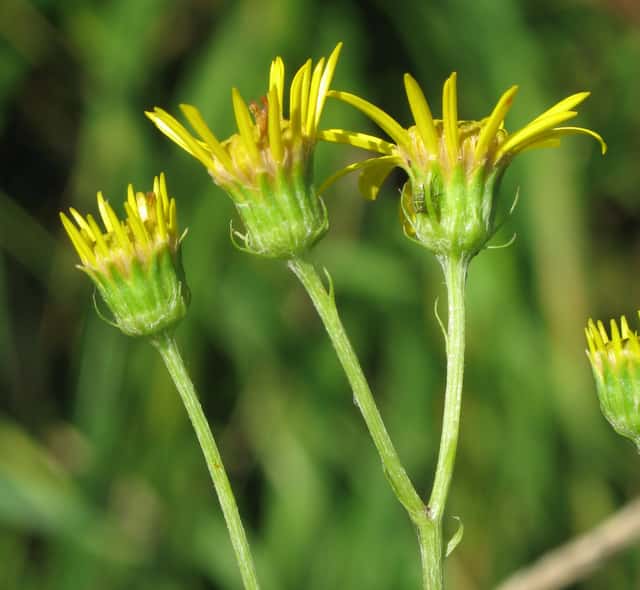
Hoary Ragwort (Jacobaea erucifolia, syn. Senecio erucifolius) is a rhizomatous perennial herb in the daisy family (Asteraceae), native to Europe and western Asia. It forms upright, branching stems up to 60cm tall covered in fine grey-white down that gives the plant its "hoary" look, with deeply pinnate, lobed leaves. From July to August it bears flat-topped clusters of small, bright-yellow daisy-like flower heads. It thrives in damp, calcareous grassland, field margins, roadsides and waste ground, spreading readily by seed and creeping rhizomes. Every part of the plant contains pyrrolizidine alkaloids that are toxic to humans and animals, especially livestock.
How to Propagate Hoary Ragwort?
Seed sowing
Seeds need light to germinate, so press onto the soil surface rather than burying them; the plant self-seeds freely once established.
- 1 Collect ripe seed heads in late summer once the fluffy seed pappus appears
- 2 Sow directly onto disturbed, bare soil in a sunny spot in spring
- 3 Keep soil lightly moist until seedlings establish
- 4 Thin seedlings once true leaves appear
Materials needed:
Rhizome division
Wear gloves throughout, as sap and foliage contain liver-toxic alkaloids.
- 1 Lift an established clump in early spring
- 2 Split the rhizome into sections with at least one shoot bud each
- 3 Replant divisions immediately at the same depth
- 4 Water in well and keep moist until new growth appears
Materials needed:
How Big Does Hoary Ragwort Grow?
TLDR: Hoary Ragwort can reach up to 60cm tall with Medium growth rate.
Max height
60cm
Spread
60cm
Growth rate
Medium
Foliage
Deciduous
Warning: Toxic Plant
This plant can be toxic if ingested. Keep out of reach of:
Is your plant showing symptoms?
Click on the symptom to discover possible causes:
What Diseases Commonly Affect Hoary Ragwort?
TLDR: Hoary Ragwort is susceptible to 4 known diseases. Monitor regularly for early detection.
Caterpillars
Caterpillars are the larval stage of moths and butterflies that feed voraciously on plant foliage, stems, flowers, and fruits. Common species include cabbage loopers, tomato hornworms, armyworms, and cutworms. These pests can cause extensive damage by consuming large amounts of plant tissue in a short time. They vary in size from small (1/4 inch) to large (5 inches), with colors ranging from green to brown, often featuring stripes or spots. Caterpillars are highly mobile and can quickly spread throughout gardens, making them one of the most destructive common pests.
Rust
Rust is a common fungal disease caused by fungi in the order Pucciniales that affects a wide variety of plants. The disease gets its name from the characteristic orange, yellow, or reddish-brown pustules that appear on leaves, resembling metal rust. This obligate fungal parasite requires living plants to survive and can cause significant economic losses in agricultural crops.
Flea beetle damage
Flea beetles are small, jumping insects that feed on the leaves of many vegetable crops. They chew numerous small, circular holes, creating a characteristic 'shothole' appearance. While established plants can often tolerate the damage, young seedlings are highly susceptible and can be stunted or killed if the infestation is severe.
Powdery Mildew
Powdery mildew is a common fungal disease caused by various fungi species including Erysiphe, Podosphaera, Oïdium, and Leveillula. It affects over 10,000 plant species worldwide. The disease thrives in warm, dry climates with high humidity and appears as a distinctive white powdery coating on plant surfaces.
Meaning & Symbolism
Long linked in British and Irish folklore to fairies, said to ride ragwort stems as steeds at night; its ability to colonize poor soils has also made it a folk emblem of resilience.
Fun Facts
Its grey, downy leaves are the origin of the common name "hoary".
Despite being toxic to livestock, its flowers are an important nectar source for bees and butterflies.
British folklore linked ragworts to fairies, said to use the stems as magical steeds.
Frequently asked questions
Is Hoary Ragwort toxic to pets?
Does Hoary Ragwort need watering?
Where does Hoary Ragwort grow best?
How is Hoary Ragwort different from Common Ragwort?
Compare with similar plants
| Attribute | Difficulty | Light | Watering | Pet Safe |
|---|---|---|---|---|
| Field Maple | Easy | Bright indirect | 14d | ✓ |
| Silver Birch | Easy | Direct sun | 14d | ✓ |
| Cushion Bush | Easy | Direct sun | 14d | ✓ |
| Wild Lettuce | Medium | Direct sun | 7d | ⚠️ |
Choose & Compare
Sources & References
- Jacobaea erucifolia | hoary ragwort - RHS
- Senecio erucifolius | hoary ragwort - RHS
- Senecio erucifolius - Plants For A Future
- Jacobaea erucifolia - BSBI
- British Wild Plant: Senecio erucifolius Hoary Ragwort
- Grazing Ecology of Sheep... Common Ragwort Part 2: Animal Health
- Pyrrolizidine Alkaloidosis in Animals - Merck Veterinary Manual





