Urticaceae
Stinging Nettle: Edible Plant
Urtica dioica
Stinging nettle is extremely hardy and easy to grow. It thrives best in full sun to partial shade in nutrient-rich, moist soil. Water regularly to keep the soil evenly moist, but avoid waterlogging. Fertilize monthly with a nitrogen-rich fertilizer. Prune the plant back 1-2 times per season to encourage fresh leaf development and prevent uncontrolled spreading. Always wear gloves when handling.
Every 7 days
Bright indirect
-20° - 29°C
40% - 80%
Categories
What is Stinging Nettle?
Stinging Nettle (Urtica dioica) is a easy-care plant from the Urticaceae family. Stinging nettle (Urtica dioica) is a perennial herb that grows wild throughout Europe, Asia, and North America. It can reach heights of up to 180 cm and spreads vigorously via rhizomes. The plant is easily recognizable by its ovate leaves with serrated margins and the numerous stinging hairs coverin...
Stinging Nettle grows up to 1.8m, spread of 100cm, watering every 7 days, -20°C – 29°C, 40–80% humidity. It is not suitable for indoor environments and safe for pets.
Unlike many tropical plants, Stinging Nettle tolerates watering mistakes. Best for beginners. Unlike many popular species, Stinging Nettle is safe to keep around pets.
How to Care for Stinging Nettle?
TLDR: Stinging Nettle needs Bright indirect, watering every 7 days, and temperatures between -20-29°C with 40-80% humidity.
How Often Should You Water Stinging Nettle?
Water approximately once a week. Stinging nettle prefers evenly moist soil and does not thrive in dried-out conditions. Avoid letting the root zone sit in stagnant water, as this can lead to root rot.
How Much Light Does Stinging Nettle Need?
Place in full sun for the best growth and seed production. The plant tolerates partial shade, but leaf quality and overall growth are best with 6+ hours of direct sunlight daily.
What Is the Best Soil for Stinging Nettle?
Use nutrient-rich, well-drained soil with a high organic matter content. A loamy soil with a pH of 5.5–7.5 is ideal. Avoid sandy soil that dries out too quickly. Add compost or well-rotted manure to improve soil fertility.
What Pot Should You Use for Stinging Nettle?
Best grown directly in the garden, as the plant spreads vigorously via rhizomes. If growing in a container, use a large, deep pot (at least 30 cm deep) to restrict its spread. Ensure good drainage.
Care Schedule
Fertilize
Every 30 days
What Is Stinging Nettle and Where Does It Come From?
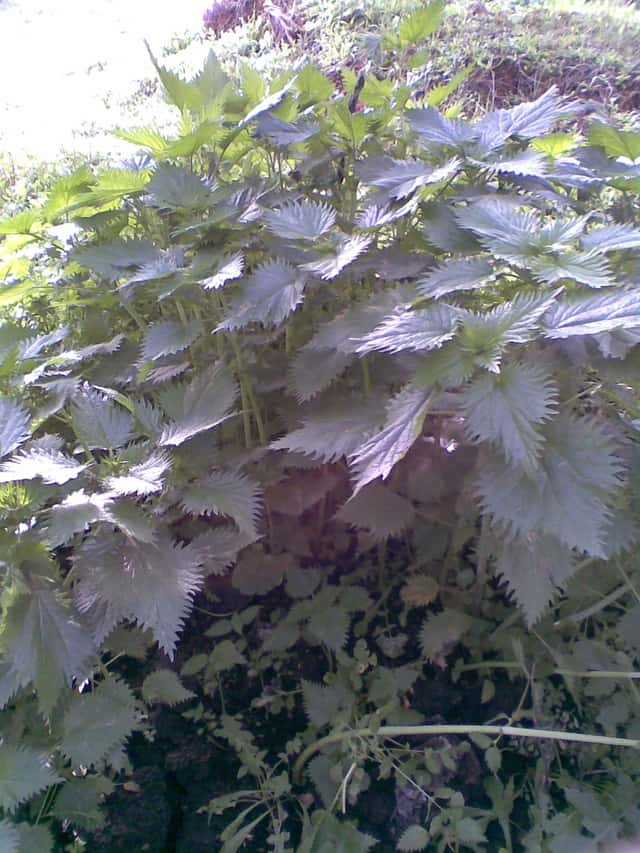
Stinging nettle (Urtica dioica) is a perennial herb that grows wild throughout Europe, Asia, and North America. It can reach heights of up to 180 cm and spreads vigorously via rhizomes. The plant is easily recognizable by its ovate leaves with serrated margins and the numerous stinging hairs covering the stems and foliage. These hairs contain formic acid and histamine, which cause a brief burning sensation upon contact. The flowers are small, greenish to whitish, and appear in dense clusters from spring to late summer. Stinging nettle is one of nature's most versatile plants, with documented medicinal, culinary, and textile applications.
How to Propagate Stinging Nettle?
Seed
Division
Cuttings
How Big Does Stinging Nettle Grow?
TLDR: Stinging Nettle can reach up to 1.8m tall with Fast growth rate.
Max height
1.8m
Spread
1.0m
Growth rate
Fast
Foliage
Deciduous
Warning: Toxic Plant
This plant can be toxic if ingested. Keep out of reach of:
Plant Uses
Medicinal
Medicinal properties
Edible
Can be consumed
Ornamental
Great for decoration
Medicinal Uses
- Anti-rheumatic: relieves joint pain from gout and arthritis
- Diuretic: promotes kidney function and urine production
- Helps with benign prostatic hyperplasia (BPH)
- Used for eczema and allergic rhinitis
- Hemostatic properties for nosebleeds and heavy menstruation
- Hypoglycemic effect: can help stabilize blood sugar levels
Culinary Uses
- Young leaves are prepared like spinach or added to soups and stews
- Used in nettle pesto and green pasta
- Dried leaves are used for herbal tea
- Leaves can be used in brewing (nettle beer)
- Harvest only the topmost young leaves in spring before flowering
Is your plant showing symptoms?
Click on the symptom to discover possible causes:
What Diseases Commonly Affect Stinging Nettle?
TLDR: Stinging Nettle is susceptible to 9 known diseases. Monitor regularly for early detection.
Aphids
Aphids are small, soft-bodied, pear-shaped insects (1/16 to 1/8 inch long) that feed by sucking nutrient-rich sap from plants. They reproduce rapidly and can quickly weaken plants, causing distorted growth and transmitting plant viruses. Aphids come in various colors including green, black, red, yellow, brown, and gray. They secrete honeydew, a sticky substance that attracts ants and encourages sooty mold growth.
Powdery Mildew
Powdery mildew is a common fungal disease caused by various fungi species including Erysiphe, Podosphaera, Oïdium, and Leveillula. It affects over 10,000 plant species worldwide. The disease thrives in warm, dry climates with high humidity and appears as a distinctive white powdery coating on plant surfaces.
Root Rot
Root rot is a serious fungal disease that affects the root system of plants, causing them to decay and die. It is primarily caused by overwatering, poor drainage, or soil-borne fungi such as Pythium, Phytophthora, Rhizoctonia, and Fusarium. The disease thrives in waterlogged conditions where roots are deprived of oxygen, making them susceptible to fungal infection.
Rust
Rust is a common fungal disease caused by fungi in the order Pucciniales that affects a wide variety of plants. The disease gets its name from the characteristic orange, yellow, or reddish-brown pustules that appear on leaves, resembling metal rust. This obligate fungal parasite requires living plants to survive and can cause significant economic losses in agricultural crops.
Compare with similar plants
| Attribute | Difficulty | Light | Watering | Pet Safe |
|---|---|---|---|---|
| Field Maple | Easy | Bright indirect | 14d | ✓ |
| Silver Birch | Easy | Direct sun | 14d | ✓ |
| Common Blanketflower | Easy | Direct sun | 10d | ✓ |
| Cushion Bush | Easy | Direct sun | 14d | ✓ |





