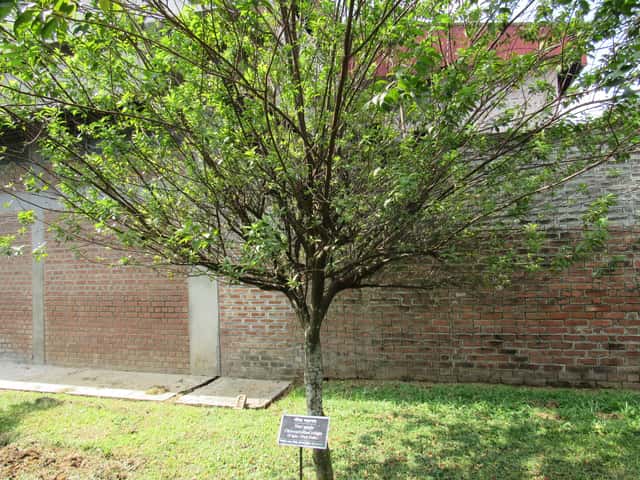
Sapotaceae
Star Apple: Edible Plant
Chrysophyllum
Plant in a full sun location. Water moderately, allowing the soil to dry between waterings. Prefers well-drained and slightly acidic soils. Does not tolerate frost. Fertilize quarterly during the growing season.
Every 10 days
Direct sun
15° - 35°C
60% - 90%
Categories
What is Star Apple?
Star Apple (Chrysophyllum) is a medium-care plant from the Sapotaceae family. Chrysophyllum is a genus of approximately 37 species of tropical trees in the family Sapotaceae, native primarily to the tropical Americas from Mexico to northern Argentina and the Caribbean. The genus name derives from the Greek chrysos (gold) and phyllon (leaf), referring to the characteristic gol...
Star Apple grows up to 20.0m, spread of 1500cm, watering every 10 days, 15°C – 35°C, 60–90% humidity. It is not suitable for indoor environments and safe for pets.
Unlike many popular species, Star Apple is safe to keep around pets.
How to Care for Star Apple?
TLDR: Star Apple needs Direct sun, watering every 10 days, and temperatures between 15-35°C with 60-90% humidity.
How Often Should You Water Star Apple?
Water every 10 days on average, reducing in winter. The Chrysophyllum genus is drought-tolerant once established but requires regular watering when young. Avoid waterlogging—excess water causes root rot.
How Much Light Does Star Apple Need?
Plant in full sun (at least 6–8 hours of direct light per day). Some species tolerate partial shade but produce better fruit and vigorous growth in full sun exposure.
What Is the Best Soil for Star Apple?
Prefers loamy, well-drained soils rich in organic matter. Tolerates sandy and clay soils as long as there is good drainage. Ideal pH between 5.0 and 8.0, with a preference for slightly acidic soils.
What Pot Should You Use for Star Apple?
Large clay or treated wood pot for young specimens. Adult trees should be grown in open ground.
Care Schedule
Fertilize
Every 90 days
What Is Star Apple and Where Does It Come From?
Chrysophyllum is a genus of approximately 37 species of tropical trees in the family Sapotaceae, native primarily to the tropical Americas from Mexico to northern Argentina and the Caribbean. The genus name derives from the Greek chrysos (gold) and phyllon (leaf), referring to the characteristic golden sheen on the underside of the leaves. These fast-growing trees can reach 10 to 30 meters in height, with glossy evergreen foliage, small purplish-white flowers, and highly prized edible fruits. The best-known species is Chrysophyllum cainito, the star apple, celebrated for its sweet, star-patterned pulp.
How to Propagate Star Apple?
Seed
Use fresh seeds as they lose viability quickly. Seed-grown trees take 5-10 years to fruit.
- 1 Collect fresh seeds from ripe fruits
- 2 Soak in warm water for 12-24 hours
- 3 Sow in well-drained, moist substrate at 25-30°C
- 4 Keep in a warm place with controlled humidity
- 5 Transplant when seedlings reach 20-30 cm
Materials needed:
Air layering
Vegetatively propagated trees fruit in 1-3 years, much faster than from seed.
- 1 Choose a healthy branch 1-2 cm in diameter
- 2 Make a ring cut removing 3 cm of bark
- 3 Apply rooting hormone to the cut
- 4 Wrap with moist sphagnum moss
- 5 Cover with clear plastic and seal the ends
- 6 Wait for rooting and separate the branch
Materials needed:
Grafting
Preferred commercial method. Grafted trees can fruit within 1 year after planting.
- 1 Prepare a 1-2 year old Chrysophyllum rootstock
- 2 Collect a scion from the desired cultivar
- 3 Perform cleft or shield grafting
- 4 Cover the graft with grafting tape
- 5 Keep in a shaded and humid place until it takes
Materials needed:
How Big Does Star Apple Grow?
TLDR: Star Apple can reach up to 20.0m tall with Fast growth rate.
Max height
20.0m
Spread
15.0m
Growth rate
Fast
Foliage
Evergreen
Plant Uses
Ornamental
Great for decoration
Edible
Can be consumed
Medicinal
Medicinal properties
Medicinal Uses
- Bark and leaves with astringent properties used in traditional medicine
- Bark extract used to treat diarrhea and fevers in tropical countries
Culinary Uses
- Fruits consumed fresh as a tropical dessert
- Very sweet gelatinous white pulp, consumed chilled
- Fruits also used in juices, ice creams, and fruit salads
Is your plant showing symptoms?
Click on the symptom to discover possible causes:
What Diseases Commonly Affect Star Apple?
TLDR: Star Apple is susceptible to 6 known diseases. Monitor regularly for early detection.
Root Rot
Root rot is a serious fungal disease that affects the root system of plants, causing them to decay and die. It is primarily caused by overwatering, poor drainage, or soil-borne fungi such as Pythium, Phytophthora, Rhizoctonia, and Fusarium. The disease thrives in waterlogged conditions where roots are deprived of oxygen, making them susceptible to fungal infection.
Leaf Spot
Leaf spot is a common fungal disease caused by various pathogens including Alternaria, Ascochyta, Colletotrichum, Septoria, and Venturia. It primarily affects leaves, causing discolored spots that can lead to premature leaf drop if left untreated.
Iron Deficiency
Iron deficiency, commonly known as iron chlorosis, is a nutrient deficiency disorder where plants cannot access sufficient iron from the soil. While iron is typically abundant in soil, various soil conditions can limit plant uptake, resulting in characteristic yellowing of leaves while veins remain green.
Anthracnose
Anthracnose is a fungal disease caused by fungi in the genus Colletotrichum that affects many plants, including vegetables, fruits, and trees. The disease thrives in cool, wet conditions, causing dark, sunken lesions on leaves, stems, flowers, and fruits.
Meaning & Symbolism
The Chrysophyllum genus symbolizes tropical abundance, vitality, and the richness of the flora of the Americas. Its golden-bottomed leaves evoke wealth and exotic beauty in Central American and Caribbean cultures.
Compare with similar plants
| Attribute | Difficulty | Light | Watering | Pet Safe |
|---|---|---|---|---|
| Dark Fieldcap | Medium | Low light | 2d | ⚠️ |
| Azalea | Medium | Partial shade | 3d | ⚠️ |
| Bougainvillea | Medium | Direct sun | 7d | ⚠️ |
| Wild Lettuce | Medium | Direct sun | 7d | ⚠️ |



