Crassulaceae
Stringy Stonecrop (Sedum sarmentosum): Complete Care Guide
Sedum sarmentosum
Low-maintenance and beginner-friendly. Prefers full sun, infrequent watering, and well-draining soil. Extremely cold-hardy and drought-tolerant, making it one of the toughest succulents for outdoor use.
Every 21 days
Direct sun
-15° - 30°C
20% - 50%
Categories
What is Stringy Stonecrop?
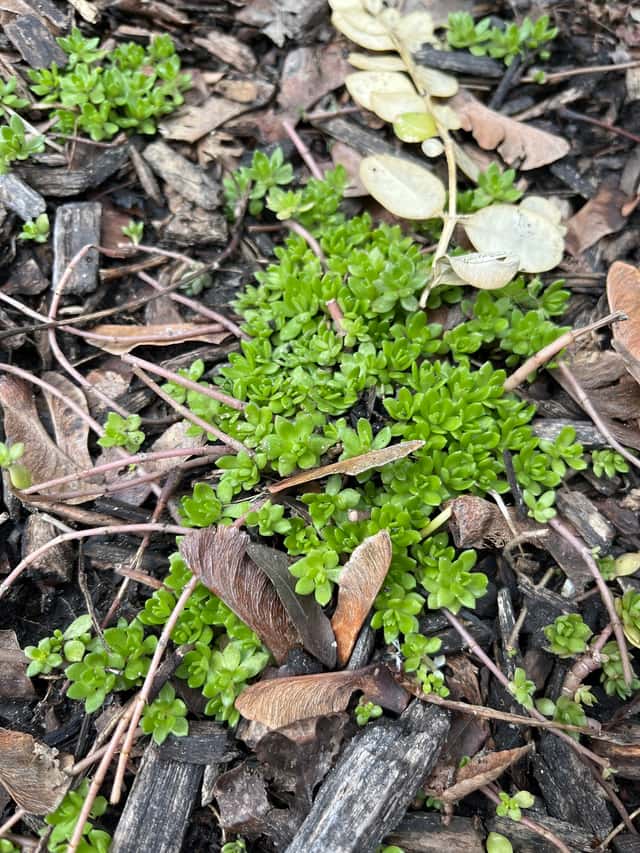
Stringy Stonecrop (Sedum sarmentosum) is a easy-care plant from the Crassulaceae family. Sedum sarmentosum is a fast-spreading creeping succulent native to China, Korea, and Japan. It forms dense mats of fleshy yellow-green leaves and produces cheerful star-shaped yellow flowers in late spring to summer. Widely used as a ground cover in rock gardens and slopes.
Stringy Stonecrop grows up to 10cm, spread of 120cm, watering every 21 days, -15°C – 30°C, 20–50% humidity. It is suitable for indoor environments and safe for pets.
Unlike many tropical plants, Stringy Stonecrop tolerates watering mistakes. Best for beginners. Unlike many popular species, Stringy Stonecrop is safe to keep around pets. Without adequate drainage, root rot can develop within 42 days.
How to Care for Stringy Stonecrop?
TLDR: Stringy Stonecrop needs Direct sun, watering every 21 days, and temperatures between -15-30°C with 20-50% humidity.
How Often Should You Water Stringy Stonecrop?
Water only when soil is completely dry, approximately every 3 weeks. Avoid standing water in the saucer — root rot is the main risk for this plant.
How Much Light Does Stringy Stonecrop Need?
Place in full sun or bright partial shade. Indoors, position near a south-facing window. Needs at least 6 hours of direct sunlight daily for best growth and color.
What Is the Best Soil for Stringy Stonecrop?
Use well-draining succulent or cactus mix. Add perlite or coarse sand to improve drainage. Ideal pH between 6.0 and 7.5.
What Pot Should You Use for Stringy Stonecrop?
Terracotta or clay pots with drainage holes. Outdoors, excellent directly in rocky soil or in hanging baskets.
Care Schedule
Fertilize
Every 365 days
What Is Stringy Stonecrop and Where Does It Come From?
Sedum sarmentosum is a fast-spreading creeping succulent native to China, Korea, and Japan. It forms dense mats of fleshy yellow-green leaves and produces cheerful star-shaped yellow flowers in late spring to summer. Widely used as a ground cover in rock gardens and slopes.
How to Propagate Stringy Stonecrop?
Stem Cutting
Avoid overwatering during rooting. Use well-draining mix and do not compact soil tightly around the cutting.
- 1 Cut a healthy stem segment 5-8 cm long with clean, sterile scissors.
- 2 Allow the cut end to callous for 1-2 days in a dry location.
- 3 Plant in slightly moist succulent mix.
- 4 Keep in bright indirect light until roots develop.
Materials needed:
Leaf Cutting
The leaf must be removed whole for propagation to succeed. Keep the mix barely moist, never wet.
- 1 Gently twist and pull a healthy leaf cleanly from the stem.
- 2 Allow to dry for 24 hours.
- 3 Place on top of moist succulent mix without burying.
- 4 Mist lightly every few days and wait for roots and shoots to emerge.
Materials needed:
How Big Does Stringy Stonecrop Grow?
TLDR: Stringy Stonecrop can reach up to 10cm tall with Fast growth rate.
Max height
10cm
Spread
1.2m
Growth rate
Fast
Foliage
Evergreen
Plant Uses
Ornamental
Great for decoration
Ground Cover
Soil coverage
Medicinal
Medicinal properties
Medicinal Uses
- Used in traditional Korean and Chinese medicine to treat inflammation, hepatitis, and bacterial infections.
Culinary Uses
- Consumed as a spring vegetable in Korea (dolnamul) in salads and kimchi preparations.
Is your plant showing symptoms?
Click on the symptom to discover possible causes:
What Diseases Commonly Affect Stringy Stonecrop?
TLDR: Stringy Stonecrop is susceptible to 8 known diseases. Monitor regularly for early detection.
Root Rot
Root rot is a serious fungal disease that affects the root system of plants, causing them to decay and die. It is primarily caused by overwatering, poor drainage, or soil-borne fungi such as Pythium, Phytophthora, Rhizoctonia, and Fusarium. The disease thrives in waterlogged conditions where roots are deprived of oxygen, making them susceptible to fungal infection.
Crown Rot
Crown rot is a serious fungal disease that attacks the crown (base) of the plant where the stem meets the soil. It is caused by various fungal pathogens including Phytophthora, Fusarium, and Rhizoctonia. The disease thrives in waterlogged conditions and can quickly spread to kill the entire plant if not addressed promptly.
Aphids
Aphids are small, soft-bodied, pear-shaped insects (1/16 to 1/8 inch long) that feed by sucking nutrient-rich sap from plants. They reproduce rapidly and can quickly weaken plants, causing distorted growth and transmitting plant viruses. Aphids come in various colors including green, black, red, yellow, brown, and gray. They secrete honeydew, a sticky substance that attracts ants and encourages sooty mold growth.
Mealybugs
Mealybugs are small, soft-bodied insects covered with a white, waxy, cottony material. They are common pests of houseplants and outdoor plants in mild climates. These sap-sucking insects feed on plant tissue, causing damage, stunted growth, and can lead to plant death if left untreated. They produce sticky honeydew which attracts sooty mold.
Meaning & Symbolism
Represents resilience and vitality. In East Asian tradition, associated with healing and renewal.
Fun Facts
It has been harvested as a spring vegetable in Korea for centuries, known as dolnamul, used in salads and kimchi.
It can survive temperatures as low as -15°C, making it one of the most cold-hardy succulents available.
Every broken stem can generate a new plant — explaining how it spreads so rapidly as a ground cover.
Scientific studies have identified anti-inflammatory and hepatoprotective compounds in Sedum sarmentosum.
Frequently asked questions
How often should I water Stringy Stonecrop?
Is Stringy Stonecrop toxic to pets?
Can Stringy Stonecrop grow indoors?
When does Stringy Stonecrop flower?
How do I propagate Stringy Stonecrop?
Compare with similar plants
| Attribute | Difficulty | Light | Watering | Pet Safe |
|---|---|---|---|---|
| Field Maple | Easy | Bright indirect | 14d | ✓ |
| Silver Birch | Easy | Direct sun | 14d | ✓ |
| Cushion Bush | Easy | Direct sun | 14d | ✓ |
| Peruvian peppertree | Easy | Direct sun | 14d | ⚠️ |