Sapindaceae
sugar maple: Edible Plant
Acer saccharum
Best grown in deep, well-drained, moist, and fertile soils in full sun to partial shade. It requires a cold winter dormancy and is not suitable for tropical or subtropical climates.
Every 7 days
Bright indirect
-40° - 35°C
40% - 70%
Categories
What is sugar maple?
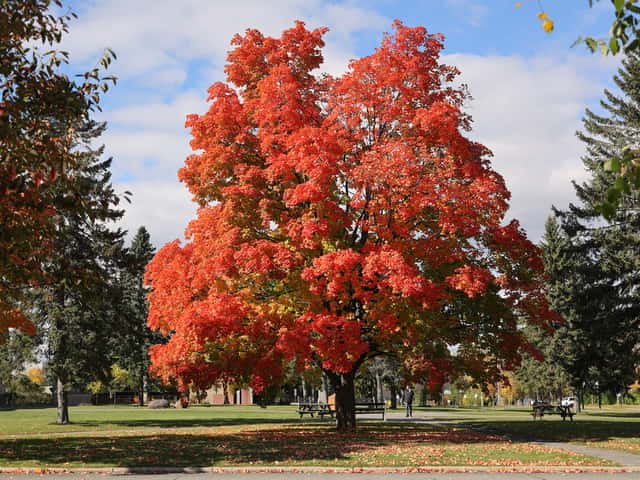
sugar maple (Acer saccharum) is a easy-care plant from the Sapindaceae family. The Sugar Maple is a large, long-lived deciduous tree native to the hardwood forests of eastern North America. It is most famous for its brilliant autumn foliage, which ranges from bright yellow to fluorescent orange and deep red. Beyond its beauty, it is the primary source of maple syrup, produced...
sugar maple grows up to 36.6m, spread of 1524cm, watering every 7 days, -40°C – 35°C, 40–70% humidity. It is not suitable for indoor environments and safe for pets.
Unlike many tropical plants, sugar maple tolerates watering mistakes. Best for beginners. Unlike many popular species, sugar maple is safe to keep around pets.
How to Care for sugar maple?
TLDR: sugar maple needs Bright indirect, watering every 7 days, and temperatures between -40-35°C with 40-70% humidity.
How Often Should You Water sugar maple?
Provide deep watering during summer droughts, especially for younger trees, to prevent leaf scorch.
How Much Light Does sugar maple Need?
While saplings are shade-tolerant, mature trees require full sun to develop a strong crown and vibrant fall colors.
What Is the Best Soil for sugar maple?
Avoid heavy clay or compacted soils; the tree prefers loamy, slightly acidic soil with high organic matter.
What Pot Should You Use for sugar maple?
Not suitable for pots; requires deep soil for its extensive root system.
Care Schedule
Fertilize
Every 365 days
What Is sugar maple and Where Does It Come From?
The Sugar Maple is a large, long-lived deciduous tree native to the hardwood forests of eastern North America. It is most famous for its brilliant autumn foliage, which ranges from bright yellow to fluorescent orange and deep red. Beyond its beauty, it is the primary source of maple syrup, produced from its sweet sap during the late winter and early spring thaw.
How to Propagate sugar maple?
Seed Stratification
- Ensure the seeds do not dry out during the stratification process.
- Protect young seedlings from squirrels and rabbits.
- 1 Seed Collection
Collect mature, brown samaras (winged seeds) in late autumn.
- 2 Cold Stratification
Place seeds in a bag of moist sand or peat moss and refrigerate at 1-4°C for 60 to 90 days.
- 3 Sowing
Plant the stratified seeds 1cm deep in fertile soil once the ground thaws in spring.
Materials needed:
How Big Does sugar maple Grow?
TLDR: sugar maple can reach up to 36.6m tall with Slow growth rate.
Max height
36.6m
Spread
15.2m
Growth rate
Slow
Foliage
Deciduous
Plant Uses
Ornamental
Great for decoration
Edible
Can be consumed
Medicinal Uses
- Traditional use of bark tea for physical weakness
- Sap used as a mineral-rich tonic
Culinary Uses
- Maple syrup production
- Maple sugar
- Edible seeds (cooked)
- Inner bark (emergency flour)
Is your plant showing symptoms?
Click on the symptom to discover possible causes:
What Diseases Commonly Affect sugar maple?
TLDR: sugar maple is susceptible to 10 known diseases. Monitor regularly for early detection.
Verticillium Wilt
Verticillium wilt is a soil-borne fungal disease caused primarily by the fungi Verticillium dahliae and V. albo-atrum. These pathogens infect plant roots and grow within the vascular tissues, blocking water and nutrient transport, resulting in wilting and eventual plant death. The disease affects over 350 plant species including vegetables, fruits, ornamental flowers, and trees. The fungi can survive in soil for more than 10 years as resistant structures called microsclerotia.
Anthracnose
Anthracnose is a fungal disease caused by fungi in the genus Colletotrichum that affects many plants, including vegetables, fruits, and trees. The disease thrives in cool, wet conditions, causing dark, sunken lesions on leaves, stems, flowers, and fruits.
Powdery Mildew
Powdery mildew is a common fungal disease caused by various fungi species including Erysiphe, Podosphaera, Oïdium, and Leveillula. It affects over 10,000 plant species worldwide. The disease thrives in warm, dry climates with high humidity and appears as a distinctive white powdery coating on plant surfaces.
Leaf Spot
Leaf spot is a common fungal disease caused by various pathogens including Alternaria, Ascochyta, Colletotrichum, Septoria, and Venturia. It primarily affects leaves, causing discolored spots that can lead to premature leaf drop if left untreated.
Meaning & Symbolism
Represents strength, endurance, and the sweetness of nature; it is the national tree of Canada.
Compare with similar plants
| Attribute | Difficulty | Light | Watering | Pet Safe |
|---|---|---|---|---|
| Field Maple | Easy | Bright indirect | 14d | ✓ |
| Silver Birch | Easy | Direct sun | 14d | ✓ |
| Common Blanketflower | Easy | Direct sun | 10d | ✓ |
| Cushion Bush | Easy | Direct sun | 14d | ✓ |





