Crassulaceae
Hylotelephium – Autumn Joy Sedum Complete Care & Growing Guide
Hylotelephium
Hylotelephium thrives in full sun with well-draining soil and very little water. It is one of the most low-maintenance perennials available: plant it in a sunny spot, water occasionally during establishment, and let it take care of itself. It dies back in winter and re-emerges reliably each spring. Fertilization is rarely needed. Deadhead or leave seed heads for winter interest and wildlife value.
Every 14 days
Direct sun
-35° - 35°C
30% - 60%
Categories
What is Autumn Joy Sedum?
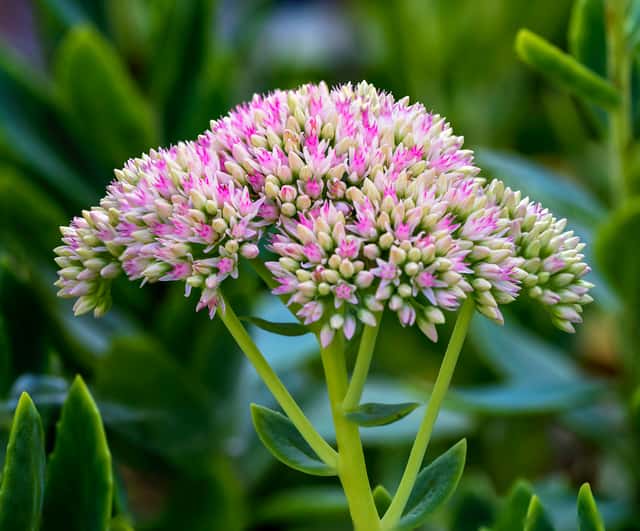
Autumn Joy Sedum (Hylotelephium) is a easy-care plant from the Crassulaceae family. Hylotelephium is a genus of succulent perennial plants in the family Crassulaceae, formerly classified under Sedum. Commonly known as Autumn Joy Sedum or showy stonecrop, these plants are beloved for their fleshy, blue-green leaves and large, dome-shaped flower heads that emerge in late summer and p...
Autumn Joy Sedum grows up to 60cm, spread of 60cm, watering every 14 days, -35°C – 35°C, 30–60% humidity. It is not suitable for indoor environments and safe for pets.
Unlike many tropical plants, Autumn Joy Sedum tolerates watering mistakes. Best for beginners. Unlike many popular species, Autumn Joy Sedum is safe to keep around pets.
How to Care for Autumn Joy Sedum?
TLDR: Autumn Joy Sedum needs Direct sun, watering every 14 days, and temperatures between -35-35°C with 30-60% humidity.
How Often Should You Water Autumn Joy Sedum?
Water deeply but infrequently — once every 14 days during the growing season is sufficient. Allow the soil to dry out completely between waterings. Overwatering is the most common mistake; these plants are succulents and store water in their leaves and stems. Reduce watering to near zero in winter when the plant is dormant.
How Much Light Does Autumn Joy Sedum Need?
Hylotelephium requires full sun — at least 6 hours of direct sunlight per day. In too much shade, stems become weak and floppy, a condition called etiolation. A south- or west-facing garden bed is ideal. The more sun the plant receives, the more compact and floriferous it will be.
What Is the Best Soil for Autumn Joy Sedum?
Plant in well-draining soil — sandy, loamy, or gravelly substrates are ideal. Avoid heavy clay or consistently moist soils, which can cause root rot. If your soil is heavy, amend it with coarse grit or perlite before planting. Raised beds are an excellent option for improving drainage in problem areas.
What Pot Should You Use for Autumn Joy Sedum?
Use a terracotta or unglazed clay pot if growing in containers — these materials allow moisture to evaporate through the walls, helping prevent overwatering. Ensure the pot has at least one large drainage hole. Avoid plastic or glazed ceramic pots as they retain too much moisture for these drought-tolerant succulents.
What Is Autumn Joy Sedum and Where Does It Come From?
Hylotelephium is a genus of succulent perennial plants in the family Crassulaceae, formerly classified under Sedum. Commonly known as Autumn Joy Sedum or showy stonecrop, these plants are beloved for their fleshy, blue-green leaves and large, dome-shaped flower heads that emerge in late summer and persist through fall, providing late-season interest in the garden. Native to Asia and Europe, they are exceptionally hardy, drought-tolerant, and attract butterflies, bees, and other pollinators in abundance.
How to Propagate Autumn Joy Sedum?
Division
Division every 3-4 years keeps clumps vigorous and prevents them from dying out in the center. Early spring is the best time.
- 1 Dig up the entire clump in early spring before new growth starts
- 2 Use a sharp spade or knife to divide the root ball into sections, each with at least 2-3 shoots
- 3 Replant divisions at the same depth in well-prepared, well-draining soil
- 4 Water once to settle the soil, then allow to establish with minimal watering
Materials needed:
Stem Cutting
Letting the cutting dry out slightly before planting helps prevent rot at the cut end. Do not overwater while rooting.
- 1 Take a 7-10 cm stem cutting in spring or early summer, just below a leaf node
- 2 Remove lower leaves and allow the cut end to callous for 1-2 days
- 3 Insert the cutting into a pot filled with gritty, well-draining compost
- 4 Keep lightly moist and in bright indirect light until roots form, then move to full sun
Materials needed:
Leaf Cutting
Success rate is lower than division or stem cuttings. Best used as a supplementary propagation method.
- 1 Gently remove a healthy, plump leaf from the stem with a clean twisting motion
- 2 Allow the leaf base to callous for 2-3 days in a dry location
- 3 Lay the leaf on top of or slightly pressed into moist, gritty substrate
- 4 Mist lightly every few days; tiny plantlets will emerge from the base of the leaf
Materials needed:
How Big Does Autumn Joy Sedum Grow?
TLDR: Autumn Joy Sedum can reach up to 60cm tall with Medium growth rate.
Max height
60cm
Spread
60cm
Growth rate
Medium
Foliage
Deciduous
Warning: Toxic Plant
This plant can be toxic if ingested. Keep out of reach of:
Plant Uses
Ornamental
Great for decoration
Ground Cover
Soil coverage
Is your plant showing symptoms?
Click on the symptom to discover possible causes:
What Diseases Commonly Affect Autumn Joy Sedum?
TLDR: Autumn Joy Sedum is susceptible to 5 known diseases. Monitor regularly for early detection.
Root Rot
Root rot is a serious fungal disease that affects the root system of plants, causing them to decay and die. It is primarily caused by overwatering, poor drainage, or soil-borne fungi such as Pythium, Phytophthora, Rhizoctonia, and Fusarium. The disease thrives in waterlogged conditions where roots are deprived of oxygen, making them susceptible to fungal infection.
Southern Blight
Southern blight is a devastating soilborne fungal disease caused by Athelia rolfsii (formerly Sclerotium rolfsii), affecting over 500 plant species including vegetables, ornamentals, and fruit crops. The fungus survives in soil through resting structures called sclerotia that resemble mustard seeds and can remain viable for years.
Overwatering
Overwatering occurs when plants receive too much water, depriving roots of oxygen and causing root rot. This environmental stress is one of the most common causes of houseplant death, as waterlogged soil prevents roots from breathing and functioning properly.
Aphids
Aphids are small, soft-bodied, pear-shaped insects (1/16 to 1/8 inch long) that feed by sucking nutrient-rich sap from plants. They reproduce rapidly and can quickly weaken plants, causing distorted growth and transmitting plant viruses. Aphids come in various colors including green, black, red, yellow, brown, and gray. They secrete honeydew, a sticky substance that attracts ants and encourages sooty mold growth.
Meaning & Symbolism
In many traditions, Hylotelephium symbolizes resilience, perseverance, and enduring beauty. Its ability to thrive in harsh conditions and return year after year after winter dormancy is seen as a metaphor for strength through adversity and the cyclical renewal of life.
Fun Facts
Hylotelephium was reclassified from the Sedum genus in 1977 by the botanist Ohba, based on key differences in chromosome number and flower structure.
The dried flower heads of Hylotelephium persist beautifully through winter, providing architectural interest and food for seed-eating birds.
A single flower head of Hylotelephium can contain hundreds of tiny star-shaped florets, making it an exceptional nectar source for butterflies and bees in late season.
The cultivar Hylotelephium 'Herbstfreude' (Autumn Joy) is one of the most widely sold perennials in the world and has received the Royal Horticultural Society Award of Garden Merit.
Frequently asked questions
How often should I water Hylotelephium?
Does Hylotelephium come back every year?
Can Hylotelephium grow in full shade?
Is Hylotelephium toxic to pets?
When does Hylotelephium flower?
Compare with similar plants
| Attribute | Difficulty | Light | Watering | Pet Safe |
|---|---|---|---|---|
| Field Maple | Easy | Bright indirect | 14d | ✓ |
| Silver Birch | Easy | Direct sun | 14d | ✓ |
| Cushion Bush | Easy | Direct sun | 14d | ✓ |
| Peruvian peppertree | Easy | Direct sun | 14d | ⚠️ |