Anacardiaceae
Staghorn Sumac: The Native Shrub with Spectacular Fall Color
Rhus typhina
Staghorn Sumac is one of the most low-maintenance woody plants you can grow. Plant it in full sun for the best fall color. Water well during the first year to establish roots, then let rainfall do the work — it is extremely drought-tolerant. Avoid wet, poorly drained sites to prevent root rot. Prune every few years in late winter to maintain shape and manage suckering.
Every 14 days
Direct sun
-40° - 38°C
30% - 60%
Categories
What is Staghorn Sumac?
Staghorn Sumac (Rhus typhina) is a easy-care plant from the Anacardiaceae family. Staghorn Sumac (Rhus typhina) is a fast-growing, deciduous large shrub or small tree native to eastern North America. Named for its velvety, antler-like branches that resemble deer velvet, it is celebrated for its spectacular fall foliage in shades of scarlet, orange, and yellow, and for its strikin...
Staghorn Sumac grows up to 7.6m, spread of 760cm, watering every 14 days, -40°C – 38°C, 30–60% humidity. It is not suitable for indoor environments and safe for pets.
Unlike many tropical plants, Staghorn Sumac tolerates watering mistakes. Best for beginners. Unlike many popular species, Staghorn Sumac is safe to keep around pets.
How to Care for Staghorn Sumac?
TLDR: Staghorn Sumac needs Direct sun, watering every 14 days, and temperatures between -40-38°C with 30-60% humidity.
How Often Should You Water Staghorn Sumac?
Water deeply once a week during the first growing season to help the roots establish. After that, reduce to every 2 weeks or less — staghorn sumac is highly drought-tolerant and prefers its soil to dry out between waterings. Avoid overwatering or soggy conditions, which can lead to root rot.
How Much Light Does Staghorn Sumac Need?
Staghorn Sumac thrives in full sun (6+ hours of direct sunlight daily). It develops its most brilliant fall colors and densest growth in maximum sun. While it tolerates partial shade, flowering and fruiting will be reduced.
What Is the Best Soil for Staghorn Sumac?
Plant in well-draining soil. Staghorn Sumac is remarkably adaptable and tolerates poor, rocky, sandy, or clay soils. The key requirement is good drainage — avoid consistently wet or waterlogged sites. Soil pH between 5.5 and 7.5 is acceptable.
What Pot Should You Use for Staghorn Sumac?
Outdoor beds, large containers, or naturalized areas. In landscape settings, a wide raised bed or garden border suits it best. If growing in a large container, choose a wide, deep pot (at least 60 cm diameter) with excellent drainage. Root barriers may be needed in formal gardens to control spreading.
Care Schedule
Fertilize
Every 90 days
What Is Staghorn Sumac and Where Does It Come From?
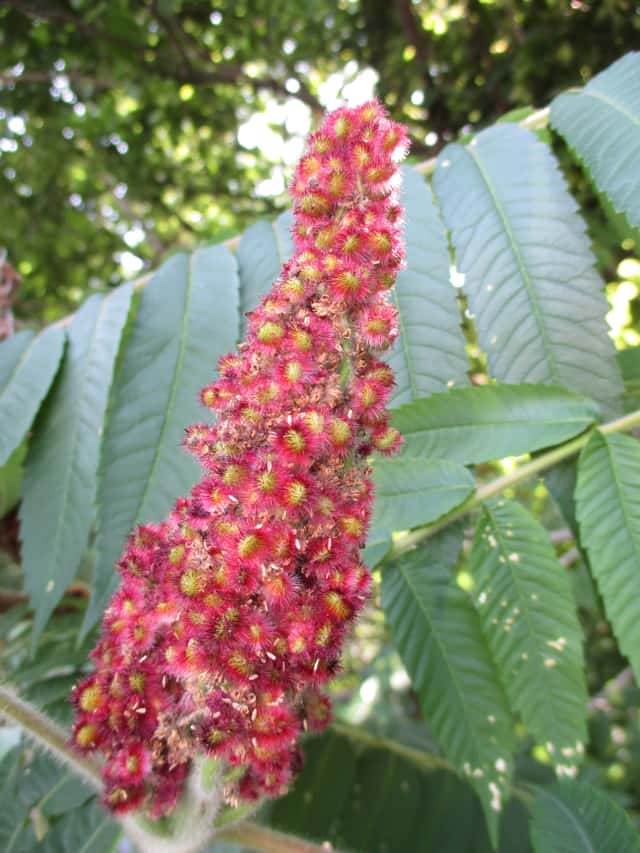
Staghorn Sumac (Rhus typhina) is a fast-growing, deciduous large shrub or small tree native to eastern North America. Named for its velvety, antler-like branches that resemble deer velvet, it is celebrated for its spectacular fall foliage in shades of scarlet, orange, and yellow, and for its striking upright clusters of fuzzy crimson berries that persist through winter. A champion of tough conditions, it thrives in poor, rocky soils and is highly drought-tolerant once established.
How to Propagate Staghorn Sumac?
Seed Propagation
Seeds benefit from scarification with sandpaper before soaking to improve germination rates.
- 1 Collect ripe red berry clusters in fall
- 2 Soak seeds in warm water for 24 hours to soften the hard coat
- 3 Sow in well-draining seed-starting mix
- 4 Keep moist in a cool location (cold stratification in fridge for 60 days improves germination)
- 5 Transplant outdoors after last frost
Materials needed:
Root Sucker Division
This is the fastest and easiest propagation method. Wear gloves as the sap can cause skin irritation in sensitive individuals.
- 1 Identify young root suckers emerging around the parent plant in spring
- 2 Dig around the sucker carefully to expose a section of connecting root
- 3 Cut the connecting root with a clean spade or pruners
- 4 Transplant the sucker with its roots to a prepared, sunny site
- 5 Water in well and keep moist until established
Materials needed:
How Big Does Staghorn Sumac Grow?
TLDR: Staghorn Sumac can reach up to 7.6m tall with Fast growth rate.
Max height
7.6m
Spread
7.6m
Growth rate
Fast
Foliage
Deciduous
Plant Uses
Ornamental
Great for decoration
Edible
Can be consumed
Medicinal
Medicinal properties
Ground Cover
Soil coverage
Medicinal Uses
- Historically used by Native Americans to treat fever, sore throats, and urinary infections; sumac berry tea was used as an astringent and anti-inflammatory remedy
Culinary Uses
- The tart red berries (drupes) are edible and used to make a tangy lemonade-like drink called sumac-ade; dried and ground berries are a culinary spice popular in Middle Eastern cuisine (za'atar blend)
Is your plant showing symptoms?
Click on the symptom to discover possible causes:
What Diseases Commonly Affect Staghorn Sumac?
TLDR: Staghorn Sumac is susceptible to 7 known diseases. Monitor regularly for early detection.
Powdery Mildew
Powdery mildew is a common fungal disease caused by various fungi species including Erysiphe, Podosphaera, Oïdium, and Leveillula. It affects over 10,000 plant species worldwide. The disease thrives in warm, dry climates with high humidity and appears as a distinctive white powdery coating on plant surfaces.
Leaf Spot
Leaf spot is a common fungal disease caused by various pathogens including Alternaria, Ascochyta, Colletotrichum, Septoria, and Venturia. It primarily affects leaves, causing discolored spots that can lead to premature leaf drop if left untreated.
Root Rot
Root rot is a serious fungal disease that affects the root system of plants, causing them to decay and die. It is primarily caused by overwatering, poor drainage, or soil-borne fungi such as Pythium, Phytophthora, Rhizoctonia, and Fusarium. The disease thrives in waterlogged conditions where roots are deprived of oxygen, making them susceptible to fungal infection.
Verticillium Wilt
Verticillium wilt is a soil-borne fungal disease caused primarily by the fungi Verticillium dahliae and V. albo-atrum. These pathogens infect plant roots and grow within the vascular tissues, blocking water and nutrient transport, resulting in wilting and eventual plant death. The disease affects over 350 plant species including vegetables, fruits, ornamental flowers, and trees. The fungi can survive in soil for more than 10 years as resistant structures called microsclerotia.
Meaning & Symbolism
Staghorn Sumac symbolizes resilience and transformation. Its ability to thrive in harsh conditions and burst into brilliant color before winter represents strength, endurance, and the beauty found in adversity.
Fun Facts
Staghorn Sumac is named for its young branches covered in soft, velvety hairs — just like the velvet on a deer's antlers.
The tart berries contain high levels of vitamin C and were used by indigenous peoples to make a refreshing drink long before lemons arrived in North America.
Female plants produce upright clusters of fuzzy red berries (called drupes) that can persist on the branches all winter, providing critical food for over 300 bird species.
Staghorn Sumac is one of the first plants to colonize disturbed land, making it an ecological pioneer that stabilizes slopes and prevents erosion.
Frequently asked questions
Is Staghorn Sumac toxic to dogs or cats?
How do I stop Staghorn Sumac from spreading?
When does Staghorn Sumac turn red?
How fast does Staghorn Sumac grow?
Can I grow Staghorn Sumac in a container?
Compare with similar plants
| Attribute | Difficulty | Light | Watering | Pet Safe |
|---|---|---|---|---|
| Field Maple | Easy | Bright indirect | 14d | ✓ |
| Silver Birch | Easy | Direct sun | 14d | ✓ |
| Cushion Bush | Easy | Direct sun | 14d | ✓ |
| Peruvian peppertree | Easy | Direct sun | 14d | ⚠️ |





