Annonaceae
Cherimoya: Edible Plant
Annona cherimola
Cherimoya requires full sun and warm temperatures without frost. It prefers subtropical climates with warm summers and mild winters (USDA zones 9b-12). It needs well-drained soil with a pH between 6.0 and 7.6. Watering should be regular and deep every 10-14 days, reducing in winter. Fertilize every 5 weeks during the growing season. Annual pruning after harvest maintains shape and stimulates fruit production.
Every 12 days
Direct sun
10° - 32°C
75% - 85%
Categories
What is Cherimoya?
Cherimoya (Annona cherimola) is a medium-care plant from the Annonaceae family. The cherimoya (Annona cherimola) is a subtropical fruit tree native to the Andean valleys of Peru, Bolivia, and Ecuador, where it has been cultivated for over 2,000 years. It reaches between 7 and 9 meters in height with a spreading canopy and deciduous foliage of large, velvety leaves. Its flowers,...
Cherimoya grows up to 9.0m, spread of 900cm, watering every 12 days, 10°C – 32°C, 75–85% humidity. It is not suitable for indoor environments and not safe for pets.
Without precautions, ingestion can cause irritation in pets. Keep out of reach of cats and dogs.
How to Care for Cherimoya?
TLDR: Cherimoya needs Direct sun, watering every 12 days, and temperatures between 10-32°C with 75-85% humidity.
How Often Should You Water Cherimoya?
Water deeply every 10-14 days during spring and summer, ensuring the soil dries out slightly between waterings. Significantly reduce watering in winter. Use drip or localized irrigation to avoid excessive moisture at the root collar, which can cause rot. Excellent drainage is essential.
How Much Light Does Cherimoya Need?
Place the cherimoya in full direct sun for at least 6-8 hours a day. It does not tolerate shade, as this reduces flowering and fruit production. In very hot areas with temperatures exceeding 35°C (95°F), light partial shade during the hottest hours can be beneficial.
What Is the Best Soil for Cherimoya?
Plant in sandy-loam or silty soil, deep (at least 1 m) and with excellent drainage. The ideal pH is between 6.0 and 7.6. Amend with organic compost when planting. Avoid compact clay soils or waterlogging, as they favor Phytophthora root rot. Apply organic mulch around the trunk to conserve moisture.
What Pot Should You Use for Cherimoya?
The cherimoya is a large tree and is not recommended for permanent pot cultivation. If grown in a container in cold climates to protect it from winter, use a very large container (at least 100-150 liters) made of high-quality clay or terracotta to stabilize the substrate temperature.
Care Schedule
Fertilize
Every 35 days
What Is Cherimoya and Where Does It Come From?
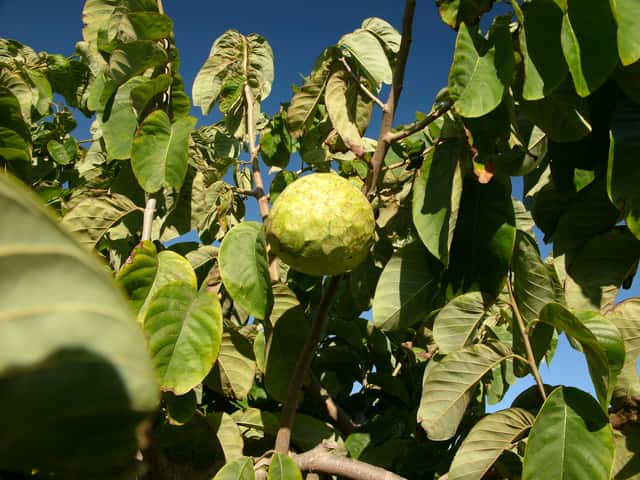
The cherimoya (Annona cherimola) is a subtropical fruit tree native to the Andean valleys of Peru, Bolivia, and Ecuador, where it has been cultivated for over 2,000 years. It reaches between 7 and 9 meters in height with a spreading canopy and deciduous foliage of large, velvety leaves. Its flowers, greenish-yellow with purple spots, are fragrant and hermaphroditic. The fruit is the tree's true treasure: heart-shaped, with green skin and creamy white pulp with a sweet and exotic flavor, described as a blend of pineapple, mango, and strawberry. Mark Twain called it 'the most delicious fruit known to men'.
How to Propagate Cherimoya?
How Big Does Cherimoya Grow?
TLDR: Cherimoya can reach up to 9.0m tall with Medium growth rate.
Max height
9.0m
Spread
9.0m
Growth rate
Medium
Foliage
Deciduous
Warning: Toxic Plant
This plant can be toxic if ingested. Keep out of reach of:
Plant Uses
Edible
Can be consumed
Medicinal
Medicinal properties
Ornamental
Great for decoration
Medicinal Uses
- Leaf and seed extracts have documented antimicrobial properties
- Used in traditional Mexican medicine to treat gastrointestinal diseases, diarrhea, and dysentery
- The fruit's acetogenins are being researched for their anti-tumor properties
Culinary Uses
- Consumed fresh as a dessert fruit
- Base for artisanal ice creams and sorbets (the famous 'chirimoya alegre' with orange juice)
- Used in jams, jellies, juices, smoothies, and artisanal liqueurs
- Ingredient in creams and mousses in gourmet pastry
Is your plant showing symptoms?
Click on the symptom to discover possible causes:
What Diseases Commonly Affect Cherimoya?
TLDR: Cherimoya is susceptible to 8 known diseases. Monitor regularly for early detection.
Anthracnose
Anthracnose is a fungal disease caused by fungi in the genus Colletotrichum that affects many plants, including vegetables, fruits, and trees. The disease thrives in cool, wet conditions, causing dark, sunken lesions on leaves, stems, flowers, and fruits.
Mealybugs
Mealybugs are small, soft-bodied insects covered with a white, waxy, cottony material. They are common pests of houseplants and outdoor plants in mild climates. These sap-sucking insects feed on plant tissue, causing damage, stunted growth, and can lead to plant death if left untreated. They produce sticky honeydew which attracts sooty mold.
Scale Insects
Scale insects are small sap-sucking pests that appear as brown, shell-like bumps on plant stems and leaves. There are over 25 species, divided into armored (hard) and unarmored (soft) scales. They feed by piercing plant tissue and extracting sap, which weakens the plant and can lead to yellowing, stunted growth, and even death if left untreated. They also excrete honeydew, which attracts ants and promotes sooty mold growth.
Phytophthora Root Rot
Disease caused by fungus-like organisms (oomycetes) that live in soil and can survive for years. It affects roots, stem, and crown of plants, being especially severe in waterlogged or poorly drained soils. It is the second most common cause of root rot in trees and shrubs.
Meaning & Symbolism
In pre-Columbian Andean cultures, the cherimoya was a symbol of abundance, fertility, and well-being. The Quechua and Andean peoples considered it a sacred fruit and offered it in ceremonies of gratitude for the harvests.
Compare with similar plants
| Attribute | Difficulty | Light | Watering | Pet Safe |
|---|---|---|---|---|
| Dark Fieldcap | Medium | Low light | 2d | ⚠️ |
| Azalea | Medium | Partial shade | 3d | ⚠️ |
| Bougainvillea | Medium | Direct sun | 7d | ⚠️ |
| Wild Lettuce | Medium | Direct sun | 7d | ⚠️ |



