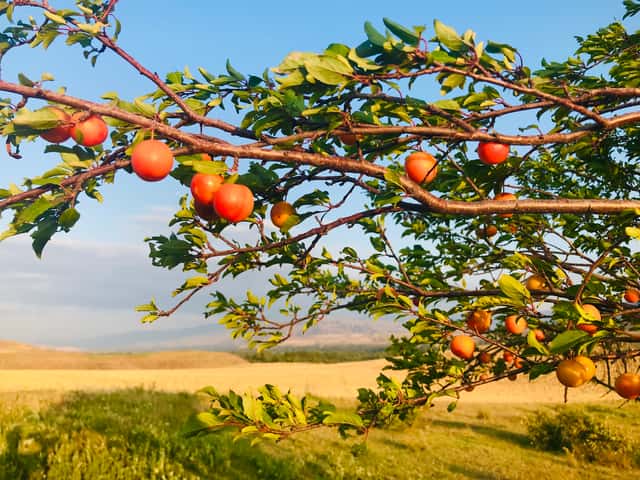
Rosaceae
European Plum (Prunus domestica)
Prunus domestica
Plant in full sun with fertile, well-draining soil. Water moderately, particularly during fruit development. Prune annually in late winter to encourage fruiting and maintain a balanced canopy.
Every 7 days
Direct sun
-20° - 35°C
40% - 70%
Categories
What is European Plum?
European Plum (Prunus domestica) is a medium-care plant from the Rosaceae family. The European plum (Prunus domestica) is a deciduous fruit tree originating in Western Asia and cultivated across Europe for thousands of years. It produces juicy, sweet plums prized for fresh eating, jams, dried prunes, and spirits such as slivovitz. In spring, the tree bursts into delicate white bl...
European Plum grows up to 8.0m, spread of 600cm, watering every 7 days, -20°C – 35°C, 40–70% humidity. It is not suitable for indoor environments and not safe for pets.
Without precautions, ingestion can cause irritation in pets. Keep out of reach of cats and dogs.
How to Care for European Plum?
TLDR: European Plum needs Direct sun, watering every 7 days, and temperatures between -20-35°C with 40-70% humidity.
How Often Should You Water European Plum?
Water regularly during the growing season and fruiting period (every 7–14 days). Reduce watering in winter dormancy. Avoid waterlogging at the root zone, which promotes root rot.
How Much Light Does European Plum Need?
Requires full sun — at least 6 hours of direct sunlight daily — for optimal fruit production. Choose a sheltered spot to protect early spring blossoms from late frosts.
What Is the Best Soil for European Plum?
Prefers loamy, fertile, well-drained soil with a pH of 6.0–7.0. Amend with organic compost at planting and apply mulch around the base to retain moisture and suppress weeds.
What Pot Should You Use for European Plum?
Large container (minimum 60L) with drainage holes for pot culture; in-ground planting preferred for best results.
Care Schedule
Fertilize
Every 60 days
What Is European Plum and Where Does It Come From?
The European plum (Prunus domestica) is a deciduous fruit tree originating in Western Asia and cultivated across Europe for thousands of years. It produces juicy, sweet plums prized for fresh eating, jams, dried prunes, and spirits such as slivovitz. In spring, the tree bursts into delicate white blossoms before leafing out, making it as ornamental as it is productive.
How Big Does European Plum Grow?
TLDR: European Plum can reach up to 8.0m tall with Medium growth rate.
Max height
8.0m
Spread
6.0m
Growth rate
Medium
Foliage
Deciduous
Warning: Toxic Plant
This plant can be toxic if ingested. Keep out of reach of:
Plant Uses
Edible
Can be consumed
Ornamental
Great for decoration
Medicinal
Medicinal properties
Medicinal Uses
- Plums and prunes are a natural mild laxative due to sorbitol content
- Rich in antioxidants, vitamin C, vitamin K, and potassium
- Prune extract used traditionally to aid digestion and relieve constipation
Culinary Uses
- Eaten fresh as a dessert fruit
- Made into jams, jellies, and preserves
- Dried into prunes for long-term storage
- Distilled into plum brandy (slivovitz, mirabelle eau-de-vie)
- Used in baking, sauces, and savory-sweet dishes
Is your plant showing symptoms?
Click on the symptom to discover possible causes:
What Diseases Commonly Affect European Plum?
TLDR: European Plum is susceptible to 13 known diseases. Monitor regularly for early detection.
Powdery Mildew
Powdery mildew is a common fungal disease caused by various fungi species including Erysiphe, Podosphaera, Oïdium, and Leveillula. It affects over 10,000 plant species worldwide. The disease thrives in warm, dry climates with high humidity and appears as a distinctive white powdery coating on plant surfaces.
Aphids
Aphids are small, soft-bodied, pear-shaped insects (1/16 to 1/8 inch long) that feed by sucking nutrient-rich sap from plants. They reproduce rapidly and can quickly weaken plants, causing distorted growth and transmitting plant viruses. Aphids come in various colors including green, black, red, yellow, brown, and gray. They secrete honeydew, a sticky substance that attracts ants and encourages sooty mold growth.
Bacterial Canker
Serious bacterial disease affecting stone fruits and tomatoes caused by Pseudomonas syringae or Clavibacter michiganensis. Creates sunken lesions that ooze sap.
Rust
Rust is a common fungal disease caused by fungi in the order Pucciniales that affects a wide variety of plants. The disease gets its name from the characteristic orange, yellow, or reddish-brown pustules that appear on leaves, resembling metal rust. This obligate fungal parasite requires living plants to survive and can cause significant economic losses in agricultural crops.
Meaning & Symbolism
In European folk traditions, the plum tree symbolizes abundance, fertility, and life's sweetness. It is associated with prosperity and good harvest in many Slavic and Germanic cultures.
Fun Facts
Plum trees can live for over 50 years when well maintained
The sorbitol in plums gives prunes their well-known gentle laxative effect
Over 2,000 cultivars of Prunus domestica are recognized worldwide
Dried plums (prunes) contain nearly twice the calories of fresh plums per gram
Frequently asked questions
When should I prune a plum tree?
Do plum trees need a pollination partner?
How long until a plum tree bears fruit?
Compare with similar plants
| Attribute | Difficulty | Light | Watering | Pet Safe |
|---|---|---|---|---|
| Dark Fieldcap | Medium | Low light | 2d | ⚠️ |
| Azalea | Medium | Partial shade | 3d | ⚠️ |
| Bougainvillea | Medium | Direct sun | 7d | ⚠️ |
| Wild Lettuce | Medium | Direct sun | 7d | ⚠️ |
Choose & Compare
Sources & References
- Prunus domestica (Common Plum, European Plum) | NC State Extension Plant Toolbox
- Plum Tree Complete Guide: Caring for, Growing, Types & Uses | Planet Natural
- European Plum - Prunus domestica | Shrubz.us
- How To Grow A Victoria Plum Tree (Prunus domestica) | BBC Gardeners World Magazine
- Plums - Diseases, Pests and Disorders | Net Tree Fruit
- RHS - Growing Plums
- University of Minnesota Extension - Growing Plums
- Missouri Botanical Garden - Prunus domestica



