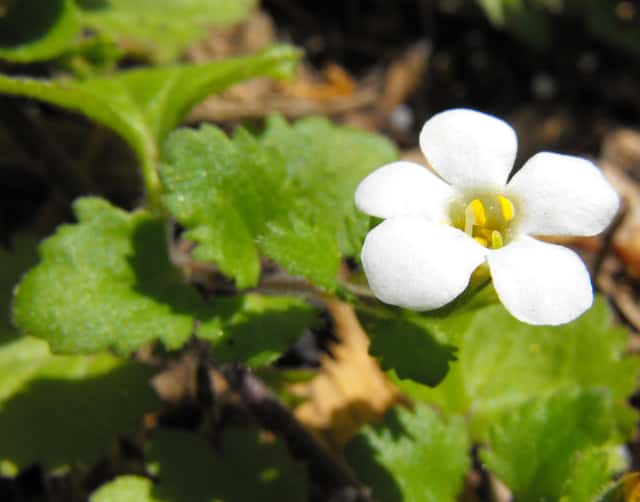
Scrophulariaceae
Bacopa: Ground Cover Plant
Sutera cordata
Bacopa is easy to care for and ideal for beginners. It requires 4-8 hours of light daily and moist, well-drained soil. It grows quickly and needs regular watering when the top layer of soil dries out, while avoiding excessive moisture that causes root rot. It tolerates short droughts, but the leaves quickly deteriorate with a lack of water. It is most easily propagated by cuttings, which root in 2-3 weeks.
Every 3 days
Partial shade
15° - 24°C
50% - 60%
Categories
What is Bacopa?
Bacopa (Sutera cordata) is a easy-care plant from the Scrophulariaceae family. Sutera cordata (syn. Chaenostoma cordatum) is a fast-growing ornamental plant from the Scrophulariaceae family, native to South African wetlands. It is characterized by small, dark green, opposite leaves with slightly serrated edges and tiny white star-shaped flowers with yellow-orange centers. It i...
Bacopa grows up to 15cm, spread of 60cm, watering every 3 days, 15°C – 24°C, 50–60% humidity. It is suitable for indoor environments and safe for pets.
Unlike many tropical plants, Bacopa tolerates watering mistakes. Best for beginners. Unlike many popular species, Bacopa is safe to keep around pets. Without adequate drainage, root rot can develop within 7 days.
How to Care for Bacopa?
TLDR: Bacopa needs Partial shade, watering every 3 days, and temperatures between 15-24°C with 50-60% humidity.
How Often Should You Water Bacopa?
Keep the soil evenly moist during the season, especially in containers. Water when the top layer dries out, usually every 2-4 days depending on the weather. Avoid waterlogging as root rot occurs quickly. Water in the morning so the foliage can dry before evening.
How Much Light Does Bacopa Need?
Bacopa thrives best with 4-8 hours of light daily; it prefers bright indirect light or partial shade. It tolerates full sun if well-watered, but intense afternoon sun can scorch the leaves.
What Is the Best Soil for Bacopa?
Use light, well-drained soil, such as a mix with perlite and sand. The ideal pH is slightly acidic to neutral (6.0-8.0). Avoid heavy, compacted soil that retains too much water.
What Pot Should You Use for Bacopa?
Hanging baskets with drainage holes or shallow containers that allow the plant to spread. Ensure good drainage.
Care Schedule
Fertilize
Every 30 days
Repot
Every 548 days
What Is Bacopa and Where Does It Come From?
Sutera cordata (syn. Chaenostoma cordatum) is a fast-growing ornamental plant from the Scrophulariaceae family, native to South African wetlands. It is characterized by small, dark green, opposite leaves with slightly serrated edges and tiny white star-shaped flowers with yellow-orange centers. It is ideal for hanging baskets, containers, and as a groundcover due to its trailing growth habit. It is known for its rapid growth and profuse blooming throughout summer and fall.
How Big Does Bacopa Grow?
TLDR: Bacopa can reach up to 15cm tall with Fast growth rate.
Max height
15cm
Spread
60cm
Growth rate
Fast
Foliage
Evergreen
Plant Uses
Ornamental
Great for decoration
Ground Cover
Soil coverage
Is your plant showing symptoms?
Click on the symptom to discover possible causes:
What Diseases Commonly Affect Bacopa?
TLDR: Bacopa is susceptible to 9 known diseases. Monitor regularly for early detection.
Root Rot
Root rot is a serious fungal disease that affects the root system of plants, causing them to decay and die. It is primarily caused by overwatering, poor drainage, or soil-borne fungi such as Pythium, Phytophthora, Rhizoctonia, and Fusarium. The disease thrives in waterlogged conditions where roots are deprived of oxygen, making them susceptible to fungal infection.
Overwatering
Overwatering occurs when plants receive too much water, depriving roots of oxygen and causing root rot. This environmental stress is one of the most common causes of houseplant death, as waterlogged soil prevents roots from breathing and functioning properly.
Powdery Mildew
Powdery mildew is a common fungal disease caused by various fungi species including Erysiphe, Podosphaera, Oïdium, and Leveillula. It affects over 10,000 plant species worldwide. The disease thrives in warm, dry climates with high humidity and appears as a distinctive white powdery coating on plant surfaces.
Grey Mould
Compare with similar plants
| Attribute | Difficulty | Light | Watering | Pet Safe |
|---|---|---|---|---|
| Field Maple | Easy | Bright indirect | 14d | ✓ |
| Silver Birch | Easy | Direct sun | 14d | ✓ |
| Common Blanketflower | Easy | Direct sun | 10d | ✓ |
| Cushion Bush | Easy | Direct sun | 14d | ✓ |





