Asteraceae
Shasta Daisy: Complete Care Guide
Leucanthemum × superbum
Grow in full sun with well-draining soil, watering regularly without waterlogging. Divide clumps every 2-3 years and deadhead spent blooms to prolong flowering.
Every 7 days
Direct sun
° - °C
% - %
Categories
What is Shasta daisy?
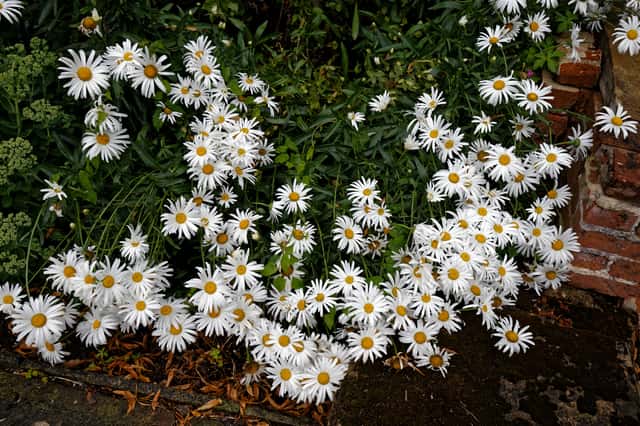
Shasta daisy (Leucanthemum × superbum) is a easy-care plant from the Asteraceae family. Shasta daisy (Leucanthemum × superbum) is a popular hybrid herbaceous perennial prized for its large white, daisy-like flowers with golden-yellow centers. Bred by horticulturist Luther Burbank, it blooms profusely from late spring through early fall and is relatively easy to grow.
Shasta daisy grows up to 90cm, spread of 45cm, watering every 7 days. It is not suitable for indoor environments and safe for pets.
Unlike many tropical plants, Shasta daisy tolerates watering mistakes. Best for beginners. Unlike many popular species, Shasta daisy is safe to keep around pets.
How to Care for Shasta daisy?
TLDR: Shasta daisy needs Direct sun, watering every 7 days, and temperatures between 15-30°C with 40-70% humidity.
How Often Should You Water Shasta daisy?
Water about 1 inch (2.5 cm) per week, letting the soil surface dry slightly between waterings to prevent root rot.
How Much Light Does Shasta daisy Need?
Plant where it gets at least 6 hours of direct sun daily; a bit of afternoon shade helps in very hot climates.
What Is the Best Soil for Shasta daisy?
Use well-amended, well-draining soil with a pH between 6.0 and 7.5; avoid waterlogged soil in winter.
What Pot Should You Use for Shasta daisy?
A terracotta or ceramic pot with ample drainage holes, at least 12 inches (30 cm) in diameter to accommodate the root system.
Care Schedule
Fertilize
Every 30 days
Repot
Every 900 days
What Is Shasta daisy and Where Does It Come From?
Shasta daisy (Leucanthemum × superbum) is a popular hybrid herbaceous perennial prized for its large white, daisy-like flowers with golden-yellow centers. Bred by horticulturist Luther Burbank, it blooms profusely from late spring through early fall and is relatively easy to grow.
How to Propagate Shasta daisy?
Clump Division
Divide every 2-3 years to maintain vigor and abundant blooming.
- 1 Dig up the entire clump in early spring or fall
- 2 Separate into smaller sections, each with healthy roots and shoots
- 3 Replant immediately in the new location and water well
Materials needed:
Seed Sowing
Seeds germinate best with indirect light and temperatures around 18-21°C (65-70°F).
- 1 Sow in a light seed-starting mix in early spring
- 2 Keep soil moist until germination
- 3 Transplant seedlings once they reach 2-3 inches (5-8 cm) tall
Materials needed:
How Big Does Shasta daisy Grow?
TLDR: Shasta daisy can reach up to 90cm tall with Medium growth rate.
Max height
90cm
Spread
45cm
Growth rate
Medium
Foliage
Semi-evergreen
Warning: Toxic Plant
This plant can be toxic if ingested. Keep out of reach of:
Plant Uses
Ornamental
Great for decoration
Is your plant showing symptoms?
Click on the symptom to discover possible causes:
What Diseases Commonly Affect Shasta daisy?
TLDR: Shasta daisy is susceptible to 13 known diseases. Monitor regularly for early detection.
Powdery Mildew
Powdery mildew is a common fungal disease caused by various fungi species including Erysiphe, Podosphaera, Oïdium, and Leveillula. It affects over 10,000 plant species worldwide. The disease thrives in warm, dry climates with high humidity and appears as a distinctive white powdery coating on plant surfaces.
Leaf Spot
Leaf spot is a common fungal disease caused by various pathogens including Alternaria, Ascochyta, Colletotrichum, Septoria, and Venturia. It primarily affects leaves, causing discolored spots that can lead to premature leaf drop if left untreated.
Septoria Leaf Spot
Septoria leaf spot is a destructive fungal disease caused by Septoria lycopersici, particularly devastating during seasons of moderate temperature and abundant rainfall. The disease starts on lower leaves and progresses upward, causing small circular spots with tan to gray centers and dark brown margins. If left untreated, it can dramatically reduce plant yields and cause complete leaf blight.
Alternaria Leaf Spot
Alternaria leaf spot is a common fungal disease caused by Alternaria solani and Alternaria alternata that affects a wide range of plants including tomatoes, potatoes, brassicas, and ornamentals. The disease thrives in warm, humid conditions and can cause significant crop damage if left untreated. Spores overwinter on plant debris and can attach to seeds, making complete elimination difficult.
Meaning & Symbolism
Represents purity, innocence, and new beginnings - a classic symbol of simplicity in cottage gardens.
Fun Facts
Despite its name, Shasta daisy is not native to Mount Shasta; it was bred by Luther Burbank by crossing European and Japanese daisy species.
It makes an excellent cut flower, lasting up to two weeks in a vase.
It attracts butterflies and other pollinators to the garden.
Frequently asked questions
How often should I water Shasta daisy?
Is Shasta daisy toxic to cats and dogs?
How much sun does Shasta daisy need?
How often should I divide Shasta daisy?
Compare with similar plants
| Attribute | Difficulty | Light | Watering | Pet Safe |
|---|---|---|---|---|
| Field Maple | Easy | Bright indirect | 14d | ✓ |
| Silver Birch | Easy | Direct sun | 14d | ✓ |
| Common Blanketflower | Easy | Direct sun | 10d | ✓ |
| Cushion Bush | Easy | Direct sun | 14d | ✓ |
Choose & Compare
Sources & References
- Shasta Daisy Care, Planting, and Growing Guide - Proven Winners
- Leucanthemum x superbum (Shasta Daisy) - NC State Extension
- Shasta Daisy Problems: Common Issues and Effective Solutions
- Shasta Daisy Leaf Spot - PNW Pest Management Handbooks
- Shasta Daisy Diseases - Weekand
- Leucanthemum x superbum (Shasta Daisy) - Gardenia.net





