Cactaceae
Golden Barrel Cactus: Full Sun Plant
Kroenleinia grusonii
An extremely hardy and easy-to-grow plant, also suitable for those with little time for gardening. It requires full sun, very well-draining soil, and sporadic watering, completely suspended in winter. It tolerates intense heat well but fears frost and water stagnation.
Every 21 days
Direct sun
4° - 45°C
10% - 40%
Categories
What is Golden Barrel Cactus?
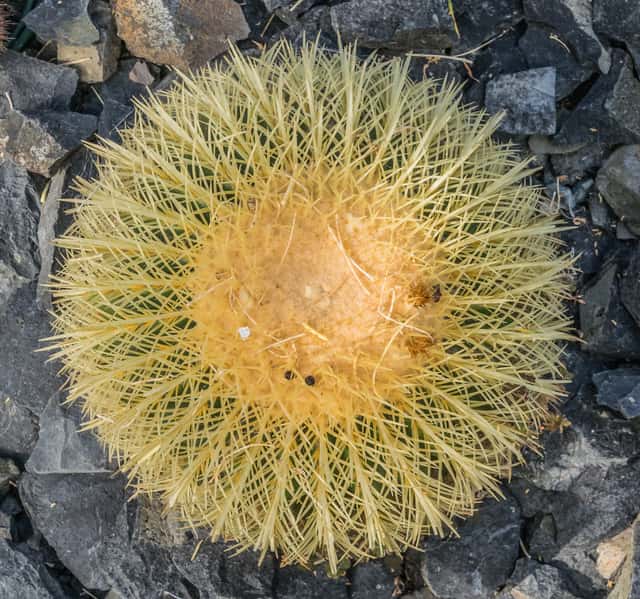
Golden Barrel Cactus (Kroenleinia grusonii) is a easy-care plant from the Cactaceae family. The Golden Barrel Cactus (Kroenleinia grusonii, synonym Echinocactus grusonii) is a globose cactus native to central Mexico, belonging to the Cactaceae family. It is recognizable by its spherical, ribbed body covered with dense golden spines (a white-spined variety also exists) which, with age, can...
Golden Barrel Cactus grows up to 1.0m, spread of 80cm, watering every 21 days, 4°C – 45°C, 10–40% humidity. It is suitable for indoor environments and safe for pets.
Unlike many tropical plants, Golden Barrel Cactus tolerates watering mistakes. Best for beginners. Unlike many popular species, Golden Barrel Cactus is safe to keep around pets. Without adequate drainage, root rot can develop within 42 days.
How to Care for Golden Barrel Cactus?
TLDR: Golden Barrel Cactus needs Direct sun, watering every 21 days, and temperatures between 4-45°C with 10-40% humidity.
How Often Should You Water Golden Barrel Cactus?
Water only when the soil is completely dry, approximately every 3 weeks in spring-summer; completely suspend watering in autumn-winter to prevent root rot.
How Much Light Does Golden Barrel Cactus Need?
Place in full sun, with at least 6 hours of direct light per day; gradually acclimate the plant to more intense exposure to prevent sunburn on the epidermis.
What Is the Best Soil for Golden Barrel Cactus?
Use a very well-draining soil specific for cacti, enriched with coarse sand, pumice, or volcanic lapilli; avoid substrates rich in organic matter that retain moisture.
What Pot Should You Use for Golden Barrel Cactus?
Prefer a shallow terracotta pot to promote soil aeration, with a diameter only 2-3 cm larger than the previous pot when repotting.
Care Schedule
Fertilize
Every 30 days
Rotate
Every 30 days
Repot
Every 1095 days
What Is Golden Barrel Cactus and Where Does It Come From?
The Golden Barrel Cactus (Kroenleinia grusonii, synonym Echinocactus grusonii) is a globose cactus native to central Mexico, belonging to the Cactaceae family. It is recognizable by its spherical, ribbed body covered with dense golden spines (a white-spined variety also exists) which, with age, can take on a more oblong shape, exceeding one meter in height. It grows very slowly and can live for decades; in nature, it is considered endangered due to poaching and dam construction in its original habitat.
How Big Does Golden Barrel Cactus Grow?
TLDR: Golden Barrel Cactus can reach up to 1.0m tall with Slow growth rate.
Max height
1.0m
Spread
80cm
Growth rate
Slow
Foliage
Evergreen
Plant Uses
Ornamental
Great for decoration
Is your plant showing symptoms?
Click on the symptom to discover possible causes:
What Diseases Commonly Affect Golden Barrel Cactus?
TLDR: Golden Barrel Cactus is susceptible to 6 known diseases. Monitor regularly for early detection.
Root Rot
Root rot is a serious fungal disease that affects the root system of plants, causing them to decay and die. It is primarily caused by overwatering, poor drainage, or soil-borne fungi such as Pythium, Phytophthora, Rhizoctonia, and Fusarium. The disease thrives in waterlogged conditions where roots are deprived of oxygen, making them susceptible to fungal infection.
Bacterial Soft Rot
Bacterial soft rot is a destructive plant disease caused primarily by bacteria from the genera Pectobacterium (formerly Erwinia) and Dickeya. These bacteria produce enzymes that break down plant cell walls, causing rapid and foul-smelling tissue decomposition. It mainly affects succulent tissues such as tubers, fruits, stems, and bulbs, being especially problematic in warm and humid conditions.
Mealybugs
Mealybugs are small, soft-bodied insects covered with a white, waxy, cottony material. They are common pests of houseplants and outdoor plants in mild climates. These sap-sucking insects feed on plant tissue, causing damage, stunted growth, and can lead to plant death if left untreated. They produce sticky honeydew which attracts sooty mold.
Spider Mites
Spider mites are tiny arachnids (less than 1/20 inch long) related to spiders and ticks that feed on plant sap. They thrive in hot, dry conditions and can cause significant damage to ornamental and vegetable plants. During severe infestations, crop losses can reach 14% or higher as these pests disrupt vital plant processes including photosynthesis, carbon dioxide absorption, and transpiration.
Meaning & Symbolism
The popular name derives from its rounded, cushion-like shape, made ironic by the dense, prickly spines that cover it; in the language of flowers, it symbolizes resilience to adversity and tenacity.
Compare with similar plants
| Attribute | Difficulty | Light | Watering | Pet Safe |
|---|---|---|---|---|
| Field Maple | Easy | Bright indirect | 14d | ✓ |
| Silver Birch | Easy | Direct sun | 14d | ✓ |
| Cushion Bush | Easy | Direct sun | 14d | ✓ |
| Peruvian peppertree | Easy | Direct sun | 14d | ⚠️ |