Lamiaceae
Sweet Basil (Ocimum basilicum): Complete Growing and Care Guide
Ocimum basilicum
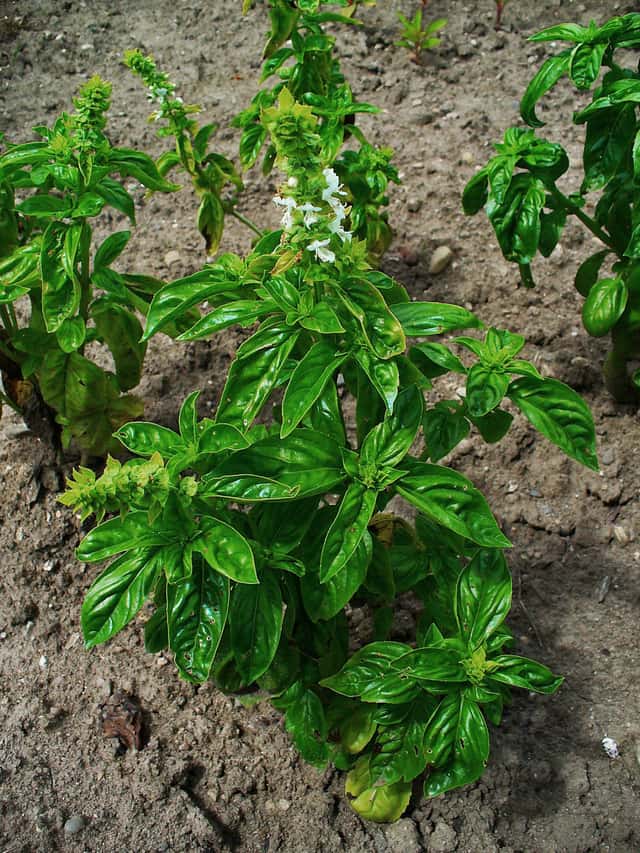
Basil needs full sun, regular watering without waterlogging, and protection from cold. It can be grown in pots or directly in the garden. Frequent pinching of flower buds encourages more leaf production.
Every 3 days
Direct sun
10° - 35°C
40% - 70%
Categories
What is Sweet Basil?
Sweet Basil (Ocimum basilicum) is a easy-care plant from the Lamiaceae family. Sweet basil (Ocimum basilicum) is a popular annual aromatic herb native to India and Southeast Asia. Widely cultivated worldwide for culinary, medicinal, and aromatic uses, it features bright green oval leaves and small white to pink flowers that bloom in summer.
Sweet Basil grows up to 60cm, spread of 60cm, watering every 3 days, 10°C – 35°C, 40–70% humidity. It is suitable for indoor environments and safe for pets.
Unlike many tropical plants, Sweet Basil tolerates watering mistakes. Best for beginners. Unlike many popular species, Sweet Basil is safe to keep around pets. Without adequate drainage, root rot can develop within 7 days.
How to Care for Sweet Basil?
TLDR: Sweet Basil needs Direct sun, watering every 3 days, and temperatures between 10-35°C with 40-70% humidity.
How Often Should You Water Sweet Basil?
Water every 2-3 days, keeping soil slightly moist but well-drained. Avoid overwatering — excess moisture promotes root rot and downy mildew. Water in the morning at the base of the plant.
How Much Light Does Sweet Basil Need?
Requires full sun for at least 6 hours daily. Indoors, place near south-facing windows or use grow lights. Insufficient light produces small, flavorless leaves.
What Is the Best Soil for Sweet Basil?
Use light, fertile, well-draining soil with pH between 6.0 and 7.5. Add organic matter to enrich. Avoid heavy clay soils that retain excess moisture.
What Pot Should You Use for Sweet Basil?
Terracotta or ceramic pots with drainage holes are ideal. A 15-20 cm pot is sufficient for an individual plant. Avoid oversized pots that retain too much moisture.
Care Schedule
Fertilize
Every 30 days
Rotate
Every 14 days
Repot
Every 365 days
What Is Sweet Basil and Where Does It Come From?
Sweet basil (Ocimum basilicum) is a popular annual aromatic herb native to India and Southeast Asia. Widely cultivated worldwide for culinary, medicinal, and aromatic uses, it features bright green oval leaves and small white to pink flowers that bloom in summer.
How to Propagate Sweet Basil?
Seed Sowing
Keep temperature above 20°C for good germination. Do not cover seeds too deeply.
- 1 Fill a pot with moist, well-drained potting mix
- 2 Sow seeds 0.5 cm deep
- 3 Cover lightly with soil and keep moist
- 4 Germination occurs in 5-10 days in a warm location
Materials needed:
Stem Cutting
Always use young, healthy stems. Keep in bright indirect light during rooting.
- 1 Cut a healthy 10-15 cm stem just below a node
- 2 Remove lower leaves
- 3 Place the stem in a glass of water
- 4 Change water every 2 days and wait for roots to form
Materials needed:
How Big Does Sweet Basil Grow?
TLDR: Sweet Basil can reach up to 60cm tall with Fast growth rate.
Max height
60cm
Spread
60cm
Growth rate
Fast
Foliage
Evergreen
Plant Uses
Edible
Can be consumed
Medicinal
Medicinal properties
Aromatic
Pleasant fragrance
Medicinal Uses
- Digestive aid
- Antiseptic
- Anti-inflammatory
- Expectorant
- Mild sedative
Culinary Uses
- Pesto
- Tomato sauce
- Salads
- Pizza
- Pasta
- Marinades
- Caprese
Is your plant showing symptoms?
Click on the symptom to discover possible causes:
What Diseases Commonly Affect Sweet Basil?
TLDR: Sweet Basil is susceptible to 6 known diseases. Monitor regularly for early detection.
Downy Mildew
Downy mildew is a fungal-like disease caused by oomycetes (water molds) that thrives in cool, wet conditions. It affects a wide range of plants, causing yellowing leaves with fuzzy white-gray growth underneath, leading to defoliation and reduced yields if left untreated.
Fusarium Wilt
Fusarium wilt is a serious fungal disease caused by the soil-borne fungus Fusarium oxysporum. The fungus invades roots and blocks the water-conducting vessels (xylem) of the plant, causing progressive wilting and eventual death. Host-specific forms of the pathogen exist that attack different plant species.
Aphids
Aphids are small, soft-bodied, pear-shaped insects (1/16 to 1/8 inch long) that feed by sucking nutrient-rich sap from plants. They reproduce rapidly and can quickly weaken plants, causing distorted growth and transmitting plant viruses. Aphids come in various colors including green, black, red, yellow, brown, and gray. They secrete honeydew, a sticky substance that attracts ants and encourages sooty mold growth.
Bacterial Leaf Spot
Bacterial leaf spot is a plant disease caused by bacteria in the Xanthomonas and Pseudomonas genera that affects various ornamental and edible plants. The bacteria infect leaves through wounds or natural openings, causing characteristic lesions that can lead to premature leaf drop and plant weakening.
Meaning & Symbolism
Symbol of love and protection in many cultures. In Hindu tradition, it is the sacred Tulasi plant, representing the goddess Lakshmi.
Fun Facts
Basil is one of the most consumed herbs in the world, with over 60 known varieties
In India, holy basil (Tulasi) has been cultivated for over 5,000 years
Basil essential oil is used in perfumery, cosmetics, and the food industry
Regular harvesting encourages the plant to produce more — the more you pick, the more it grows
Frequently asked questions
How often should I water basil?
Can basil be grown indoors?
Why are my basil leaves turning yellow?
How do I make basil last longer?
Is basil toxic to pets?
Compare with similar plants
| Attribute | Difficulty | Light | Watering | Pet Safe |
|---|---|---|---|---|
| Field Maple | Easy | Bright indirect | 14d | ✓ |
| Silver Birch | Easy | Direct sun | 14d | ✓ |
| Common Blanketflower | Easy | Direct sun | 10d | ✓ |
| Cushion Bush | Easy | Direct sun | 14d | ✓ |





