Araceae
Arrowhead Vines (Syngonium) Care Guide – Light, Water & Soil
Syngonium
Syngonium is one of the most adaptable and beginner-friendly houseplants. It thrives in bright to medium indirect light, needs watering roughly once a week when the top inch of soil dries out, and appreciates higher humidity. Keep it away from cold drafts and direct sun. Fertilize monthly in spring and summer with a balanced diluted fertilizer. Repot every 1-2 years. It can grow upright with a moss pole or trail beautifully in a hanging basket.
Every 7 days
Partial shade
15° - 29°C
50% - 70%
Categories
What is Arrowhead Vines?
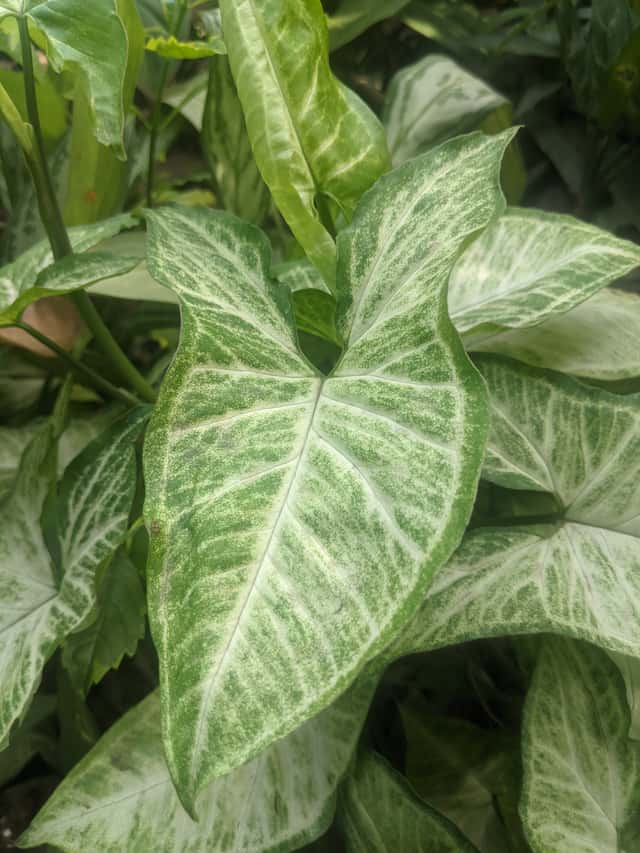
Arrowhead Vines (Syngonium) is a easy-care plant from the Araceae family. Syngonium is a genus of tropical climbing and trailing plants in the family Araceae, native to the rainforests of Central and South America. Its young leaves display a distinctive arrowhead shape that gradually transforms into multi-lobed forms as the plant matures. Widely grown as a houseplant for...
Arrowhead Vines grows up to 1.8m, spread of 180cm, watering every 7 days, 15°C – 29°C, 50–70% humidity. It is suitable for indoor environments and not safe for pets.
Unlike many tropical plants, Arrowhead Vines tolerates watering mistakes. Best for beginners. Without precautions, ingestion can cause irritation in pets. Keep out of reach of cats and dogs. Without adequate drainage, root rot can develop within 14 days.
How to Care for Arrowhead Vines?
TLDR: Arrowhead Vines needs Partial shade, watering every 7 days, and temperatures between 15-29°C with 50-70% humidity.
How Often Should You Water Arrowhead Vines?
Water when the top inch of soil feels dry — approximately every 7 days in summer, every 10-14 days in winter. Avoid waterlogging; overwatering is the leading cause of root rot. Never let the pot sit in standing water.
How Much Light Does Arrowhead Vines Need?
Prefers bright to medium indirect light. Tolerates lower light but variegated cultivars may revert to green under insufficient light. Avoid direct sunlight, which scorches the leaves. An east- or west-facing window is ideal.
What Is the Best Soil for Arrowhead Vines?
Use a well-draining aroid mix: equal parts potting soil, perlite, and orchid bark. Target pH between 5.5 and 6.5. Avoid dense, moisture-retaining soils that promote root rot.
What Pot Should You Use for Arrowhead Vines?
Pots with drainage holes are essential. Terra cotta or ceramic pots help regulate soil moisture. Hanging baskets highlight the trailing habit, while a moss pole or totem encourages larger leaves and vertical growth.
Care Schedule
Fertilize
Every 30 days
Misting
Every 3 days
Rotate
Every 7 days
Repot
Every 365 days
What Is Arrowhead Vines and Where Does It Come From?
Syngonium is a genus of tropical climbing and trailing plants in the family Araceae, native to the rainforests of Central and South America. Its young leaves display a distinctive arrowhead shape that gradually transforms into multi-lobed forms as the plant matures. Widely grown as a houseplant for its lush ornamental foliage, Syngonium comes in dozens of cultivars with green, variegated, pink, and silvery leaves. Important: the plant is toxic to cats, dogs, and humans due to calcium oxalate crystals present throughout its tissues.
How to Propagate Arrowhead Vines?
Stem cutting
Division
How Big Does Arrowhead Vines Grow?
TLDR: Arrowhead Vines can reach up to 1.8m tall with Medium growth rate.
Max height
1.8m
Spread
1.8m
Growth rate
Medium
Foliage
Evergreen
Warning: Toxic Plant
This plant can be toxic if ingested. Keep out of reach of:
Plant Uses
Ornamental
Great for decoration
Air Purifying
Improves air quality
Is your plant showing symptoms?
Click on the symptom to discover possible causes:
What Diseases Commonly Affect Arrowhead Vines?
TLDR: Arrowhead Vines is susceptible to 12 known diseases. Monitor regularly for early detection.
Root Rot
Root rot is a serious fungal disease that affects the root system of plants, causing them to decay and die. It is primarily caused by overwatering, poor drainage, or soil-borne fungi such as Pythium, Phytophthora, Rhizoctonia, and Fusarium. The disease thrives in waterlogged conditions where roots are deprived of oxygen, making them susceptible to fungal infection.
Spider Mites
Spider mites are tiny arachnids (less than 1/20 inch long) related to spiders and ticks that feed on plant sap. They thrive in hot, dry conditions and can cause significant damage to ornamental and vegetable plants. During severe infestations, crop losses can reach 14% or higher as these pests disrupt vital plant processes including photosynthesis, carbon dioxide absorption, and transpiration.
Mealybugs
Mealybugs are small, soft-bodied insects covered with a white, waxy, cottony material. They are common pests of houseplants and outdoor plants in mild climates. These sap-sucking insects feed on plant tissue, causing damage, stunted growth, and can lead to plant death if left untreated. They produce sticky honeydew which attracts sooty mold.
Scale Insects
Scale insects are small sap-sucking pests that appear as brown, shell-like bumps on plant stems and leaves. There are over 25 species, divided into armored (hard) and unarmored (soft) scales. They feed by piercing plant tissue and extracting sap, which weakens the plant and can lead to yellowing, stunted growth, and even death if left untreated. They also excrete honeydew, which attracts ants and promotes sooty mold growth.
Meaning & Symbolism
The arrowhead plant symbolizes adaptability, personal growth, and resilience — mirroring its leaf shape transformation from a simple arrow to a complex multi-lobed form. In some traditions it is associated with good luck and positive energy in the home.
Fun Facts
Syngonium leaves undergo a dramatic metamorphosis: juvenile leaves are arrow-shaped, while mature leaves develop up to 11 lobes.
Syngonium has air-purifying qualities, helping to remove volatile organic compounds such as benzene and formaldehyde from indoor air.
The genus contains more than 30 recognized species, all native to tropical forests from Mexico to Brazil.
In outdoor tropical climates (USDA zones 10-12), Syngonium can grow as a climbing vine reaching over 10 meters in height.
Compare with similar plants
| Attribute | Difficulty | Light | Watering | Pet Safe |
|---|---|---|---|---|
| Field Maple | Easy | Bright indirect | 14d | ✓ |
| Silver Birch | Easy | Direct sun | 14d | ✓ |
| Common Blanketflower | Easy | Direct sun | 10d | ✓ |
| Cushion Bush | Easy | Direct sun | 14d | ✓ |





