Pinaceae
Subalpine Fir: Edible Plant
Abies lasiocarpa
The Subalpine Fir is a low-maintenance tree suitable for cooler climatic conditions. It prefers full sun or light partial shade in locations with sufficient atmospheric humidity. The soil should be humus-rich, slightly acidic (pH 4.5–6.0), consistently moist, and well-drained. The tree is very frost-hardy (down to –29 °C) and grows slowly. Pruning is generally not required; in spring, fertilize with compost or a conifer-specific fertilizer. Stagnant water in the soil is harmful and leads to root rot.
Every 14 days
Bright indirect
-29° - 25°C
50% - 80%
Categories
What is Subalpine Fir?
Subalpine Fir (Abies lasiocarpa) is a easy-care plant from the Pinaceae family. The Subalpine Fir (Abies lasiocarpa) is a majestic coniferous tree native to the subalpine forests and mountainous regions of western North America, where it grows at elevations from 600 to 3,700 m. This slow-growing tree, with a narrow, conical crown, reaches a height of 15–27 m and a width of 3–6...
Subalpine Fir grows up to 27.0m, spread of 610cm, watering every 14 days, -29°C – 25°C, 50–80% humidity. It is not suitable for indoor environments and safe for pets.
Unlike many tropical plants, Subalpine Fir tolerates watering mistakes. Best for beginners. Unlike many popular species, Subalpine Fir is safe to keep around pets.
How to Care for Subalpine Fir?
TLDR: Subalpine Fir needs Bright indirect, watering every 14 days, and temperatures between -29-25°C with 50-80% humidity.
How Often Should You Water Subalpine Fir?
Regular watering is crucial in the first two years after planting, especially during dry periods. Mature trees are tolerant of short-term drought, but prolonged waterlogging is dangerous. Water approximately once every 10–14 days, allowing the top layer of soil to dry out slightly between waterings. Mulching around the trunk helps retain moisture and protects the roots.
How Much Light Does Subalpine Fir Need?
The Subalpine Fir thrives best in full sun or light partial shade. It grows slower in shade but tolerates it well as a young tree. For optimal development of its silvery-blue needle coloration and a dense crown, prefer a location with direct sunlight for most of the day. Avoid hot and stuffy positions without air circulation.
What Is the Best Soil for Subalpine Fir?
It thrives best in humus-rich, slightly acidic soil with a pH of 4.5–6.0. The soil must be well-drained – firs do not tolerate stagnant water. Loamy-sandy or loamy soil with plenty of organic matter is suitable. When planting, it is advisable to add compost; mulch around the base of the tree stabilizes moisture and suppresses weeds. Calcareous soils are unsuitable.
What Pot Should You Use for Subalpine Fir?
The Subalpine Fir is not suitable for container cultivation under normal conditions. For bonsai cultivation or temporary container growing, use a large wooden or ceramic pot with excellent drainage holes and a substrate for conifers (acidic pH). In a container, it requires consistent watering and protection of the roots from freezing.
Care Schedule
Fertilize
Every 90 days
What Is Subalpine Fir and Where Does It Come From?
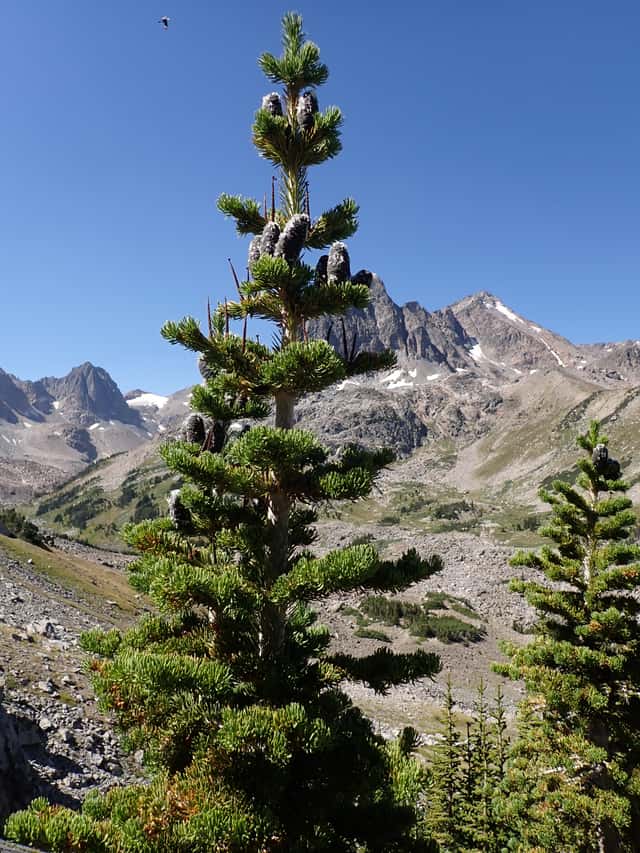
The Subalpine Fir (Abies lasiocarpa) is a majestic coniferous tree native to the subalpine forests and mountainous regions of western North America, where it grows at elevations from 600 to 3,700 m. This slow-growing tree, with a narrow, conical crown, reaches a height of 15–27 m and a width of 3–6 m. It is characterized by smooth, silvery-gray bark with resin blisters on young specimens, and soft, spirally arranged needles with a striking silvery-blue-gray coloration. It is one of the most resilient cold-loving conifers, capable of surviving frosts down to –29 °C, and forms a typical mountain forest alongside dwarf pine and spruce. Due to its elegant habit, it is valued as an ornamental tree for large gardens and parks.
How to Propagate Subalpine Fir?
Seeds
Layering
How Big Does Subalpine Fir Grow?
TLDR: Subalpine Fir can reach up to 27.0m tall with Slow growth rate.
Max height
27.0m
Spread
6.1m
Growth rate
Slow
Foliage
Evergreen
Plant Uses
Ornamental
Great for decoration
Edible
Can be consumed
Medicinal
Medicinal properties
Medicinal Uses
- Resin and inner bark have antiseptic properties; Native American tribes used them to treat wounds and skin diseases.
- A decoction of needles and buds served as a decongestant for colds, bronchitis, and symptoms of tuberculosis.
- The resin has tonic and mildly laxative properties; it was used as a laxative and general tonic.
- Aromatic needles were used to repel moths and to make incense for spiritual ceremonies.
Culinary Uses
- The inner bark was dried and ground into flour, which was added to bread and porridges as a source of starch.
- A vitamin C-rich tea was prepared from fresh needles; needle tea was important in preventing scurvy.
- Fresh resin was used as chewing gum.
- Young cones are occasionally eaten as a delicacy in their early stage of development.
Is your plant showing symptoms?
Click on the symptom to discover possible causes:
What Diseases Commonly Affect Subalpine Fir?
TLDR: Subalpine Fir is susceptible to 7 known diseases. Monitor regularly for early detection.
Root Rot
Root rot is a serious fungal disease that affects the root system of plants, causing them to decay and die. It is primarily caused by overwatering, poor drainage, or soil-borne fungi such as Pythium, Phytophthora, Rhizoctonia, and Fusarium. The disease thrives in waterlogged conditions where roots are deprived of oxygen, making them susceptible to fungal infection.
Rust
Rust is a common fungal disease caused by fungi in the order Pucciniales that affects a wide variety of plants. The disease gets its name from the characteristic orange, yellow, or reddish-brown pustules that appear on leaves, resembling metal rust. This obligate fungal parasite requires living plants to survive and can cause significant economic losses in agricultural crops.
Canker
Canker is a disease caused by various fungi and bacteria that create necrotic, sunken areas on bark of branches, stems, and trunks. Pathogens enter through wounds and natural openings, especially when plants are stressed. Canker can gradually weaken or kill branches by disrupting water and nutrient flow.
Phytophthora
The Phytophthora genus consists of soil-borne oomycetes (water molds) that act as plant pathogens, primarily affecting trees and woody plants. It typically spreads through the root system, leading to systemic decline and eventual plant collapse.
Meaning & Symbolism
The Subalpine Fir symbolizes resilience and endurance in the harsh conditions of mountain nature. In Native American tradition, it was revered as a sacred tree of healing power and protection. It also symbolizes eternity and constancy due to its evergreen nature and ability to survive at extreme altitudes for centuries.
Compare with similar plants
| Attribute | Difficulty | Light | Watering | Pet Safe |
|---|---|---|---|---|
| Field Maple | Easy | Bright indirect | 14d | ✓ |
| Silver Birch | Easy | Direct sun | 14d | ✓ |
| Cushion Bush | Easy | Direct sun | 14d | ✓ |
| Peruvian peppertree | Easy | Direct sun | 14d | ⚠️ |