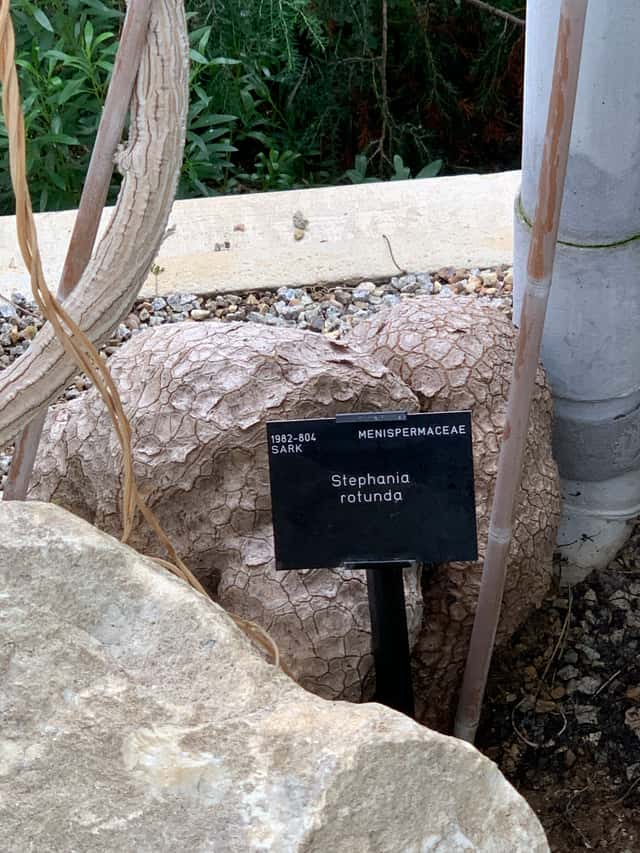
Menispermaceae
Stephania Care Guide: The Elephant Foot Plant
Stephania
Give it bright light with a little morning or evening sun, water only when the top half of the soil has dried out, and let it rest almost dry through its winter dormancy. It thrives in a gritty, fast-draining mix and average room humidity, but is unforgiving of soggy soil.
Every 7 days
Bright indirect
16° - 26°C
50% - 75%
Categories
What is Elephant Foot Plant?
Elephant Foot Plant (Stephania) is a medium-care plant from the Menispermaceae family. Stephania is a genus of caudiciform vines in the Menispermaceae family, native to the tropical forests of Southeast and East Asia. It is prized by collectors for its swollen, potato-like caudex, a woody, water-storing tuber that can grow to nearly a foot across over many decades. Each growing season...
Elephant Foot Plant grows up to 1.0m, watering every 7 days, 16°C – 26°C, 50–75% humidity. It is suitable for indoor environments and not safe for pets.
Without precautions, ingestion can cause irritation in pets. Keep out of reach of cats and dogs. Without adequate drainage, root rot can develop within 14 days.
How to Care for Elephant Foot Plant?
TLDR: Elephant Foot Plant needs Bright indirect, watering every 7 days, and temperatures between 16-26°C with 50-75% humidity.
How Often Should You Water Elephant Foot Plant?
Water thoroughly once the top half of the potting mix is dry, using room-temperature water, since the caudex stores its own moisture, so err on the side of underwatering. Cut back to a light trickle every few weeks once the vines die back for dormancy.
How Much Light Does Elephant Foot Plant Need?
Place in bright, indirect light with a few hours of gentle morning or late-afternoon sun; harsh midday sun can scorch the leaves, while too little light produces sparse, leggy vines.
What Is the Best Soil for Elephant Foot Plant?
Pot in a gritty cactus or succulent mix amended with perlite, coarse sand, or pumice so water drains quickly and the caudex is never left sitting wet.
What Pot Should You Use for Elephant Foot Plant?
A shallow, wide terracotta pot with generous drainage holes suits the caudex best, letting roots and excess moisture breathe while keeping the tuber partly exposed above the soil line.
Care Schedule
Fertilize
Every 30 days
What Is Elephant Foot Plant and Where Does It Come From?
Stephania is a genus of caudiciform vines in the Menispermaceae family, native to the tropical forests of Southeast and East Asia. It is prized by collectors for its swollen, potato-like caudex, a woody, water-storing tuber that can grow to nearly a foot across over many decades. Each growing season, slender, twining vines emerge from the caudex, unfurling round, peltate leaves before dying back into dormancy when temperatures drop. Left largely untouched during its winter rest, the plant channels its energy into slowly thickening the caudex, making it as much a sculptural centerpiece as a houseplant.
How to Propagate Elephant Foot Plant?
Seed propagation
Bottom heat speeds germination considerably; be patient, as this species is notoriously slow both to sprout and to mature, sometimes taking decades to reach full size.
- 1 Soak seeds in lukewarm water for 24 hours before sowing
- 2 Sow seeds about 0.5cm deep in a well-draining cactus or succulent mix
- 3 Keep the mix consistently moist and maintain temperatures above 18C (64F)
- 4 Cover the pot with a clear bag or propagator lid to hold in humidity and warmth
- 5 Wait for germination, which can take anywhere from a few weeks to five months
- 6 Once seedlings develop a second leaf, transplant them into individual small pots
Materials needed:
How Big Does Elephant Foot Plant Grow?
TLDR: Elephant Foot Plant can reach up to 1.0m tall with Slow growth rate.
Max height
1.0m
Growth rate
Slow
Foliage
Deciduous
Warning: Toxic Plant
This plant can be toxic if ingested. Keep out of reach of:
Plant Uses
Ornamental
Great for decoration
Medicinal
Medicinal properties
Medicinal Uses
- Roots of several Stephania species have long been used in traditional Southeast and East Asian medicine to prepare decoctions for fever and inflammation
Is your plant showing symptoms?
Click on the symptom to discover possible causes:
What Diseases Commonly Affect Elephant Foot Plant?
TLDR: Elephant Foot Plant is susceptible to 9 known diseases. Monitor regularly for early detection.
Root Rot
Root rot is a serious fungal disease that affects the root system of plants, causing them to decay and die. It is primarily caused by overwatering, poor drainage, or soil-borne fungi such as Pythium, Phytophthora, Rhizoctonia, and Fusarium. The disease thrives in waterlogged conditions where roots are deprived of oxygen, making them susceptible to fungal infection.
Overwatering
Overwatering occurs when plants receive too much water, depriving roots of oxygen and causing root rot. This environmental stress is one of the most common causes of houseplant death, as waterlogged soil prevents roots from breathing and functioning properly.
Spider Mites
Spider mites are tiny arachnids (less than 1/20 inch long) related to spiders and ticks that feed on plant sap. They thrive in hot, dry conditions and can cause significant damage to ornamental and vegetable plants. During severe infestations, crop losses can reach 14% or higher as these pests disrupt vital plant processes including photosynthesis, carbon dioxide absorption, and transpiration.
Mealybugs
Mealybugs are small, soft-bodied insects covered with a white, waxy, cottony material. They are common pests of houseplants and outdoor plants in mild climates. These sap-sucking insects feed on plant tissue, causing damage, stunted growth, and can lead to plant death if left untreated. They produce sticky honeydew which attracts sooty mold.
Meaning & Symbolism
The long dormancy and unhurried growth of this plant have made it a quiet emblem of patience and resilience, a reminder that a season of apparent stillness is often when the deepest growth is happening beneath the surface.
Fun Facts
Its caudex can take decades to reach full size, growing only a few millimeters wider each year
The plant is completely leafless for several months every winter, living off water stored in its swollen base
Some specimens sold as dry, potato-like tubers can sprout and grow for 20+ years afterward
Frequently asked questions
Why did my Stephania lose all its leaves?
How often should I water Stephania?
Is Stephania toxic to pets?
Why is my Stephania caudex cracking?
Compare with similar plants
| Attribute | Difficulty | Light | Watering | Pet Safe |
|---|---|---|---|---|
| Dark Fieldcap | Medium | Low light | 2d | ⚠️ |
| Azalea | Medium | Partial shade | 3d | ⚠️ |
| Bougainvillea | Medium | Direct sun | 7d | ⚠️ |
| Wild Lettuce | Medium | Direct sun | 7d | ⚠️ |
Choose & Compare
Sources & References
- Stephania Erecta: Growing Guide, Care Tips and Problem Guide - ourhouseplants.com
- The COMPLETE Guide & Dormancy Care for Stephania Erecta - ukhouseplants.com
- Stephania Erecta Care Guide - Rooted Hues
- Stephania - Wikipedia
- Best Soil for Stephania erecta - Greg App
- Stephania Erecta: Complete Guide on the Elephant Foot Plant - Hydrobuilder



