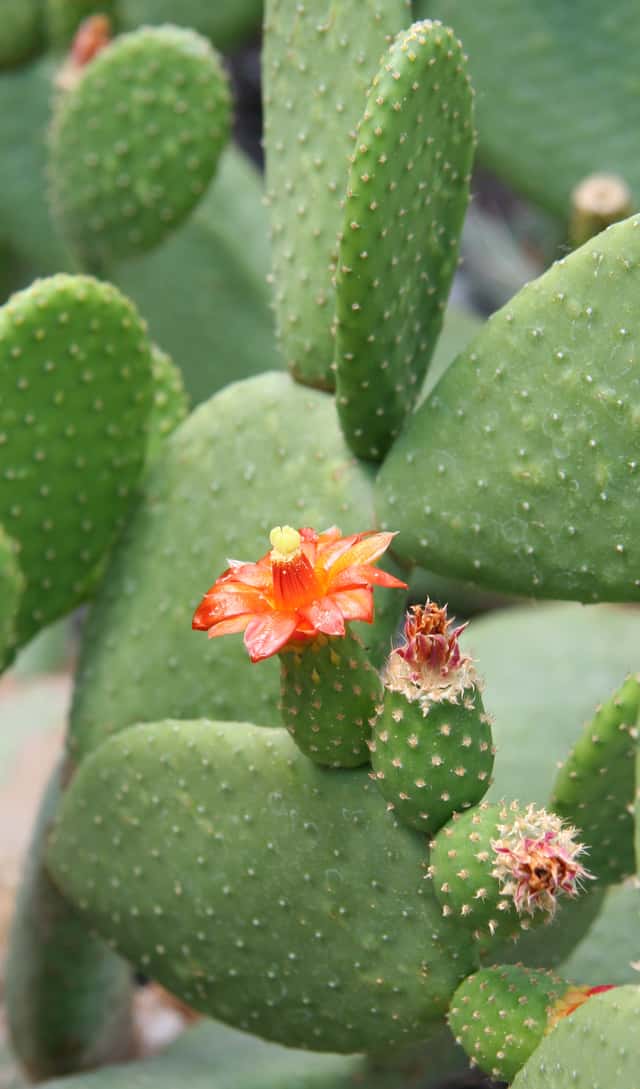
Cactaceae
Pink Toad Cactus (Tacinga): Brazil's Native Caatinga Cactus
Tacinga
Extremely hardy and low-maintenance plant. Thrives in full direct sun, sandy well-draining soil, and infrequent watering. No misting, rotation, or frequent repotting needed. Ideal for xerophytic gardens and cactus collections.
Every 10 days
Direct sun
5° - 40°C
20% - 60%
Categories
What is Pink Toad Cactus?
Pink Toad Cactus (Tacinga) is a easy-care plant from the Cactaceae family. Tacinga is a genus of cacti native to the Caatinga biome of northeastern Brazil, belonging to the family Cactaceae (subfamily Opuntioideae). Closely related to Opuntia, it includes species such as T. inamoena and T. funalis, perfectly adapted to semi-arid conditions. It produces colorful flowers and...
Pink Toad Cactus grows up to 5.0m, spread of 200cm, watering every 10 days, 5°C – 40°C, 20–60% humidity. It is not suitable for indoor environments and safe for pets.
Unlike many tropical plants, Pink Toad Cactus tolerates watering mistakes. Best for beginners. Unlike many popular species, Pink Toad Cactus is safe to keep around pets.
How to Care for Pink Toad Cactus?
TLDR: Pink Toad Cactus needs Direct sun, watering every 10 days, and temperatures between 5-40°C with 20-60% humidity.
How Often Should You Water Pink Toad Cactus?
Water every 10 days in summer and reduce to every 15–20 days in winter. Allow the soil to dry out completely between waterings to prevent root rot.
How Much Light Does Pink Toad Cactus Need?
Place in full direct sun for at least 6 hours per day. Not suitable for indoor environments due to insufficient light.
What Is the Best Soil for Pink Toad Cactus?
Use sandy, well-draining soil with coarse sand and gravel. Ideal pH is 5.5–7.0. Avoid heavy or compacted soils.
What Pot Should You Use for Pink Toad Cactus?
Terracotta or ceramic pot with drainage hole. Avoid plastic pots that retain moisture.
Care Schedule
Fertilize
Every 90 days
What Is Pink Toad Cactus and Where Does It Come From?
Tacinga is a genus of cacti native to the Caatinga biome of northeastern Brazil, belonging to the family Cactaceae (subfamily Opuntioideae). Closely related to Opuntia, it includes species such as T. inamoena and T. funalis, perfectly adapted to semi-arid conditions. It produces colorful flowers and edible fruits, and is an iconic symbol of Brazil's endemic flora.
How to Propagate Pink Toad Cactus?
Stem Cutting
Avoid watering for the first few days after planting to prevent rot.
- 1 Cut a healthy stem segment with a disinfected knife
- 2 Let the cut dry for 2–3 days to callous
- 3 Plant in slightly moist sandy substrate
- 4 Keep in indirect light until rooted
Materials needed:
Seeds
Germination can be irregular; keep substrate slightly moist until emergence.
- 1 Sow in moist sandy substrate
- 2 Cover lightly with a thin layer of sand
- 3 Keep in a warm, well-lit location
- 4 Transplant when seedlings reach 3–5 cm
Materials needed:
How Big Does Pink Toad Cactus Grow?
TLDR: Pink Toad Cactus can reach up to 5.0m tall with Slow growth rate.
Max height
5.0m
Spread
2.0m
Growth rate
Slow
Foliage
Evergreen
Plant Uses
Ornamental
Great for decoration
Edible
Can be consumed
Medicinal
Medicinal properties
Medicinal Uses
- Traditional use in treating fever and burns in northeastern Brazilian folk medicine
- Plant extract used for skin conditions
Culinary Uses
- Edible fruits used in handmade jams, preserves, and syrups
Is your plant showing symptoms?
Click on the symptom to discover possible causes:
What Diseases Commonly Affect Pink Toad Cactus?
TLDR: Pink Toad Cactus is susceptible to 4 known diseases. Monitor regularly for early detection.
Root Rot
Root rot is a serious fungal disease that affects the root system of plants, causing them to decay and die. It is primarily caused by overwatering, poor drainage, or soil-borne fungi such as Pythium, Phytophthora, Rhizoctonia, and Fusarium. The disease thrives in waterlogged conditions where roots are deprived of oxygen, making them susceptible to fungal infection.
Mealybugs
Mealybugs are small, soft-bodied insects covered with a white, waxy, cottony material. They are common pests of houseplants and outdoor plants in mild climates. These sap-sucking insects feed on plant tissue, causing damage, stunted growth, and can lead to plant death if left untreated. They produce sticky honeydew which attracts sooty mold.
Spider Mites
Spider mites are tiny arachnids (less than 1/20 inch long) related to spiders and ticks that feed on plant sap. They thrive in hot, dry conditions and can cause significant damage to ornamental and vegetable plants. During severe infestations, crop losses can reach 14% or higher as these pests disrupt vital plant processes including photosynthesis, carbon dioxide absorption, and transpiration.
Powdery Mildew
Powdery mildew is a common fungal disease caused by various fungi species including Erysiphe, Podosphaera, Oïdium, and Leveillula. It affects over 10,000 plant species worldwide. The disease thrives in warm, dry climates with high humidity and appears as a distinctive white powdery coating on plant surfaces.
Meaning & Symbolism
Symbol of resilience and adaptation to the Brazilian semi-arid.
Fun Facts
Tacinga inamoena can grow up to 5 meters tall in the wild
It is endemic to the Caatinga, a biome found exclusively in Brazil
Its fruits are an important food source for native semi-arid wildlife
The Tacinga genus was separated from Opuntia in the 20th century based on unique morphological features
Frequently asked questions
How often should I water the Pink Toad Cactus?
Does Tacinga need direct sunlight?
Is Tacinga toxic to pets?
What is the best soil for Tacinga?
Does Tacinga produce edible fruit?
Compare with similar plants
| Attribute | Difficulty | Light | Watering | Pet Safe |
|---|---|---|---|---|
| Field Maple | Easy | Bright indirect | 14d | ✓ |
| Silver Birch | Easy | Direct sun | 14d | ✓ |
| Common Blanketflower | Easy | Direct sun | 10d | ✓ |
| Cushion Bush | Easy | Direct sun | 14d | ✓ |





