Cactaceae
Dog-tail Cactus: Pet-Safe Plant
Deamia testudo
A low-maintenance cactus that enjoys bright light and moderate watering. It tolerates heat and low humidity well but is sensitive to overwatering, which quickly causes rot. As a climber, it benefits from a support or a hanging basket. Ideal for indoor cultivation in well-lit windows or outdoors in warm, frost-free climates.
Every 10 days
Bright indirect
5° - 38°C
40% - 80%
Categories
What is Dog-tail Cactus?
Dog-tail Cactus (Deamia testudo) is a medium-care plant from the Cactaceae family. Deamia testudo, known as the Dog-tail Cactus, is an epiphytic and climbing cactus native to the tropical forests of Central America and northern South America, from Mexico to Colombia and Venezuela. It grows by attaching itself to tree trunks and rocks using aerial roots, displaying angular and flat...
Dog-tail Cactus grows up to 3.0m, spread of 60cm, watering every 10 days, 5°C – 38°C, 40–80% humidity. It is suitable for indoor environments and safe for pets.
Unlike many popular species, Dog-tail Cactus is safe to keep around pets. Without adequate drainage, root rot can develop within 20 days.
How to Care for Dog-tail Cactus?
TLDR: Dog-tail Cactus needs Bright indirect, watering every 10 days, and temperatures between 5-38°C with 40-80% humidity.
How Often Should You Water Dog-tail Cactus?
Water only when the substrate has completely dried out, approximately every 10 days, reducing frequency in winter. Prefer watering from the base to keep the stems dry and prevent rot. Never leave standing water in the saucer.
How Much Light Does Dog-tail Cactus Need?
Prefers bright light, from full sun to partial shade. Indoors, place it near a sunny window. Thin or pale stems indicate a lack of light.
What Is the Best Soil for Dog-tail Cactus?
Use a well-drained, sandy substrate, such as a cactus mix with coarse sand and perlite or gravel. It tolerates slightly acidic to alkaline pH. Efficient drainage is essential to prevent root rot.
What Pot Should You Use for Dog-tail Cactus?
A terracotta pot with drainage holes, which helps excess moisture evaporate. A hanging basket highlights the trailing and climbing habit of the stems.
Care Schedule
Fertilize
Every 30 days
What Is Dog-tail Cactus and Where Does It Come From?
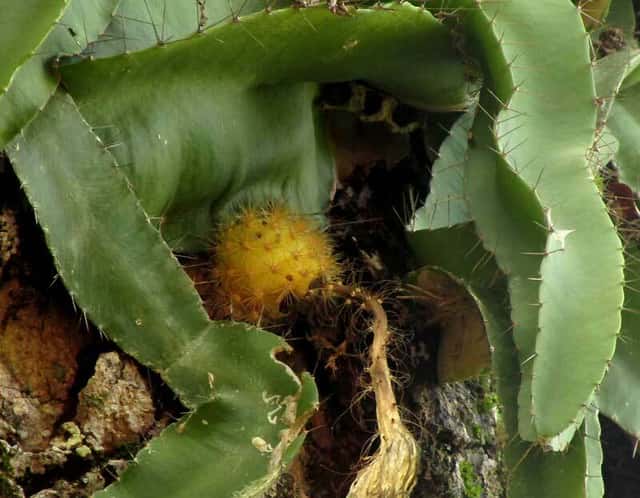
Deamia testudo, known as the Dog-tail Cactus, is an epiphytic and climbing cactus native to the tropical forests of Central America and northern South America, from Mexico to Colombia and Venezuela. It grows by attaching itself to tree trunks and rocks using aerial roots, displaying angular and flattened stems that resemble a tortoise shell. In summer and early fall, it produces large, fragrant, nocturnal white flowers, followed by spiny spherical fruits.
How to Propagate Dog-tail Cactus?
Stem Cutting Propagation
- Let the cut end heal for 24-48 hours before planting.
- Avoid overwatering until rooted.
- Use well-drained substrate to prevent rot.
- 1 Cut the Cutting
Cut a healthy 4-6 inch (10-15 cm) stem segment with a clean knife.
- 2 Callus
Let the cut end dry and form a callus for 24 to 48 hours in a ventilated, shaded area.
- 3 Plant
Insert the callused end into a slightly moist, sandy, well-drained substrate.
- 4 Root
Keep in a warm, bright spot with indirect light, watering sparingly. Roots appear in 3 to 6 weeks.
Materials needed:
How Big Does Dog-tail Cactus Grow?
TLDR: Dog-tail Cactus can reach up to 3.0m tall with Medium growth rate.
Max height
3.0m
Spread
60cm
Growth rate
Medium
Foliage
Evergreen
Plant Uses
Ornamental
Great for decoration
Is your plant showing symptoms?
Click on the symptom to discover possible causes:
What Diseases Commonly Affect Dog-tail Cactus?
TLDR: Dog-tail Cactus is susceptible to 3 known diseases. Monitor regularly for early detection.
Root Rot
Root rot is a serious fungal disease that affects the root system of plants, causing them to decay and die. It is primarily caused by overwatering, poor drainage, or soil-borne fungi such as Pythium, Phytophthora, Rhizoctonia, and Fusarium. The disease thrives in waterlogged conditions where roots are deprived of oxygen, making them susceptible to fungal infection.
Mealybugs
Mealybugs are small, soft-bodied insects covered with a white, waxy, cottony material. They are common pests of houseplants and outdoor plants in mild climates. These sap-sucking insects feed on plant tissue, causing damage, stunted growth, and can lead to plant death if left untreated. They produce sticky honeydew which attracts sooty mold.
Spider Mites
Spider mites are tiny arachnids (less than 1/20 inch long) related to spiders and ticks that feed on plant sap. They thrive in hot, dry conditions and can cause significant damage to ornamental and vegetable plants. During severe infestations, crop losses can reach 14% or higher as these pests disrupt vital plant processes including photosynthesis, carbon dioxide absorption, and transpiration.
Meaning & Symbolism
A symbol of resilience and adaptation, as it thrives attached to trees and rocks in adverse conditions.
Compare with similar plants
| Attribute | Difficulty | Light | Watering | Pet Safe |
|---|---|---|---|---|
| Azalea | Medium | Partial shade | 3d | ⚠️ |
| Wild Lettuce | Medium | Direct sun | 7d | ⚠️ |
| Cape Primrose | Medium | Partial shade | 7d | ✓ |
| Honey Locust | Medium | Direct sun | 14d | ✓ |