Scrophulariaceae
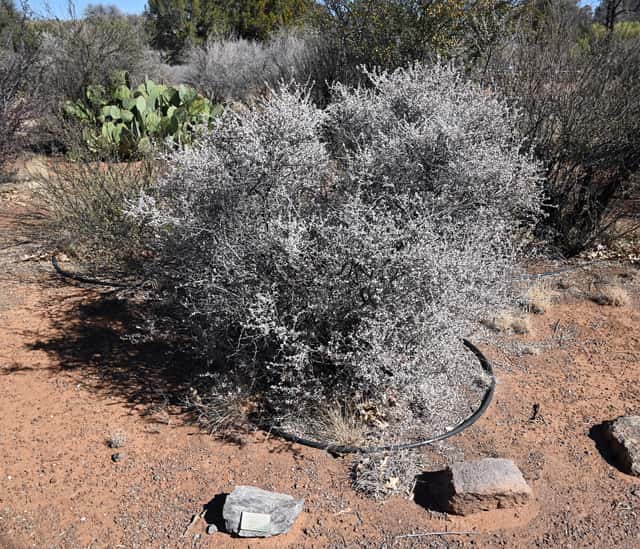
Thunder Cloud Sage (Leucophyllum candidum) Care Guide
Leucophyllum candidum
An extremely drought-tolerant desert shrub that thrives on neglect. Give it full sun, alkaline well-draining soil, and infrequent deep watering — its biggest enemy is soggy soil, which leads to root rot.
Every 14 days
Direct sun
-12° - 40°C
20% - 50%
Categories
What is Thunder Cloud Sage?
Thunder Cloud Sage (Leucophyllum candidum) is a easy-care plant from the Scrophulariaceae family. Leucophyllum candidum is a compact, silvery-leaved evergreen shrub native to the arid limestone hills of the Chihuahuan Desert in Texas and northern Mexico. Prized for its dense, felted foliage and lavender-purple blooms that appear after rains, it is a hardy, low-maintenance choice for xeriscapes a...
Thunder Cloud Sage grows up to 1.5m, spread of 120cm, watering every 14 days, -12°C – 40°C, 20–50% humidity. It is not suitable for indoor environments and safe for pets.
Unlike many tropical plants, Thunder Cloud Sage tolerates watering mistakes. Best for beginners. Unlike many popular species, Thunder Cloud Sage is safe to keep around pets.
How to Care for Thunder Cloud Sage?
TLDR: Thunder Cloud Sage needs Direct sun, watering every 14 days, and temperatures between -12-40°C with 20-50% humidity.
How Often Should You Water Thunder Cloud Sage?
Water deeply but infrequently, letting the soil dry out completely between waterings. Reduce watering further in winter; established plants need little to no supplemental water.
How Much Light Does Thunder Cloud Sage Need?
Provide full sun for the best foliage color and heaviest flowering. It tolerates partial shade but blooms less.
What Is the Best Soil for Thunder Cloud Sage?
Plant in sandy, alkaline, well-draining soil. Good drainage is essential — this species is more prone to root rot than other Leucophyllum species if soil stays wet.
What Pot Should You Use for Thunder Cloud Sage?
Unglazed terracotta pot with ample drainage holes, if container-grown.
What Is Thunder Cloud Sage and Where Does It Come From?
Leucophyllum candidum is a compact, silvery-leaved evergreen shrub native to the arid limestone hills of the Chihuahuan Desert in Texas and northern Mexico. Prized for its dense, felted foliage and lavender-purple blooms that appear after rains, it is a hardy, low-maintenance choice for xeriscapes and desert gardens.
How to Propagate Thunder Cloud Sage?
Semi-hardwood stem cutting
Avoid overwatering cuttings, as Leucophyllum candidum is highly prone to rot; bottom heat can speed rooting.
- 1 Take a 10-15 cm semi-hardwood cutting from a healthy stem in spring or early summer
- 2 Remove the lower leaves and dip the cut end in rooting hormone
- 3 Insert into a well-draining sandy or perlite-based mix
- 4 Keep lightly moist (never soggy) until roots form
Materials needed:
Seed propagation
Germination can be slow and uneven; patience is key.
- 1 Sow seeds on the surface of a sandy, well-draining seed mix
- 2 Cover lightly and keep in a warm, sunny spot
- 3 Keep the soil barely moist until germination
- 4 Transplant seedlings once they have several true leaves
Materials needed:
How Big Does Thunder Cloud Sage Grow?
TLDR: Thunder Cloud Sage can reach up to 1.5m tall with Medium growth rate.
Max height
1.5m
Spread
1.2m
Growth rate
Medium
Foliage
Evergreen
Plant Uses
Ornamental
Great for decoration
Is your plant showing symptoms?
Click on the symptom to discover possible causes:
What Diseases Commonly Affect Thunder Cloud Sage?
TLDR: Thunder Cloud Sage is susceptible to 5 known diseases. Monitor regularly for early detection.
Root Rot
Root rot is a serious fungal disease that affects the root system of plants, causing them to decay and die. It is primarily caused by overwatering, poor drainage, or soil-borne fungi such as Pythium, Phytophthora, Rhizoctonia, and Fusarium. The disease thrives in waterlogged conditions where roots are deprived of oxygen, making them susceptible to fungal infection.
Leaf Spot
Leaf spot is a common fungal disease caused by various pathogens including Alternaria, Ascochyta, Colletotrichum, Septoria, and Venturia. It primarily affects leaves, causing discolored spots that can lead to premature leaf drop if left untreated.
Aphids
Aphids are small, soft-bodied, pear-shaped insects (1/16 to 1/8 inch long) that feed by sucking nutrient-rich sap from plants. They reproduce rapidly and can quickly weaken plants, causing distorted growth and transmitting plant viruses. Aphids come in various colors including green, black, red, yellow, brown, and gray. They secrete honeydew, a sticky substance that attracts ants and encourages sooty mold growth.
Spider Mites
Spider mites are tiny arachnids (less than 1/20 inch long) related to spiders and ticks that feed on plant sap. They thrive in hot, dry conditions and can cause significant damage to ornamental and vegetable plants. During severe infestations, crop losses can reach 14% or higher as these pests disrupt vital plant processes including photosynthesis, carbon dioxide absorption, and transpiration.
Meaning & Symbolism
Represents resilience and endurance, thriving in harsh desert climates with minimal care.
Fun Facts
Its silvery leaves reflect intense desert sunlight, helping the plant survive extreme heat.
Wild populations often burst into bloom within days of a rainstorm, earning relatives the nickname "barometer bush".
It belongs to the same plant family as snapdragons, Scrophulariaceae.
Frequently asked questions
How often should I water Thunder Cloud Sage?
Is Leucophyllum candidum toxic to pets?
Why is my Thunder Cloud Sage not blooming?
What is the biggest risk when growing this shrub?
Compare with similar plants
| Attribute | Difficulty | Light | Watering | Pet Safe |
|---|---|---|---|---|
| Field Maple | Easy | Bright indirect | 14d | ✓ |
| Silver Birch | Easy | Direct sun | 14d | ✓ |
| Common Blanketflower | Easy | Direct sun | 10d | ✓ |
| Cushion Bush | Easy | Direct sun | 14d | ✓ |





