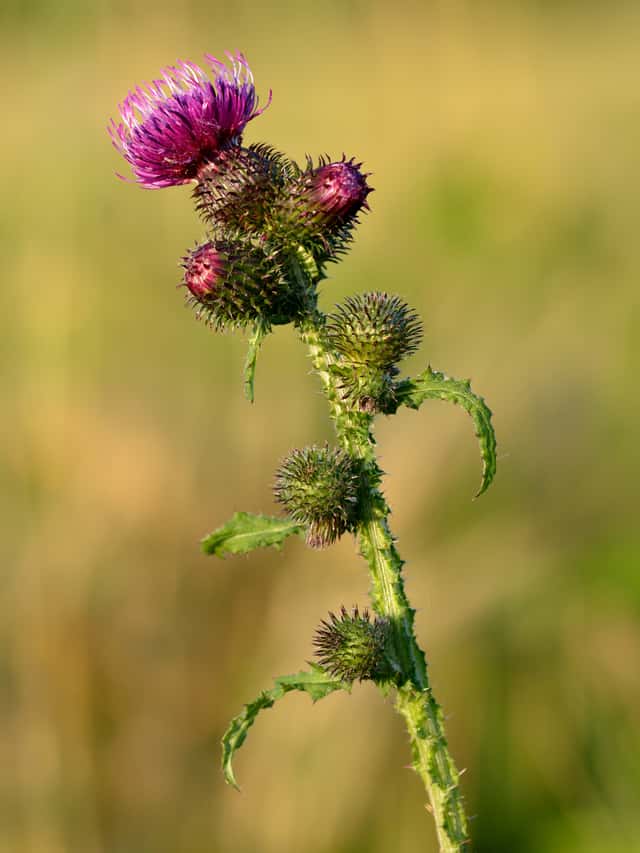
Asteraceae
Carduus – Thistle
Carduus
Hardy, low-maintenance plants that thrive in full sun and tolerate drought once established. They prefer well-drained soil and need little care beyond managing their spines and controlling self-seeding.
Every 10 days
Direct sun
-10° - 35°C
30% - 70%
Categories
What is Thistle?
Thistle (Carduus) is a easy-care plant from the Asteraceae family. Carduus is a genus in the family Asteraceae comprising around 90 species of spiny thistles, commonly known as "plumeless thistles" because they lack the feathery pappus found in the related genus Cirsium. Native to Europe, North Africa and Asia, many species have naturalized as ruderal or invasive w...
Thistle grows up to 1.5m, spread of 60cm, watering every 10 days, -10°C – 35°C, 30–70% humidity. It is not suitable for indoor environments and safe for pets.
Unlike many tropical plants, Thistle tolerates watering mistakes. Best for beginners. Unlike many popular species, Thistle is safe to keep around pets.
How to Care for Thistle?
TLDR: Thistle needs Direct sun, watering every 10 days, and temperatures between -10-35°C with 30-70% humidity.
How Often Should You Water Thistle?
Water deeply but infrequently, letting the soil dry out between waterings. Established plants handle dry spells well.
How Much Light Does Thistle Need?
Prefers full sun, at least 6 hours of direct light daily. Tolerates partial shade but flowers less.
What Is the Best Soil for Thistle?
Well-drained soil is essential; most species adapt to poor, sandy or calcareous soils as long as they are not waterlogged.
What Pot Should You Use for Thistle?
Not recommended for small pots due to the robust size, deep taproot and spines; if grown deliberately, prefer open beds or large containers.
What Is Thistle and Where Does It Come From?
Carduus is a genus in the family Asteraceae comprising around 90 species of spiny thistles, commonly known as "plumeless thistles" because they lack the feathery pappus found in the related genus Cirsium. Native to Europe, North Africa and Asia, many species have naturalized as ruderal or invasive weeds elsewhere, including North America and Australia. This profile describes the genus generally; traits such as height, bloom time and cold hardiness vary among species (e.g., C. nutans, C. acanthoides, C. crispus).
How to Propagate Thistle?
Seed propagation
Seeds germinate readily and plants can self-seed quickly; deadhead flowers before seed set to prevent unwanted spread.
- 1 Collect mature seeds from dried flower heads in late summer
- 2 Sow directly into the ground or pots with well-drained substrate
- 3 Cover lightly with a thin layer of soil
- 4 Keep the substrate lightly moist until germination
Materials needed:
How Big Does Thistle Grow?
TLDR: Thistle can reach up to 1.5m tall with Fast growth rate.
Max height
1.5m
Spread
60cm
Growth rate
Fast
Foliage
Deciduous
Plant Uses
Ornamental
Great for decoration
Is your plant showing symptoms?
Click on the symptom to discover possible causes:
What Diseases Commonly Affect Thistle?
TLDR: Thistle is susceptible to 3 known diseases. Monitor regularly for early detection.
Aphids
Aphids are small, soft-bodied, pear-shaped insects (1/16 to 1/8 inch long) that feed by sucking nutrient-rich sap from plants. They reproduce rapidly and can quickly weaken plants, causing distorted growth and transmitting plant viruses. Aphids come in various colors including green, black, red, yellow, brown, and gray. They secrete honeydew, a sticky substance that attracts ants and encourages sooty mold growth.
Powdery Mildew
Powdery mildew is a common fungal disease caused by various fungi species including Erysiphe, Podosphaera, Oïdium, and Leveillula. It affects over 10,000 plant species worldwide. The disease thrives in warm, dry climates with high humidity and appears as a distinctive white powdery coating on plant surfaces.
Rust
Rust is a common fungal disease caused by fungi in the order Pucciniales that affects a wide variety of plants. The disease gets its name from the characteristic orange, yellow, or reddish-brown pustules that appear on leaves, resembling metal rust. This obligate fungal parasite requires living plants to survive and can cause significant economic losses in agricultural crops.
Meaning & Symbolism
A symbol of protection, resilience and defense; the spines represent the ability to survive in harsh terrain and withstand adversity.
Fun Facts
Many Carduus species are biennial: they form a leaf rosette in the first year, flower in the second, then die.
The name "plumeless thistle" comes from the lack of the feathery pappus on the seeds, unlike the genus Cirsium.
Several species are considered invasive weeds outside their native range, especially in North America and Australia.
Frequently asked questions
Does Carduus need a lot of water?
Is Carduus toxic to pets?
What is the difference between Carduus and Cirsium?
Can Carduus be grown in a pot?
Compare with similar plants
| Attribute | Difficulty | Light | Watering | Pet Safe |
|---|---|---|---|---|
| Field Maple | Easy | Bright indirect | 14d | ✓ |
| Silver Birch | Easy | Direct sun | 14d | ✓ |
| Cushion Bush | Easy | Direct sun | 14d | ✓ |
| Wild Lettuce | Medium | Direct sun | 7d | ⚠️ |





