Lamiaceae
Thyme (Thymus): How to Grow and Care For It
Thymus
A low-maintenance, drought-tolerant herb. Needs full direct sun, infrequent watering with soil fully dry between sessions, well-draining slightly alkaline soil. Frost-hardy and tolerant of poor soils. Regular trimming keeps growth compact and productive.
Every 14 days
Direct sun
-15° - 35°C
30% - 50%
Categories
What is Thyme?
Thyme (Thymus) is a easy-care plant from the Lamiaceae family. Thyme (Thymus) is a genus of approximately 350 species of aromatic perennial herbs and subshrubs in the family Lamiaceae, native to the Mediterranean region, North Africa, and southwestern Asia. These low-growing woody plants feature tiny aromatic leaves and small tubular flowers in pink, lavender,...
Thyme grows up to 40cm, spread of 45cm, watering every 14 days, -15°C – 35°C, 30–50% humidity. It is suitable for indoor environments and safe for pets.
Unlike many tropical plants, Thyme tolerates watering mistakes. Best for beginners. Unlike many popular species, Thyme is safe to keep around pets. Without adequate drainage, root rot can develop within 28 days.
How to Care for Thyme?
TLDR: Thyme needs Direct sun, watering every 14 days, and temperatures between -15-35°C with 30-50% humidity.
How Often Should You Water Thyme?
Water deeply but infrequently — wait until soil is completely dry between waterings. Overwatering causes root rot, the main killer. Typically every 10-14 days in summer, much less in winter.
How Much Light Does Thyme Need?
Requires full sun: at least 6-8 hours of direct sunlight daily. Indoors, place in the sunniest possible window (south or west facing). Insufficient light leads to leggy, flavorless growth.
What Is the Best Soil for Thyme?
Prefers light, sandy or rocky, well-draining soil with a neutral to slightly alkaline pH (6.0–8.0). Avoid heavy clay or moisture-retentive mixes that promote root rot.
What Pot Should You Use for Thyme?
Terracotta or clay pot with ample drainage holes. Avoid plastic pots that retain moisture. A shallow wide pot suits its spreading growth habit.
Care Schedule
Fertilize
Every 30 days
Repot
Every 365 days
What Is Thyme and Where Does It Come From?
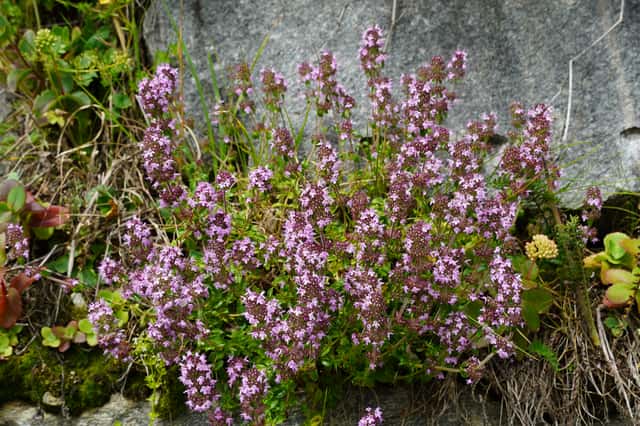
Thyme (Thymus) is a genus of approximately 350 species of aromatic perennial herbs and subshrubs in the family Lamiaceae, native to the Mediterranean region, North Africa, and southwestern Asia. These low-growing woody plants feature tiny aromatic leaves and small tubular flowers in pink, lavender, or white. Widely grown as a culinary, medicinal, and ornamental herb, thyme is a cornerstone of Mediterranean cuisine and herbal medicine.
How to Propagate Thyme?
Tip Cutting
Division
Layering
How Big Does Thyme Grow?
TLDR: Thyme can reach up to 40cm tall with Slow growth rate.
Max height
40cm
Spread
45cm
Growth rate
Slow
Foliage
Evergreen
Plant Uses
Ornamental
Great for decoration
Edible
Can be consumed
Medicinal
Medicinal properties
Aromatic
Pleasant fragrance
Ground Cover
Soil coverage
Medicinal Uses
- Natural antiseptic: thymol and carvacrol compounds
- Historical use for coughs, bronchitis, and respiratory ailments
- Anti-inflammatory and antioxidant properties
- Active ingredient in many mouthwashes and acne treatments
Culinary Uses
- Classic culinary herb for soups, stews, roasts, and sauces
- Key component of bouquet garni and herbes de Provence
- Withstands long cooking times while maintaining flavor
- Used fresh or dried across Mediterranean, French, and British cuisines
Is your plant showing symptoms?
Click on the symptom to discover possible causes:
What Diseases Commonly Affect Thyme?
TLDR: Thyme is susceptible to 7 known diseases. Monitor regularly for early detection.
Root Rot
Root rot is a serious fungal disease that affects the root system of plants, causing them to decay and die. It is primarily caused by overwatering, poor drainage, or soil-borne fungi such as Pythium, Phytophthora, Rhizoctonia, and Fusarium. The disease thrives in waterlogged conditions where roots are deprived of oxygen, making them susceptible to fungal infection.
Gray Mold (Botrytis Blight)
Gray mold, caused by the fungus Botrytis cinerea, is a widespread necrotrophic pathogen affecting over 1,400 plant species. It thrives in cool, humid conditions and attacks weakened or aging plant tissues, causing soft rot and characteristic gray fuzzy growth.
Gray Mold (Botrytis Blight)
Gray mold, caused by the fungus Botrytis cinerea, is one of the most common fungal diseases in plants. It affects over 200 plant species, including ornamentals, vegetables, fruits, and houseplants. The disease thrives in cool, humid conditions with poor air circulation, causing grayish spots and soft rot on infected tissues.
Downy Mildew
Downy mildew is a fungal-like disease caused by oomycetes (water molds) that thrives in cool, wet conditions. It affects a wide range of plants, causing yellowing leaves with fuzzy white-gray growth underneath, leading to defoliation and reduced yields if left untreated.
Meaning & Symbolism
In medieval times, thyme was a symbol of courage. Knights received sprigs of thyme from ladies as a token of bravery before battle.
Fun Facts
Thyme produces thymol, a natural compound found in many mouthwashes and antiseptic products.
Bees are major pollinators of thyme, and thyme honey is considered one of the most aromatic in the world — Hymettus thyme honey from Greece has been prized since antiquity.
Thyme was used as a natural food preservative in ancient times due to its potent antimicrobial properties.
Thyme plants become increasingly woody over 3-5 years and benefit from regular pruning or replacement to stay productive.
Frequently asked questions
Can I grow thyme indoors?
How often should I water thyme?
Is thyme toxic to pets?
Compare with similar plants
| Attribute | Difficulty | Light | Watering | Pet Safe |
|---|---|---|---|---|
| Field Maple | Easy | Bright indirect | 14d | ✓ |
| Silver Birch | Easy | Direct sun | 14d | ✓ |
| Cushion Bush | Easy | Direct sun | 14d | ✓ |
| Peruvian peppertree | Easy | Direct sun | 14d | ⚠️ |