Solanaceae
Tomatillo – Physalis ixocarpa
Physalis ixocarpa
Full-sun plant requiring well-drained loamy soil. Water every 7 days at the base. Fast-growing and productive, bearing fruit 60–80 days after transplant.
Every 7 days
Direct sun
10° - 35°C
60% - 80%
Categories
What is Tomatillo?
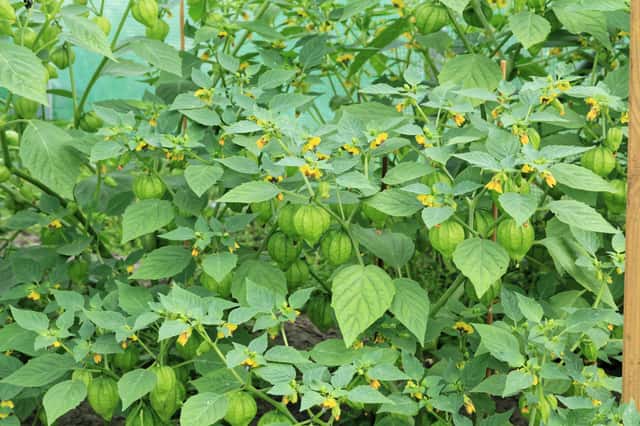
Tomatillo (Physalis ixocarpa) is a easy-care plant from the Solanaceae family. Physalis ixocarpa, commonly known as tomatillo, is an annual plant in the Solanaceae family native to Mexico and Central America. It produces green fruits enclosed in a distinctive papery husk, widely used in traditional Mexican cuisine for salsas, moles, and sauces.
Tomatillo grows up to 1.2m, spread of 120cm, watering every 7 days, 10°C – 35°C, 60–80% humidity. It is not suitable for indoor environments and safe for pets.
Unlike many tropical plants, Tomatillo tolerates watering mistakes. Best for beginners. Unlike many popular species, Tomatillo is safe to keep around pets.
How to Care for Tomatillo?
TLDR: Tomatillo needs Direct sun, watering every 7 days, and temperatures between 10-35°C with 60-80% humidity.
How Often Should You Water Tomatillo?
Water deeply every 7 days, directing water to the base. Avoid wetting foliage to minimize fungal disease risk. Mulch around base to retain moisture.
How Much Light Does Tomatillo Need?
Requires at least 6–8 hours of direct sunlight daily. Partial shade significantly reduces fruit production.
What Is the Best Soil for Tomatillo?
Prefers well-drained loamy soil rich in organic matter. Ideal pH 5.5–6.8. Amend with compost at planting for best results.
What Pot Should You Use for Tomatillo?
Outdoor bed or large container (minimum 40 cm diameter) with stake or trellis support
Care Schedule
Fertilize
Every 90 days
What Is Tomatillo and Where Does It Come From?
Physalis ixocarpa, commonly known as tomatillo, is an annual plant in the Solanaceae family native to Mexico and Central America. It produces green fruits enclosed in a distinctive papery husk, widely used in traditional Mexican cuisine for salsas, moles, and sauces.
How Big Does Tomatillo Grow?
TLDR: Tomatillo can reach up to 1.2m tall with Fast growth rate.
Max height
1.2m
Spread
1.2m
Growth rate
Fast
Foliage
Deciduous
Warning: Toxic Plant
This plant can be toxic if ingested. Keep out of reach of:
Plant Uses
Edible
Can be consumed
Culinary Uses
- Salsa verde
- Green mole
- Green enchiladas
- Tomatillo guacamole
- Mexican soups and stews
- Preserves and pickles
Is your plant showing symptoms?
Click on the symptom to discover possible causes:
What Diseases Commonly Affect Tomatillo?
TLDR: Tomatillo is susceptible to 15 known diseases. Monitor regularly for early detection.
Aphids
Aphids are small, soft-bodied, pear-shaped insects (1/16 to 1/8 inch long) that feed by sucking nutrient-rich sap from plants. They reproduce rapidly and can quickly weaken plants, causing distorted growth and transmitting plant viruses. Aphids come in various colors including green, black, red, yellow, brown, and gray. They secrete honeydew, a sticky substance that attracts ants and encourages sooty mold growth.
Whiteflies
Whiteflies are small, soft-bodied, winged insects closely related to aphids and mealybugs. They are moth-like in appearance, about 1/16 inch long, triangular in shape, and gray-white in color. These sap-sucking pests feed on plant tissue, causing yellowing, stunted growth, and wilting. They also excrete honeydew, which attracts ants and promotes sooty mold growth. Whiteflies can transmit serious plant viruses.
Fusarium Wilt
Fusarium wilt is a serious fungal disease caused by the soil-borne fungus Fusarium oxysporum. The fungus invades roots and blocks the water-conducting vessels (xylem) of the plant, causing progressive wilting and eventual death. Host-specific forms of the pathogen exist that attack different plant species.
Verticillium Wilt
Verticillium wilt is a soil-borne fungal disease caused primarily by the fungi Verticillium dahliae and V. albo-atrum. These pathogens infect plant roots and grow within the vascular tissues, blocking water and nutrient transport, resulting in wilting and eventual plant death. The disease affects over 350 plant species including vegetables, fruits, ornamental flowers, and trees. The fungi can survive in soil for more than 10 years as resistant structures called microsclerotia.
Meaning & Symbolism
Emblem of Mexican culinary tradition and Latin American cultural heritage.
Fun Facts
Tomatillo is technically a fruit, not a vegetable, despite being used as one in cooking.
The papery husk is actually a modified calyx called a physalis.
It has been a staple of Mexican salsa verde for thousands of years.
Frequently asked questions
Does tomatillo need another plant to fruit?
Can I grow tomatillo in a pot?
When do I harvest tomatillos?
Compare with similar plants
| Attribute | Difficulty | Light | Watering | Pet Safe |
|---|---|---|---|---|
| Field Maple | Easy | Bright indirect | 14d | ✓ |
| Silver Birch | Easy | Direct sun | 14d | ✓ |
| Common Blanketflower | Easy | Direct sun | 10d | ✓ |
| Cushion Bush | Easy | Direct sun | 14d | ✓ |





