Nyctaginaceae
Bougainvillea (Bougainvillea peruviana): Complete Care Guide
Bougainvillea peruviana
Bougainvillea thrives in full sun with at least 6 hours of direct sunlight daily — the more sun, the more blooms. Water every 7 days, allowing the soil to dry out completely between waterings; it is highly drought-tolerant and will suffer from overwatering. Use a fast-draining soil mix and a pot with drainage holes. Feed monthly with a low-nitrogen, high-phosphorus fertilizer during the growing season to promote flowering over leafy growth.
Every 7 days
Direct sun
-2° - 38°C
40% - 70%
Categories
What is Bougainvillea?
Bougainvillea (Bougainvillea peruviana) is a medium-care plant from the Nyctaginaceae family. Bougainvillea peruviana is a vigorous climbing shrub native to Peru and northern South America, belonging to the family Nyctaginaceae. Its spectacular display comes not from its true flowers — which are small, white, and inconspicuous — but from the brilliantly colored bracts that surround them in s...
Bougainvillea grows up to 3.0m, spread of 400cm, watering every 7 days, -2°C – 38°C, 40–70% humidity. It is not suitable for indoor environments and not safe for pets.
Without precautions, ingestion can cause irritation in pets. Keep out of reach of cats and dogs.
How to Care for Bougainvillea?
TLDR: Bougainvillea needs Direct sun, watering every 7 days, and temperatures between -2-38°C with 40-70% humidity.
How Often Should You Water Bougainvillea?
Water every 7 days, only when the soil is completely dry. Bougainvillea is drought-tolerant and highly sensitive to overwatering — soggy roots lead to root rot quickly. During winter, cut back to once every 10–14 days. Always water thoroughly, then let the excess drain freely.
How Much Light Does Bougainvillea Need?
Place in full sun with 6–8 hours of direct sunlight per day (30,000–80,000 lux). Insufficient light is the number-one reason Bougainvillea fails to bloom. Outdoors on a south-facing wall or fence is ideal; indoors, only the sunniest window will do.
What Is the Best Soil for Bougainvillea?
Use a fast-draining potting mix — a blend of regular potting soil with coarse sand and perlite works well. Avoid heavy clay soils that retain moisture. Ideal soil pH is 5.5–6.5. In containers, refresh the top layer of soil annually.
What Pot Should You Use for Bougainvillea?
Terracotta or unglazed ceramic pot with at least one large drainage hole. Terracotta is especially good as it allows the soil to breathe and dries out faster, preventing root rot. Choose a pot that is slightly root-bound — Bougainvillea blooms better when its roots are a little cramped.
Care Schedule
Fertilize
Every 14 days
Repot
Every 730 days
What Is Bougainvillea and Where Does It Come From?
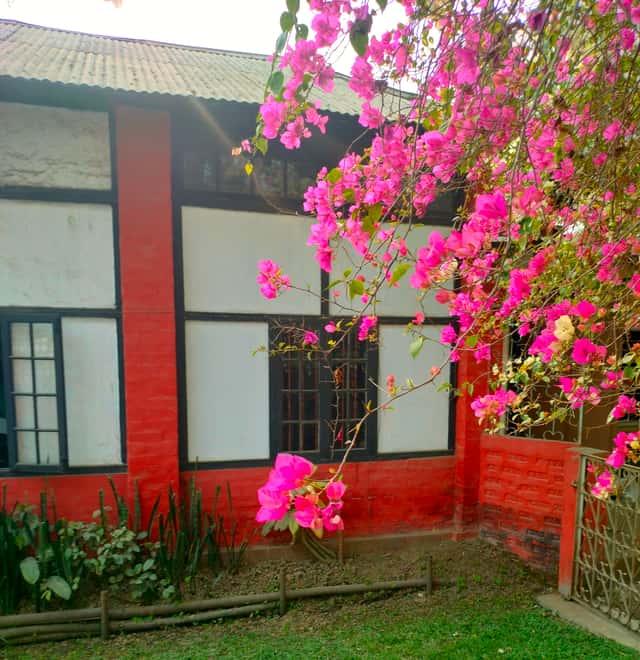
Bougainvillea peruviana is a vigorous climbing shrub native to Peru and northern South America, belonging to the family Nyctaginaceae. Its spectacular display comes not from its true flowers — which are small, white, and inconspicuous — but from the brilliantly colored bracts that surround them in shades of magenta, pink, white, and purple. A champion of warm, sunny climates, it thrives in gardens, on trellises, walls, and pergolas, producing abundant color from spring through summer and beyond when given sufficient light.
How to Propagate Bougainvillea?
Stem Cutting
Use sterilized, sharp tools. High ambient temperature (25-30C) significantly speeds rooting. Cover with a clear plastic bag to maintain humidity if the air is dry.
- 1 Take a semi-hardwood cutting 15-20 cm long, cut just below a node
- 2 Remove leaves from the lower half of the cutting
- 3 Dip the cut end in rooting hormone powder
- 4 Plant in a well-draining mix of coarse sand and perlite, lightly moistened
- 5 Place in bright indirect light at 25-30C, away from direct sun
- 6 Water lightly every 3 days, avoid waterlogging
- 7 After 3-5 weeks, gently tug the cutting; resistance means roots have formed
Materials needed:
Air Layering
Keep the moss consistently moist. Air layering is ideal for thicker stems that would be difficult to root as cuttings.
- 1 Select a healthy stem 30-40 cm long still attached to the parent plant
- 2 Remove a 3 cm ring of bark from the selected stem
- 3 Dust the exposed area with rooting hormone
- 4 Wrap with moist sphagnum moss and cover tightly with clear plastic, sealing both ends
- 5 Keep the moss moist; check weekly
- 6 Once roots are visible through the plastic, cut the stem below the layering point and transplant
Materials needed:
How Big Does Bougainvillea Grow?
TLDR: Bougainvillea can reach up to 3.0m tall with Fast growth rate.
Max height
3.0m
Spread
4.0m
Growth rate
Fast
Foliage
Evergreen
Warning: Toxic Plant
This plant can be toxic if ingested. Keep out of reach of:
Plant Uses
Ornamental
Great for decoration
Medicinal Uses
- Traditional folk medicine in South America and the Caribbean uses bracts and leaves in infusions to treat coughs, bronchitis, and respiratory inflammation
- Preliminary studies suggest anti-inflammatory and antimicrobial properties in extracts from the bracts and leaves
Is your plant showing symptoms?
Click on the symptom to discover possible causes:
What Diseases Commonly Affect Bougainvillea?
TLDR: Bougainvillea is susceptible to 10 known diseases. Monitor regularly for early detection.
Aphids
Aphids are small, soft-bodied, pear-shaped insects (1/16 to 1/8 inch long) that feed by sucking nutrient-rich sap from plants. They reproduce rapidly and can quickly weaken plants, causing distorted growth and transmitting plant viruses. Aphids come in various colors including green, black, red, yellow, brown, and gray. They secrete honeydew, a sticky substance that attracts ants and encourages sooty mold growth.
Mealybugs
Mealybugs are small, soft-bodied insects covered with a white, waxy, cottony material. They are common pests of houseplants and outdoor plants in mild climates. These sap-sucking insects feed on plant tissue, causing damage, stunted growth, and can lead to plant death if left untreated. They produce sticky honeydew which attracts sooty mold.
Spider Mites
Spider mites are tiny arachnids (less than 1/20 inch long) related to spiders and ticks that feed on plant sap. They thrive in hot, dry conditions and can cause significant damage to ornamental and vegetable plants. During severe infestations, crop losses can reach 14% or higher as these pests disrupt vital plant processes including photosynthesis, carbon dioxide absorption, and transpiration.
Scale Insects
Scale insects are small sap-sucking pests that appear as brown, shell-like bumps on plant stems and leaves. There are over 25 species, divided into armored (hard) and unarmored (soft) scales. They feed by piercing plant tissue and extracting sap, which weakens the plant and can lead to yellowing, stunted growth, and even death if left untreated. They also excrete honeydew, which attracts ants and promotes sooty mold growth.
Meaning & Symbolism
In the language of flowers, Bougainvillea symbolizes passion, vitality, and the welcoming of visitors. In many South American and Caribbean cultures, a Bougainvillea-draped doorway signals a warm, open home. It also represents resilience — beautiful despite drought and heat.
Fun Facts
What appear to be Bougainvillea's colorful flowers are actually bracts — modified leaves. The true flowers are the small, white, trumpet-shaped structures at the center.
The plant is named after French navigator Louis Antoine de Bougainville, who brought specimens to Europe in 1768 during his circumnavigation of the globe.
In the wild, Bougainvillea peruviana can scale trees to heights of 10 metres or more, using its curved thorns as natural hooks.
Bougainvillea can tolerate brief dips to -2°C, making it hardier than many tropical plants and suitable for mild subtropical gardens.
Frequently asked questions
How often should I water Bougainvillea?
Why is my Bougainvillea not blooming?
Can Bougainvillea grow in a container?
Is Bougainvillea toxic to pets?
When and how should I prune Bougainvillea?
Compare with similar plants
| Attribute | Difficulty | Light | Watering | Pet Safe |
|---|---|---|---|---|
| Azalea | Medium | Partial shade | 3d | ⚠️ |
| Wild Lettuce | Medium | Direct sun | 7d | ⚠️ |
| Cape Primrose | Medium | Partial shade | 7d | ✓ |
| Honey Locust | Medium | Direct sun | 14d | ✓ |