Poaceae
Heath-grass (Danthonia decumbens)
Danthonia decumbens
Heath-grass is a low-maintenance, hardy perennial grass suited to acidic, nutrient-poor soils. It thrives in full sun to partial shade, needs only occasional watering once established, and requires minimal fertiliser. Best grown outdoors in heathland, meadow, or rockery settings. Allow it to go dormant in winter and cut back lightly in early spring.
Every 9 days
Partial shade
5° - 25°C
50% - 75%
Categories
What is Heath-grass?
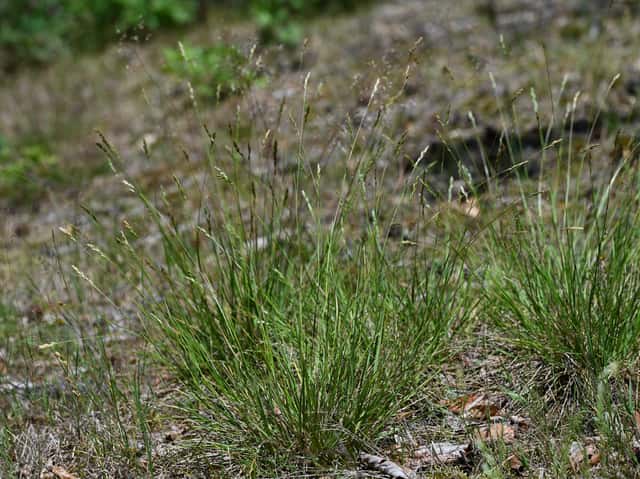
Heath-grass (Danthonia decumbens) is a easy-care plant from the Poaceae family. Danthonia decumbens, commonly known as heath-grass, is a low-growing perennial grass native to European heathlands and acid grasslands. It forms dense, compact tufts of narrow bright-green leaves with a characteristic decumbent (sprawling) habit, with tips turned upward. In summer it produces small...
Heath-grass grows up to 30cm, spread of 30cm, watering every 9 days, 5°C – 25°C, 50–75% humidity. It is not suitable for indoor environments and safe for pets.
Unlike many tropical plants, Heath-grass tolerates watering mistakes. Best for beginners. Unlike many popular species, Heath-grass is safe to keep around pets.
How to Care for Heath-grass?
TLDR: Heath-grass needs Partial shade, watering every 9 days, and temperatures between 5-25°C with 50-75% humidity.
How Often Should You Water Heath-grass?
Water every 7-10 days during the growing season, allowing the top few centimetres of soil to dry partially between waterings. Established clumps are moderately drought-tolerant. Avoid waterlogging, which can cause root rot. In winter dormancy, watering is rarely needed.
How Much Light Does Heath-grass Need?
Place in a position receiving 4-6 hours of direct sunlight or bright indirect light per day. Heath-grass tolerates partial shade but produces its best form and colour in full sun. Avoid deep shade, which causes lax, weak growth.
What Is the Best Soil for Heath-grass?
Use an acidic, free-draining soil — sandy, peaty, or loamy — with a pH of 5.0-6.5. Avoid rich, fertile soils or heavy clay, as high nutrient levels encourage coarse competitors and suppress the plant. Good drainage is essential; waterlogged conditions lead to root rot.
What Pot Should You Use for Heath-grass?
Best grown in open ground or in large, unglazed terracotta or stone containers filled with acidic, gritty compost. Ensure containers have adequate drainage holes. Avoid plastic pots that retain moisture.
What Is Heath-grass and Where Does It Come From?
Danthonia decumbens, commonly known as heath-grass, is a low-growing perennial grass native to European heathlands and acid grasslands. It forms dense, compact tufts of narrow bright-green leaves with a characteristic decumbent (sprawling) habit, with tips turned upward. In summer it produces small panicles of silvery-green to purplish spikelets, many of which self-pollinate while still enclosed. It is a specialist of nutrient-poor, acid soils and is considered an indicator of ancient, undisturbed grassland habitats.
How to Propagate Heath-grass?
Clump Division
Divide every 3-4 years to rejuvenate clumps and prevent them becoming too dense.
- 1 Lift an established clump carefully with a fork in early spring or autumn
- 2 Divide into smaller sections, each with roots attached
- 3 Replant divisions at the same depth in prepared acidic soil
- 4 Water in well and keep moist until established
Materials needed:
Seed Sowing
Heath-grass seeds need a period of cold to break dormancy. Spring-sown seeds benefit from stratification.
- 1 Collect seeds in late summer when spikelets are ripe
- 2 Cold-stratify seeds for 4 weeks in the fridge if sowing in spring
- 3 Sow thinly on the surface of damp, acidic seed compost
- 4 Cover lightly with a thin layer of compost and keep moist in a cool spot
Materials needed:
How Big Does Heath-grass Grow?
TLDR: Heath-grass can reach up to 30cm tall with Slow growth rate.
Max height
30cm
Spread
30cm
Growth rate
Slow
Foliage
Deciduous
Plant Uses
Ornamental
Great for decoration
Ground Cover
Soil coverage
Is your plant showing symptoms?
Click on the symptom to discover possible causes:
What Diseases Commonly Affect Heath-grass?
TLDR: Heath-grass is susceptible to 3 known diseases. Monitor regularly for early detection.
Leaf Spot
Leaf spot is a common fungal disease caused by various pathogens including Alternaria, Ascochyta, Colletotrichum, Septoria, and Venturia. It primarily affects leaves, causing discolored spots that can lead to premature leaf drop if left untreated.
Rust
Rust is a common fungal disease caused by fungi in the order Pucciniales that affects a wide variety of plants. The disease gets its name from the characteristic orange, yellow, or reddish-brown pustules that appear on leaves, resembling metal rust. This obligate fungal parasite requires living plants to survive and can cause significant economic losses in agricultural crops.
Root Rot
Root rot is a serious fungal disease that affects the root system of plants, causing them to decay and die. It is primarily caused by overwatering, poor drainage, or soil-borne fungi such as Pythium, Phytophthora, Rhizoctonia, and Fusarium. The disease thrives in waterlogged conditions where roots are deprived of oxygen, making them susceptible to fungal infection.
Meaning & Symbolism
In folklore, heathland grasses like Danthonia symbolise resilience, simplicity, and quiet endurance — thriving in barren landscapes where little else survives, embodying the spirit of wild, untamed places.
Fun Facts
Heath-grass is an indicator species for ancient, undisturbed grasslands — its presence can signal habitats that have never been ploughed.
Many of its flowers never open, self-pollinating inside the closed spikelet in a process called cleistogamy.
Despite being native to Europe, Danthonia decumbens may also grow naturally in Newfoundland and Nova Scotia, Canada.
Heath-grass has almost no agricultural forage value, making it unique among grasses cultivated for heathland restoration rather than grazing.
Frequently asked questions
How often should I water heath-grass?
What soil does Danthonia decumbens need?
Is heath-grass toxic to pets or humans?
When does heath-grass flower?
Can I grow heath-grass indoors?
Compare with similar plants
| Attribute | Difficulty | Light | Watering | Pet Safe |
|---|---|---|---|---|
| Field Maple | Easy | Bright indirect | 14d | ✓ |
| Silver Birch | Easy | Direct sun | 14d | ✓ |
| Cushion Bush | Easy | Direct sun | 14d | ✓ |
| Peruvian peppertree | Easy | Direct sun | 14d | ⚠️ |





