Bignoniaceae
Southern Catalpa: Full Sun Plant
Catalpa bignonioides
Southern Catalpa is an easy-to-grow, low-maintenance tree best suited for large outdoor spaces. Plant in full sun (at least 6 hours of direct sunlight daily) in well-draining to moderately moist soil with a pH between 5.5 and 7.5. Water young trees weekly during the first two growing seasons; established trees are drought-tolerant and require supplemental watering only during prolonged dry spells. Fertilise once in early spring with a balanced slow-release fertiliser. Prune in late winter or early spring to remove dead, crossing, or damaged branches and to maintain shape. This tree is not suitable for indoor growing.
Every 7 days
Direct sun
-20° - 38°C
40% - 70%
Categories
What is Southern Catalpa?
Southern Catalpa (Catalpa bignonioides) is a easy-care plant from the Bignoniaceae family. Catalpa bignonioides, commonly known as the Southern Catalpa or Indian Bean Tree, is a fast-growing deciduous tree native to the southeastern United States, particularly the lower Mississippi Valley region of Alabama, Mississippi, Georgia, and Florida. Celebrated for its dramatic ornamental qualitie...
Southern Catalpa grows up to 15.0m, spread of 1200cm, watering every 7 days, -20°C – 38°C, 40–70% humidity. It is not suitable for indoor environments and safe for pets.
Unlike many tropical plants, Southern Catalpa tolerates watering mistakes. Best for beginners. Unlike many popular species, Southern Catalpa is safe to keep around pets.
How to Care for Southern Catalpa?
TLDR: Southern Catalpa needs Direct sun, watering every 7 days, and temperatures between -20-38°C with 40-70% humidity.
How Often Should You Water Southern Catalpa?
Water newly planted trees deeply once per week for the first one to two years to encourage deep root establishment. Once established (typically after 2–3 growing seasons), Southern Catalpa is remarkably drought-tolerant and generally requires no regular irrigation except during extended summer droughts. Avoid waterlogging around the root zone — while the tree tolerates brief flooding, prolonged standing water can cause root rot.
How Much Light Does Southern Catalpa Need?
Southern Catalpa performs best in full sun, receiving at least 6–8 hours of direct sunlight per day. It can tolerate partial shade (3–6 hours of sun), but flowering is reduced and growth may become more open and leggy in lower light. Always site it away from structures where its large leaves and seed pods may cause litter issues.
What Is the Best Soil for Southern Catalpa?
This tree is adaptable to a wide range of soil types including clay, loam, and sandy soils, provided drainage is adequate. It tolerates mildly acidic to slightly alkaline soils (pH 5.5–7.5) and even temporarily waterlogged conditions. For best growth, amend heavy clay soils with organic matter at planting time. Avoid highly compacted soils which restrict root development.
What Pot Should You Use for Southern Catalpa?
Southern Catalpa is not suitable for container growing due to its size — it is a large tree that needs to be planted directly in the ground in a spacious outdoor setting. Even the dwarf cultivar 'Nana' is typically grafted onto a standard rootstock and grown as a lollipop-form tree in landscape settings rather than in pots.
Care Schedule
Fertilize
Every 90 days
What Is Southern Catalpa and Where Does It Come From?
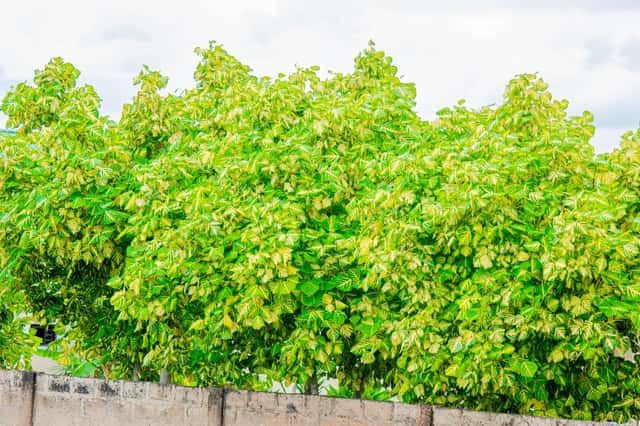
Catalpa bignonioides, commonly known as the Southern Catalpa or Indian Bean Tree, is a fast-growing deciduous tree native to the southeastern United States, particularly the lower Mississippi Valley region of Alabama, Mississippi, Georgia, and Florida. Celebrated for its dramatic ornamental qualities, it produces enormous heart-shaped leaves up to 30 cm across and spectacular clusters of trumpet-shaped white flowers with yellow and purple markings in late spring to early summer. The tree reaches a mature height of 12–18 metres with a broad, irregular crown spanning 10–12 metres, making it an impressive shade tree for large gardens and parks. Its most distinctive feature — besides the showy flowers — is the production of long, slender seed pods resembling cigars or beans, which hang from the branches well into winter and give rise to several of its common names. Catalpa bignonioides has been widely cultivated across Europe and North America since the 18th century. It thrives in full sun to partial shade and tolerates a wide range of soil conditions, including clay and periodically waterlogged soils. The species is notably drought-tolerant once established and hardy in USDA zones 5–9, making it adaptable to many temperate climates.
How to Propagate Southern Catalpa?
How Big Does Southern Catalpa Grow?
TLDR: Southern Catalpa can reach up to 15.0m tall with Fast growth rate.
Max height
15.0m
Spread
12.0m
Growth rate
Fast
Foliage
Deciduous
Plant Uses
Ornamental
Great for decoration
Medicinal
Medicinal properties
Medicinal Uses
- Bark tea used traditionally by Native Americans (Cherokee, Chickasaw) as an anthelmintic (against intestinal worms)
- Seed pod infusions used in folk medicine for mild sedative and antispasmodic effects
- Leaves used in poultices for skin irritations in traditional herbal medicine
- Root bark used historically as a febrifuge (fever reducer) in 19th-century American herbalism
Is your plant showing symptoms?
Click on the symptom to discover possible causes:
What Diseases Commonly Affect Southern Catalpa?
TLDR: Southern Catalpa is susceptible to 9 known diseases. Monitor regularly for early detection.
Powdery Mildew
Powdery mildew is a common fungal disease caused by various fungi species including Erysiphe, Podosphaera, Oïdium, and Leveillula. It affects over 10,000 plant species worldwide. The disease thrives in warm, dry climates with high humidity and appears as a distinctive white powdery coating on plant surfaces.
Verticillium Wilt
Verticillium wilt is a soil-borne fungal disease caused primarily by the fungi Verticillium dahliae and V. albo-atrum. These pathogens infect plant roots and grow within the vascular tissues, blocking water and nutrient transport, resulting in wilting and eventual plant death. The disease affects over 350 plant species including vegetables, fruits, ornamental flowers, and trees. The fungi can survive in soil for more than 10 years as resistant structures called microsclerotia.
Caterpillars
Caterpillars are the larval stage of moths and butterflies that feed voraciously on plant foliage, stems, flowers, and fruits. Common species include cabbage loopers, tomato hornworms, armyworms, and cutworms. These pests can cause extensive damage by consuming large amounts of plant tissue in a short time. They vary in size from small (1/4 inch) to large (5 inches), with colors ranging from green to brown, often featuring stripes or spots. Caterpillars are highly mobile and can quickly spread throughout gardens, making them one of the most destructive common pests.
Leaf Spot
Leaf spot is a common fungal disease caused by various pathogens including Alternaria, Ascochyta, Colletotrichum, Septoria, and Venturia. It primarily affects leaves, causing discolored spots that can lead to premature leaf drop if left untreated.
Meaning & Symbolism
In its native southeastern United States, Catalpa has long been associated with resilience and endurance — a tree that flourishes in difficult conditions and provides generous shade. Some Native American peoples, including the Cherokees and Chickasaws, used the bark and pods medicinally and regarded the tree as a healing plant. In Victorian England, where it was popularised as a garden specimen, Catalpa symbolised exoticism and the grandeur of nature.
Compare with similar plants
| Attribute | Difficulty | Light | Watering | Pet Safe |
|---|---|---|---|---|
| Field Maple | Easy | Bright indirect | 14d | ✓ |
| Silver Birch | Easy | Direct sun | 14d | ✓ |
| Cushion Bush | Easy | Direct sun | 14d | ✓ |
| Peruvian peppertree | Easy | Direct sun | 14d | ⚠️ |





