Zamiaceae
Bread Palm: Low Water Needs
Encephalartos
Grow in full sun to bright light in an extremely well-draining, mineral-rich soil mix with minimal organic matter. Water moderately during spring and summer, letting the substrate dry out fully between waterings, and cut back drastically in winter. Highly heat- and drought-tolerant, but very sensitive to waterlogged roots. Fertilize sparingly during the active growing season.
Every 14 days
Bright indirect
7° - 35°C
30% - 60%
Categories
What is Bread Palm?
Bread Palm (Encephalartos) is a medium-care plant from the Zamiaceae family. Encephalartos is a genus of African cycads commonly called "bread palms," a name derived from the starchy stem pith historically processed into a bread-like food by indigenous peoples of southern and eastern Africa. Despite the common name, they are not true palms but ancient gymnosperms — living fo...
Bread Palm grows up to 6.0m, spread of 300cm, watering every 14 days, 7°C – 35°C, 30–60% humidity. It is suitable for indoor environments and not safe for pets.
Without precautions, ingestion can cause irritation in pets. Keep out of reach of cats and dogs. Without adequate drainage, root rot can develop within 28 days.
How to Care for Bread Palm?
TLDR: Bread Palm needs Bright indirect, watering every 14 days, and temperatures between 7-35°C with 30-60% humidity.
How Often Should You Water Bread Palm?
Let the substrate dry out completely between waterings — overwatering is the most common cause of root rot in cycads.
How Much Light Does Bread Palm Need?
Prefers full sun; young seedlings tolerate partial shade, but mature plants cone and grow best in bright, direct light.
What Is the Best Soil for Bread Palm?
Use a gritty, mineral-heavy mix (coarse sand, pumice, perlite) with little organic matter; keep pH slightly acidic to neutral.
What Pot Should You Use for Bread Palm?
A wide, heavy pot (terracotta or ceramic) with multiple drainage holes to support the plant's weight and prevent waterlogging.
Care Schedule
Fertilize
Every 90 days
Repot
Every 1095 days
What Is Bread Palm and Where Does It Come From?
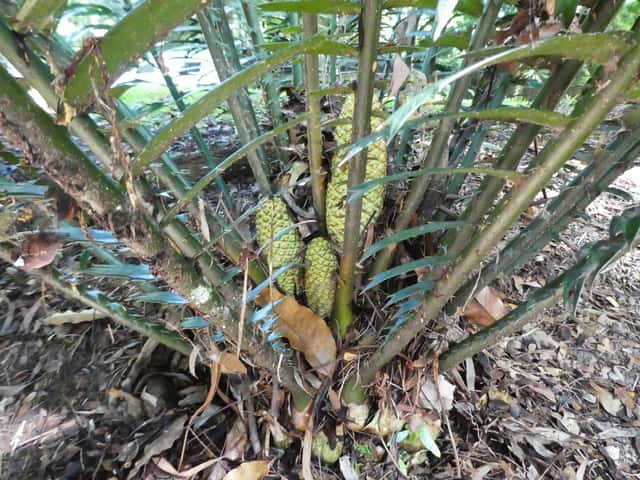
Encephalartos is a genus of African cycads commonly called "bread palms," a name derived from the starchy stem pith historically processed into a bread-like food by indigenous peoples of southern and eastern Africa. Despite the common name, they are not true palms but ancient gymnosperms — living fossils that predate the dinosaurs. They form a rosette of stiff, pinnate leaves, sometimes blue-tinted or heavily armed with spines, atop a thick woody stem or trunk. Plants are dioecious, producing large male and female cones. Growth is extremely slow, and individuals can live for centuries. Nearly all species are listed on CITES Appendix I due to severe poaching pressure.
How to Propagate Bread Palm?
Seed
- Remove the fleshy seed coat (sarcotesta) before sowing, wearing gloves as it is irritating
- Lightly scarify and soak seeds 24-48 hours in warm water
- 1 Prepare seed
Clean and soak seeds for 1-2 days
- 2 Sow
Bury halfway in a well-draining mineral mix at 25-30°C
- 3 Wait for germination
Germination can take 4-12 weeks or longer
Materials needed:
Basal offset division
- Not all species produce offsets; only remove pups once well rooted
- 1 Identify offset
Locate a basal pup with its own root system
- 2 Separate
Cut away from the main stem with a sterilized knife
- 3 Plant
Let the cut callus for a few days before planting in dry, well-draining substrate
Materials needed:
How Big Does Bread Palm Grow?
TLDR: Bread Palm can reach up to 6.0m tall with Slow growth rate.
Max height
6.0m
Spread
3.0m
Growth rate
Slow
Foliage
Evergreen
Warning: Toxic Plant
This plant can be toxic if ingested. Keep out of reach of:
Plant Uses
Ornamental
Great for decoration
Is your plant showing symptoms?
Click on the symptom to discover possible causes:
What Diseases Commonly Affect Bread Palm?
TLDR: Bread Palm is susceptible to 4 known diseases. Monitor regularly for early detection.
Scale Insects
Scale insects are small sap-sucking pests that appear as brown, shell-like bumps on plant stems and leaves. There are over 25 species, divided into armored (hard) and unarmored (soft) scales. They feed by piercing plant tissue and extracting sap, which weakens the plant and can lead to yellowing, stunted growth, and even death if left untreated. They also excrete honeydew, which attracts ants and promotes sooty mold growth.
Mealybugs
Mealybugs are small, soft-bodied insects covered with a white, waxy, cottony material. They are common pests of houseplants and outdoor plants in mild climates. These sap-sucking insects feed on plant tissue, causing damage, stunted growth, and can lead to plant death if left untreated. They produce sticky honeydew which attracts sooty mold.
Root Rot
Root rot is a serious fungal disease that affects the root system of plants, causing them to decay and die. It is primarily caused by overwatering, poor drainage, or soil-borne fungi such as Pythium, Phytophthora, Rhizoctonia, and Fusarium. The disease thrives in waterlogged conditions where roots are deprived of oxygen, making them susceptible to fungal infection.
Phytophthora
The Phytophthora genus consists of soil-borne oomycetes (water molds) that act as plant pathogens, primarily affecting trees and woody plants. It typically spreads through the root system, leading to systemic decline and eventual plant collapse.
Meaning & Symbolism
A symbol of resilience, longevity, and African heritage; often regarded as a living botanical relic.
Compare with similar plants
| Attribute | Difficulty | Light | Watering | Pet Safe |
|---|---|---|---|---|
| Dark Fieldcap | Medium | Low light | 2d | ⚠️ |
| Azalea | Medium | Partial shade | 3d | ⚠️ |
| Bougainvillea | Medium | Direct sun | 7d | ⚠️ |
| Wild Lettuce | Medium | Direct sun | 7d | ⚠️ |



