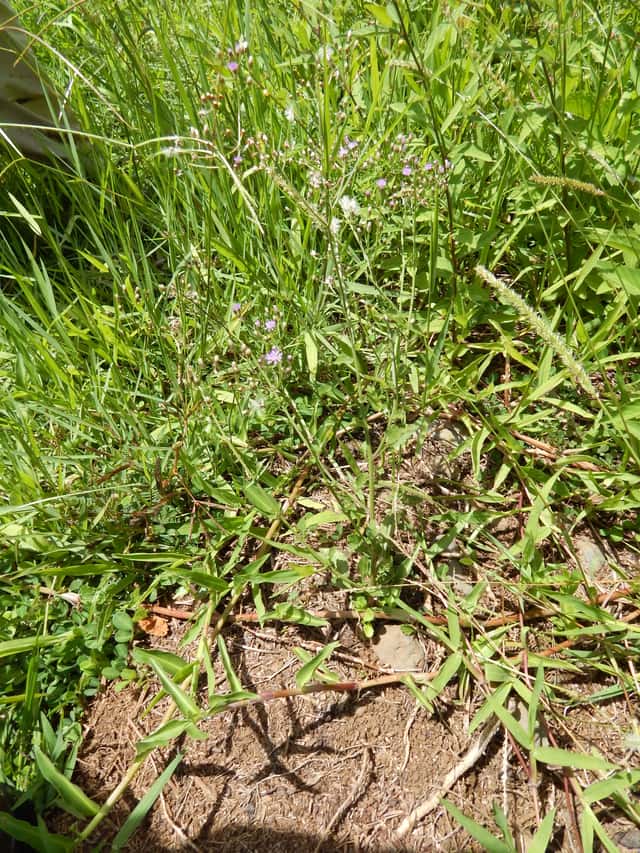
Asteraceae
Little Ironweed: Edible Plant
Cyanthillium cinereum
An extremely hardy, fast-growing weed that requires at least 6 hours of direct sunlight daily and tolerates nutrient-poor, dry soils well. The soil should be allowed to dry out almost completely between waterings, as it is drought-tolerant but cannot withstand stagnant moisture. It does not require regular fertilization.
Every 10 days
Direct sun
15° - 35°C
40% - 70%
Categories
What is Little Ironweed?
Little Ironweed (Cyanthillium cinereum) is a easy-care plant from the Asteraceae family. Cyanthillium cinereum (synonym: Vernonia cinerea), commonly known as little ironweed, is an annual or short-lived perennial herb in the Asteraceae family that can grow up to 120 cm tall. Native to tropical Africa and Asia (India, Sri Lanka, Indochina, Indonesia), it has become a pantropical weed nat...
Little Ironweed grows up to 1.2m, spread of 30cm, watering every 10 days, 15°C – 35°C, 40–70% humidity. It is not suitable for indoor environments and safe for pets.
Unlike many tropical plants, Little Ironweed tolerates watering mistakes. Best for beginners. Unlike many popular species, Little Ironweed is safe to keep around pets.
How to Care for Little Ironweed?
TLDR: Little Ironweed needs Direct sun, watering every 10 days, and temperatures between 15-35°C with 40-70% humidity.
How Often Should You Water Little Ironweed?
Water only when the top layer of soil is completely dry - the plant is drought-tolerant, and overwatering can lead to root rot.
How Much Light Does Little Ironweed Need?
Choose a full sun location where it receives at least 6 hours of direct sunlight daily; it flowers poorly in the shade.
What Is the Best Soil for Little Ironweed?
It tolerates poor, lean soils well, but achieves the best results in well-drained, loose, slightly nutrient-rich soil.
What Pot Should You Use for Little Ironweed?
Rarely grown in pots, but if cultivated this way, a well-drained, porous terracotta pot is recommended due to its drought-tolerant root system and to avoid root rot.
What Is Little Ironweed and Where Does It Come From?
Cyanthillium cinereum (synonym: Vernonia cinerea), commonly known as little ironweed, is an annual or short-lived perennial herb in the Asteraceae family that can grow up to 120 cm tall. Native to tropical Africa and Asia (India, Sri Lanka, Indochina, Indonesia), it has become a pantropical weed naturalized in Australia, Central and South America, and Florida. Its tiny, flat-topped inflorescences contain pinkish-purple flower heads without ray florets. It frequently appears along roadsides, open spaces, and abandoned fields, while it has played an important role in Ayurvedic and folk medicine for centuries.
How to Propagate Little Ironweed?
Seed Sowing
- Seeds require light to germinate; do not cover them with a thick layer of soil.
- 1 Seed Collection
Collect mature, dry seeds from the spent flower heads.
- 2 Sowing
Scatter seeds on the surface of moist, well-drained soil, barely covering them since they need light to germinate.
- 3 Germination
Keep in a warm, sunny spot and maintain even moisture until seedlings appear.
Materials needed:
Stem Cuttings
- Using rooting hormone improves the chances of successful rooting.
- 1 Cutting
Cut a 10-15 cm long, healthy, non-flowering stem.
- 2 Planting
Remove the lower leaves and place the cutting into a moist, sandy mix.
- 3 Rooting
Maintain high humidity until roots begin to appear.
Materials needed:
How Big Does Little Ironweed Grow?
TLDR: Little Ironweed can reach up to 1.2m tall with Fast growth rate.
Max height
1.2m
Spread
30cm
Growth rate
Fast
Plant Uses
Medicinal
Medicinal properties
Edible
Can be consumed
Medicinal Uses
- Fever reduction and diaphoretic (sweat-inducing) effect
- Assisting in smoking cessation in Thailand and other countries
- Anti-inflammatory and wound healing (used as a poultice)
- Traditional remedy against intestinal worms (nematodes, roundworms)
- Treatment of urinary complaints and bladder spasms in Ayurvedic medicine
- Treatment of conjunctivitis using the flowers
Culinary Uses
- Young, slightly bitter leaves can be consumed as a potherb or soup ingredient in some Southeast Asian cuisines
Is your plant showing symptoms?
Click on the symptom to discover possible causes:
What Diseases Commonly Affect Little Ironweed?
TLDR: Little Ironweed is susceptible to 6 known diseases. Monitor regularly for early detection.
Aphids
Aphids are small, soft-bodied, pear-shaped insects (1/16 to 1/8 inch long) that feed by sucking nutrient-rich sap from plants. They reproduce rapidly and can quickly weaken plants, causing distorted growth and transmitting plant viruses. Aphids come in various colors including green, black, red, yellow, brown, and gray. They secrete honeydew, a sticky substance that attracts ants and encourages sooty mold growth.
Whiteflies
Whiteflies are small, soft-bodied, winged insects closely related to aphids and mealybugs. They are moth-like in appearance, about 1/16 inch long, triangular in shape, and gray-white in color. These sap-sucking pests feed on plant tissue, causing yellowing, stunted growth, and wilting. They also excrete honeydew, which attracts ants and promotes sooty mold growth. Whiteflies can transmit serious plant viruses.
Powdery Mildew
Powdery mildew is a common fungal disease caused by various fungi species including Erysiphe, Podosphaera, Oïdium, and Leveillula. It affects over 10,000 plant species worldwide. The disease thrives in warm, dry climates with high humidity and appears as a distinctive white powdery coating on plant surfaces.
Leaf Spot
Leaf spot is a common fungal disease caused by various pathogens including Alternaria, Ascochyta, Colletotrichum, Septoria, and Venturia. It primarily affects leaves, causing discolored spots that can lead to premature leaf drop if left untreated.
Meaning & Symbolism
A symbol of perseverance, adaptability, and resilience - as a pioneer species, it is often among the first to colonize disturbed, barren areas.
Compare with similar plants
| Attribute | Difficulty | Light | Watering | Pet Safe |
|---|---|---|---|---|
| Field Maple | Easy | Bright indirect | 14d | ✓ |
| Silver Birch | Easy | Direct sun | 14d | ✓ |
| Common Blanketflower | Easy | Direct sun | 10d | ✓ |
| Cushion Bush | Easy | Direct sun | 14d | ✓ |





