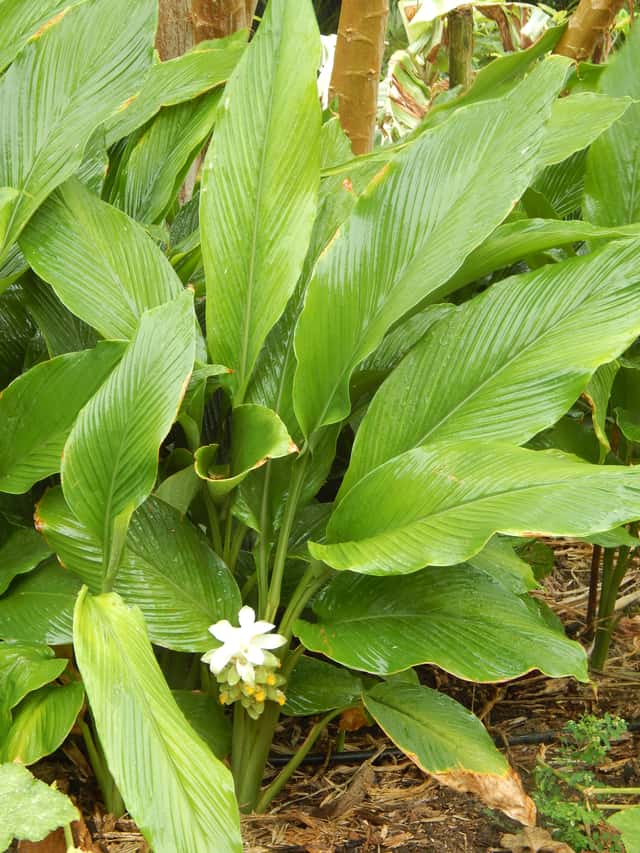
Zingiberaceae
Turmeric: growing guide and plant care
Curcuma longa
Thrives in bright, filtered light, rich well-draining soil, and high humidity. Goes dormant in winter, when watering should be significantly reduced.
Every 4 days
Bright indirect
20° - 35°C
60% - 80%
Categories
What is Turmeric?
Turmeric (Curcuma longa) is a medium-care plant from the Zingiberaceae family. Turmeric (Curcuma longa) is a herbaceous perennial in the ginger family (Zingiberaceae), native to India and Southeast Asia. It grows from fleshy, bright orange rhizomes and produces large, lance-shaped leaves resembling those of a banana plant. It is cultivated both as an ornamental and for its rhi...
Turmeric grows up to 1.1m, spread of 60cm, watering every 4 days, 20°C – 35°C, 60–80% humidity. It is suitable for indoor environments and safe for pets.
Unlike many popular species, Turmeric is safe to keep around pets. Without adequate drainage, root rot can develop within 8 days.
How to Care for Turmeric?
TLDR: Turmeric needs Bright indirect, watering every 4 days, and temperatures between 20-35°C with 60-80% humidity.
How Often Should You Water Turmeric?
Keep soil consistently moist but never soggy during active growth; cut back watering drastically during winter dormancy.
How Much Light Does Turmeric Need?
Prefers bright, filtered sunlight or partial shade; indoors, place near a bright window but avoid intense all-day direct sun.
What Is the Best Soil for Turmeric?
Use a rich, organic-matter-heavy substrate with excellent drainage, such as a mix of garden soil, compost, and coarse sand.
What Pot Should You Use for Turmeric?
A wide, shallow pot with drainage holes, ceramic or plastic, giving room for rhizome expansion.
Care Schedule
Fertilize
Every 30 days
Repot
Every 365 days
What Is Turmeric and Where Does It Come From?
Turmeric (Curcuma longa) is a herbaceous perennial in the ginger family (Zingiberaceae), native to India and Southeast Asia. It grows from fleshy, bright orange rhizomes and produces large, lance-shaped leaves resembling those of a banana plant. It is cultivated both as an ornamental and for its rhizome, which has been used as a spice, dye, and medicine for thousands of years.
How to Propagate Turmeric?
Rhizome division
Plant once temperatures are consistently above 20 degrees C. Keep substrate moist until sprouting occurs.
- 1 Dig up the mature rhizome at the end of dormancy
- 2 Cut into 2-5 cm pieces, making sure each piece has at least one visible bud (eye)
- 3 Let cuts callus for a day in a dry, shaded spot
- 4 Plant pieces 5 cm deep in moist, well-draining substrate
Materials needed:
How Big Does Turmeric Grow?
TLDR: Turmeric can reach up to 1.1m tall with Medium growth rate.
Max height
1.1m
Spread
60cm
Growth rate
Medium
Foliage
Deciduous
Plant Uses
Edible
Can be consumed
Medicinal
Medicinal properties
Aromatic
Pleasant fragrance
Ornamental
Great for decoration
Medicinal Uses
- Natural anti-inflammatory (curcumin)
- Supports digestion
- Joint health support
- Antioxidant properties
Culinary Uses
- Spice in curries and rice dishes
- Natural yellow food coloring
- Golden milk tea
- Fresh grated rhizome in juices and stir-fries
Is your plant showing symptoms?
Click on the symptom to discover possible causes:
What Diseases Commonly Affect Turmeric?
TLDR: Turmeric is susceptible to 8 known diseases. Monitor regularly for early detection.
Root Rot
Root rot is a serious fungal disease that affects the root system of plants, causing them to decay and die. It is primarily caused by overwatering, poor drainage, or soil-borne fungi such as Pythium, Phytophthora, Rhizoctonia, and Fusarium. The disease thrives in waterlogged conditions where roots are deprived of oxygen, making them susceptible to fungal infection.
Spider Mites
Spider mites are tiny arachnids (less than 1/20 inch long) related to spiders and ticks that feed on plant sap. They thrive in hot, dry conditions and can cause significant damage to ornamental and vegetable plants. During severe infestations, crop losses can reach 14% or higher as these pests disrupt vital plant processes including photosynthesis, carbon dioxide absorption, and transpiration.
Mealybugs
Mealybugs are small, soft-bodied insects covered with a white, waxy, cottony material. They are common pests of houseplants and outdoor plants in mild climates. These sap-sucking insects feed on plant tissue, causing damage, stunted growth, and can lead to plant death if left untreated. They produce sticky honeydew which attracts sooty mold.
Scale Insects
Scale insects are small sap-sucking pests that appear as brown, shell-like bumps on plant stems and leaves. There are over 25 species, divided into armored (hard) and unarmored (soft) scales. They feed by piercing plant tissue and extracting sap, which weakens the plant and can lead to yellowing, stunted growth, and even death if left untreated. They also excrete honeydew, which attracts ants and promotes sooty mold growth.
Meaning & Symbolism
Symbolizes purity, prosperity, and spiritual protection in Indian culture, and is used in religious rituals, weddings, and festivals.
Fun Facts
Turmeric's rhizome is the source of curcumin, the compound responsible for its vivid orange-yellow color.
It has been cultivated for over 4,000 years and plays a central role in Ayurvedic medicine and Hindu rituals.
Its leaves can grow over 1 meter long and resemble a miniature banana plant.
Frequently asked questions
Is turmeric toxic to cats and dogs?
How often should I water turmeric?
Why are my turmeric leaves turning yellow?
Can I grow turmeric indoors in a pot?
Compare with similar plants
| Attribute | Difficulty | Light | Watering | Pet Safe |
|---|---|---|---|---|
| Dark Fieldcap | Medium | Low light | 2d | ⚠️ |
| Azalea | Medium | Partial shade | 3d | ⚠️ |
| Bougainvillea | Medium | Direct sun | 7d | ⚠️ |
| Wild Lettuce | Medium | Direct sun | 7d | ⚠️ |



