Poaceae
Muriel's Bamboo: Ground Cover Plant
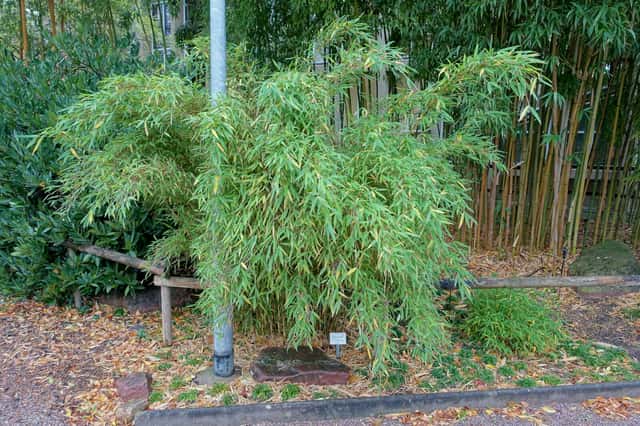
Fargesia murielae
Prefers a location with partial shade to full sun, sheltered from wind, and with consistently moist, nutrient-rich, well-draining soil. It tolerates neither waterlogging nor prolonged drought; otherwise, it is very robust and largely free from pests and diseases.
Every 3 days
Partial shade
-20° - 32°C
60% - 90%
Categories
What is Muriel's Bamboo?
Muriel's Bamboo (Fargesia murielae) is a medium-care plant from the Poaceae family. Fargesia murielae, also known as Muriel's Bamboo or Umbrella Bamboo, is a clump-forming bamboo native to the Chinese mountain forests. It does not spread via runners and therefore is not invasive. It is characterized by dense, elegantly arching culms and fine, bright green foliage that remains everg...
Muriel's Bamboo grows up to 4.0m, spread of 150cm, watering every 3 days, -20°C – 32°C, 60–90% humidity. It is not suitable for indoor environments and safe for pets.
Unlike many popular species, Muriel's Bamboo is safe to keep around pets.
How to Care for Muriel's Bamboo?
TLDR: Muriel's Bamboo needs Partial shade, watering every 3 days, and temperatures between -20-32°C with 60-90% humidity.
How Often Should You Water Muriel's Bamboo?
Keep the soil consistently slightly moist, watering even in winter on frost-free days. Absolutely avoid waterlogging, as it can lead to root rot.
How Much Light Does Muriel's Bamboo Need?
Full sun to partial shade is possible; however, in intense midday sun during midsummer, the leaves will curl up for protection, so a partially shaded spot is usually more advantageous.
What Is the Best Soil for Muriel's Bamboo?
Use nutrient-rich, humus-rich garden soil or special bamboo soil that retains moisture but remains well-draining. The pH value is not critical; both acidic and alkaline soils are tolerated.
What Pot Should You Use for Muriel's Bamboo?
Large, sturdy pots with sufficient drainage holes and a gravel layer to prevent waterlogging; due to its dense root system, repot into a larger container every 2-3 years.
Care Schedule
Fertilize
Every 30 days
Misting
Every 2 days
Repot
Every 730 days
What Is Muriel's Bamboo and Where Does It Come From?
Fargesia murielae, also known as Muriel's Bamboo or Umbrella Bamboo, is a clump-forming bamboo native to the Chinese mountain forests. It does not spread via runners and therefore is not invasive. It is characterized by dense, elegantly arching culms and fine, bright green foliage that remains evergreen throughout the year. As one of the hardiest bamboo species, it can permanently withstand temperatures down to approximately -20 °C and even significantly colder for short periods. It flowers only every few decades in a rare, synchronized event (most recently in 1999) and is primarily cultivated for its foliage, not its blooms. Thanks to its dense, non-invasive growth habit, it is very popular as a privacy hedge, a container plant, or a solitary specimen by a garden pond.
How to Propagate Muriel's Bamboo?
Division of the Rootstock
- Keep the divided plants particularly moist during the first few weeks.
- Pruning the culms reduces evaporation and eases the stress on the freshly divided plant.
- 1 Dig up the plant
Carefully lift the entire root ball out of the soil.
- 2 Divide the rootstock
Using a sharp spade, divide the root ball into two or more pieces, ensuring each piece has enough culms and roots.
- 3 Replant
Immediately plant the divided sections and water thoroughly, keeping them particularly moist during the first few weeks.
Materials needed:
How Big Does Muriel's Bamboo Grow?
TLDR: Muriel's Bamboo can reach up to 4.0m tall with Medium growth rate.
Max height
4.0m
Spread
1.5m
Growth rate
Medium
Foliage
Evergreen
Plant Uses
Ornamental
Great for decoration
Ground Cover
Soil coverage
Is your plant showing symptoms?
Click on the symptom to discover possible causes:
What Diseases Commonly Affect Muriel's Bamboo?
TLDR: Muriel's Bamboo is susceptible to 6 known diseases. Monitor regularly for early detection.
Aphids
Aphids are small, soft-bodied, pear-shaped insects (1/16 to 1/8 inch long) that feed by sucking nutrient-rich sap from plants. They reproduce rapidly and can quickly weaken plants, causing distorted growth and transmitting plant viruses. Aphids come in various colors including green, black, red, yellow, brown, and gray. They secrete honeydew, a sticky substance that attracts ants and encourages sooty mold growth.
Spider Mites
Spider mites are tiny arachnids (less than 1/20 inch long) related to spiders and ticks that feed on plant sap. They thrive in hot, dry conditions and can cause significant damage to ornamental and vegetable plants. During severe infestations, crop losses can reach 14% or higher as these pests disrupt vital plant processes including photosynthesis, carbon dioxide absorption, and transpiration.
Thrips
Thrips are tiny cigar-shaped insects (1/25-inch long) that damage plants by sucking plant juices and scraping at fruits, flowers, and leaves. With over 6,000 species and rapid reproduction (lifecycle as short as 14 days), they can quickly infest plants and transmit viruses like tomato spotted wilt virus.
Slugs and Snails
Slugs and snails are mollusks that feed on plant tissue, causing irregular holes in leaves and damage to young seedlings. They are most active at night and in moist conditions, leaving characteristic silvery slime trails. These pests can quickly devastate gardens, especially during wet seasons.
Meaning & Symbolism
Bamboo traditionally symbolizes resilience, flexibility, and resistance – it bends in the storm without breaking, and is considered a symbol of endurance and quiet strength.
Compare with similar plants
| Attribute | Difficulty | Light | Watering | Pet Safe |
|---|---|---|---|---|
| Dark Fieldcap | Medium | Low light | 2d | ⚠️ |
| Azalea | Medium | Partial shade | 3d | ⚠️ |
| Bougainvillea | Medium | Direct sun | 7d | ⚠️ |
| Wild Lettuce | Medium | Direct sun | 7d | ⚠️ |



