Commelinaceae
Flowering Inch Plant (Tradescantia cerinthoides)
Tradescantia cerinthoides
An easy-care plant perfect for beginners. Thrives in bright indirect light with moderate watering and medium to high humidity. Fast-growing and well-suited for both indoor and outdoor environments.
Every 7 days
Partial shade
18° - 29°C
50% - 70%
Categories
What is Flowering Inch Plant?
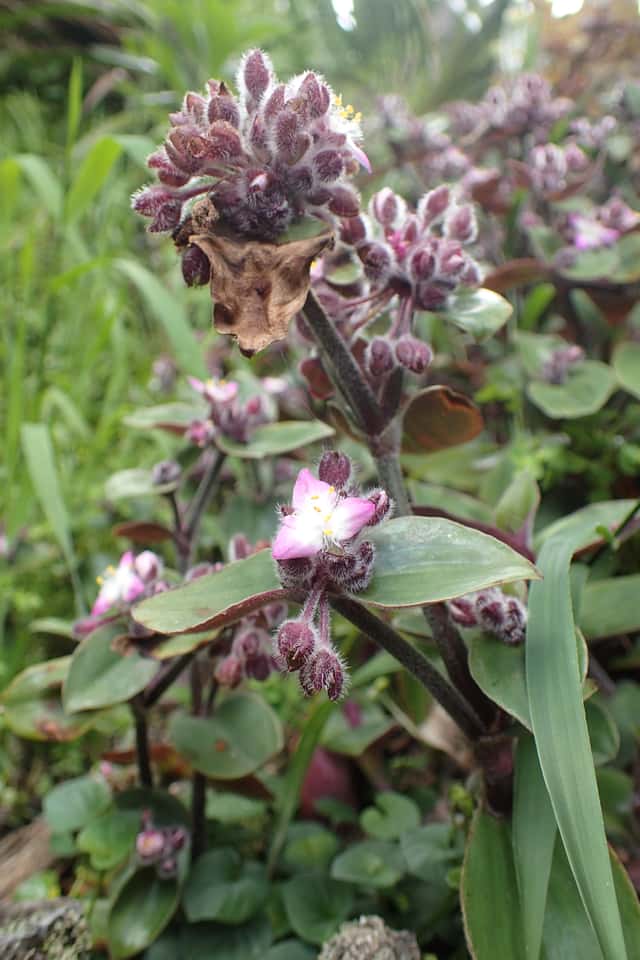
Flowering Inch Plant (Tradescantia cerinthoides) is a easy-care plant from the Commelinaceae family. Tradescantia cerinthoides is a fast-growing trailing tropical plant native to southeastern Brazil and northeastern Argentina. It features attractive green-purple foliage and produces delicate white flowers with pink-tipped petals. It is highly popular as a hanging basket plant and ground cover, valu...
Flowering Inch Plant grows up to 30cm, spread of 60cm, watering every 7 days, 18°C – 29°C, 50–70% humidity. It is suitable for indoor environments and not safe for pets.
Unlike many tropical plants, Flowering Inch Plant tolerates watering mistakes. Best for beginners. Without precautions, ingestion can cause irritation in pets. Keep out of reach of cats and dogs. Without adequate drainage, root rot can develop within 14 days.
How to Care for Flowering Inch Plant?
TLDR: Flowering Inch Plant needs Partial shade, watering every 7 days, and temperatures between 18-29°C with 50-70% humidity.
How Often Should You Water Flowering Inch Plant?
Water when the top inch of soil feels dry, approximately every 7 days. Reduce watering in winter to every 10 days. Always allow excess water to drain to prevent root rot.
How Much Light Does Flowering Inch Plant Need?
Provide bright, indirect light. Avoid direct sunlight which can scorch the leaves. Insufficient light causes leggy growth and loss of the characteristic purple coloration.
What Is the Best Soil for Flowering Inch Plant?
Use a well-draining potting mix with perlite or coarse sand. A blend of potting soil, perlite, and peat moss works well. Avoid heavy, compacted soils that retain excessive moisture.
What Pot Should You Use for Flowering Inch Plant?
Pots with drainage holes, hanging baskets, or terracotta pots work best. Avoid oversized containers that hold too much moisture.
Care Schedule
Fertilize
Every 30 days
Misting
Every 7 days
Rotate
Every 14 days
Repot
Every 365 days
What Is Flowering Inch Plant and Where Does It Come From?
Tradescantia cerinthoides is a fast-growing trailing tropical plant native to southeastern Brazil and northeastern Argentina. It features attractive green-purple foliage and produces delicate white flowers with pink-tipped petals. It is highly popular as a hanging basket plant and ground cover, valued for its colorful, low-maintenance nature.
How Big Does Flowering Inch Plant Grow?
TLDR: Flowering Inch Plant can reach up to 30cm tall with Fast growth rate.
Max height
30cm
Spread
60cm
Growth rate
Fast
Foliage
Evergreen
Warning: Toxic Plant
This plant can be toxic if ingested. Keep out of reach of:
Plant Uses
Ornamental
Great for decoration
Is your plant showing symptoms?
Click on the symptom to discover possible causes:
What Diseases Commonly Affect Flowering Inch Plant?
TLDR: Flowering Inch Plant is susceptible to 8 known diseases. Monitor regularly for early detection.
Root Rot
Root rot is a serious fungal disease that affects the root system of plants, causing them to decay and die. It is primarily caused by overwatering, poor drainage, or soil-borne fungi such as Pythium, Phytophthora, Rhizoctonia, and Fusarium. The disease thrives in waterlogged conditions where roots are deprived of oxygen, making them susceptible to fungal infection.
Powdery Mildew
Powdery mildew is a common fungal disease caused by various fungi species including Erysiphe, Podosphaera, Oïdium, and Leveillula. It affects over 10,000 plant species worldwide. The disease thrives in warm, dry climates with high humidity and appears as a distinctive white powdery coating on plant surfaces.
Leaf Spot
Leaf spot is a common fungal disease caused by various pathogens including Alternaria, Ascochyta, Colletotrichum, Septoria, and Venturia. It primarily affects leaves, causing discolored spots that can lead to premature leaf drop if left untreated.
Gray Mold (Botrytis Blight)
Gray mold, caused by the fungus Botrytis cinerea, is one of the most common fungal diseases in plants. It affects over 200 plant species, including ornamentals, vegetables, fruits, and houseplants. The disease thrives in cool, humid conditions with poor air circulation, causing grayish spots and soft rot on infected tissues.
Fun Facts
Tradescantia cerinthoides can root in water in as little as 7-10 days.
Its flowers have only three petals, a hallmark of the Commelinaceae family.
The plant is native to the Atlantic Forest and Pampa biomes of South America.
Frequently asked questions
Is the Flowering Inch Plant toxic to cats?
How often should I water?
Why are the leaves losing their purple color?
Compare with similar plants
| Attribute | Difficulty | Light | Watering | Pet Safe |
|---|---|---|---|---|
| Field Maple | Easy | Bright indirect | 14d | ✓ |
| Silver Birch | Easy | Direct sun | 14d | ✓ |
| Cushion Bush | Easy | Direct sun | 14d | ✓ |
| Peruvian peppertree | Easy | Direct sun | 14d | ⚠️ |