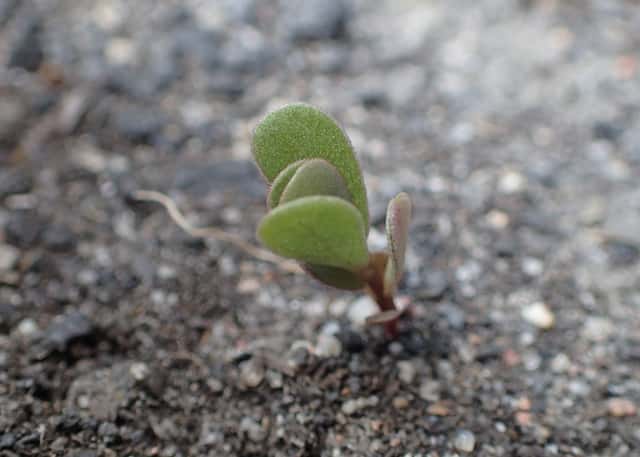
Portulacaceae
Common Purslane: The Edible Succulent Weed for Your Garden
Portulaca oleracea
Very easy to grow. Prefers full sun and well-drained sandy soil. Water every 3 weeks — highly drought-tolerant. No frequent fertilizing needed. Best suited for outdoor beds and as a living ground cover.
Every 21 days
Direct sun
10° - 40°C
30% - 70%
Categories
What is Common Purslane?
Common Purslane (Portulaca oleracea) is a easy-care plant from the Portulacaceae family. Common Purslane (Portulaca oleracea) is an edible succulent groundcover found across the globe. It features reddish, fleshy stems, thick succulent leaves, and tiny yellow flowers that open only on sunny mornings. Extremely hardy and drought-tolerant, it thrives in poor soils and hot climates.
Common Purslane grows up to 40cm, spread of 50cm, watering every 21 days, 10°C – 40°C, 30–70% humidity. It is not suitable for indoor environments and safe for pets.
Unlike many tropical plants, Common Purslane tolerates watering mistakes. Best for beginners. Unlike many popular species, Common Purslane is safe to keep around pets.
How to Care for Common Purslane?
TLDR: Common Purslane needs Direct sun, watering every 21 days, and temperatures between 10-40°C with 30-70% humidity.
How Often Should You Water Common Purslane?
Water every 3 weeks. Purslane stores water in its succulent leaves and handles drought well. Avoid overwatering — excess moisture is the primary cause of root rot.
How Much Light Does Common Purslane Need?
Plant in full sun with at least 6 hours of direct light daily. More sun means more vigorous growth and more flowers.
What Is the Best Soil for Common Purslane?
Prefers light, sandy, well-draining soil. Add coarse sand or perlite to improve drainage. Ideal pH: 5.5–7.0.
What Pot Should You Use for Common Purslane?
Shallow terracotta pot, outdoor bed
What Is Common Purslane and Where Does It Come From?
Common Purslane (Portulaca oleracea) is an edible succulent groundcover found across the globe. It features reddish, fleshy stems, thick succulent leaves, and tiny yellow flowers that open only on sunny mornings. Extremely hardy and drought-tolerant, it thrives in poor soils and hot climates.
How to Propagate Common Purslane?
Seed sowing
Sow in spring after the last frost. Seeds are very small — mix with fine sand for even distribution.
- 1 Scatter seeds directly on soil surface or in a seed tray
- 2 Press lightly without covering — seeds need light to germinate
- 3 Keep substrate lightly moist until germination
- 4 Transplant seedlings when they reach 5 cm
Materials needed:
Stem cutting
Broken stems root easily in moist soil. This is the simplest and fastest propagation method.
- 1 Cut a healthy stem 5-10 cm long
- 2 Remove leaves from the base
- 3 Let dry for 1-2 days
- 4 Plant directly in moist soil
Materials needed:
How Big Does Common Purslane Grow?
TLDR: Common Purslane can reach up to 40cm tall with Fast growth rate.
Max height
40cm
Spread
50cm
Growth rate
Fast
Foliage
Evergreen
Plant Uses
Edible
Can be consumed
Medicinal
Medicinal properties
Ground Cover
Soil coverage
Ornamental
Great for decoration
Medicinal Uses
- Used in folk medicine for inflammation, ulcers, headaches, and as a diuretic. Rich in omega-3 fatty acids and antioxidants.
Culinary Uses
- Eaten raw in salads, sautéed, in soups, or as a spinach substitute. Slightly sour and mucilaginous flavor.
Is your plant showing symptoms?
Click on the symptom to discover possible causes:
What Diseases Commonly Affect Common Purslane?
TLDR: Common Purslane is susceptible to 8 known diseases. Monitor regularly for early detection.
Root Rot
Root rot is a serious fungal disease that affects the root system of plants, causing them to decay and die. It is primarily caused by overwatering, poor drainage, or soil-borne fungi such as Pythium, Phytophthora, Rhizoctonia, and Fusarium. The disease thrives in waterlogged conditions where roots are deprived of oxygen, making them susceptible to fungal infection.
Overwatering
Overwatering occurs when plants receive too much water, depriving roots of oxygen and causing root rot. This environmental stress is one of the most common causes of houseplant death, as waterlogged soil prevents roots from breathing and functioning properly.
Leafminers
Leafminers are the larvae of various insects including flies, moths, sawflies, and beetles that tunnel between leaf surfaces, creating distinctive serpentine trails or blotchy patches. While primarily cosmetic, severe infestations can weaken plants by reducing photosynthesis capacity and making them susceptible to secondary infections.
Gray Mold (Botrytis Blight)
Gray mold, caused by the fungus Botrytis cinerea, is a widespread necrotrophic pathogen affecting over 1,400 plant species. It thrives in cool, humid conditions and attacks weakened or aging plant tissues, causing soft rot and characteristic gray fuzzy growth.
Fun Facts
Purslane contains more omega-3 than any other land plant — up to 4mg per gram of fresh weight.
A single plant can produce over 200,000 seeds per season, ensuring prolific natural propagation.
It is considered an invasive weed in over 40 countries, yet intentionally cultivated as a vegetable in many cultures.
Purslane flowers open only on sunny mornings and close by midday.
Frequently asked questions
How often should I water purslane?
Does purslane need a lot of sun?
Is purslane toxic to pets?
How does purslane propagate?
Can I eat purslane from my garden?
Compare with similar plants
| Attribute | Difficulty | Light | Watering | Pet Safe |
|---|---|---|---|---|
| Field Maple | Easy | Bright indirect | 14d | ✓ |
| Silver Birch | Easy | Direct sun | 14d | ✓ |
| Cushion Bush | Easy | Direct sun | 14d | ✓ |
| Peruvian peppertree | Easy | Direct sun | 14d | ⚠️ |





