Poaceae
hairy crabgrass: Ground Cover Plant
Digitaria sanguinalis
An extremely hardy opportunistic annual that thrives in full sun and well-drained to moderately moist soils across a wide range of conditions. It requires minimal care once established, grows rapidly through summer, and is killed by frost in autumn. Historically cultivated as a grain crop in Eastern Europe, it is now primarily managed as a lawn and crop weed.
Every 4 days
Direct sun
-2° - 38°C
20% - 80%
Categories
What is hairy crabgrass?
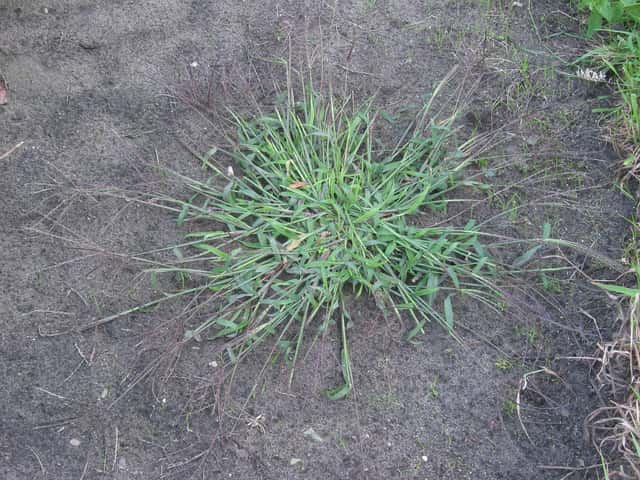
hairy crabgrass (Digitaria sanguinalis) is a easy-care plant from the Poaceae family. Digitaria sanguinalis is a summer-annual weedy grass native to Eurasia, now naturalized worldwide, belonging to family Poaceae. It develops several branching, hairy stems from the base that sprawl horizontally and root at nodes, bearing linear leaves 3–6 inches long with hairy sheaths. The infloresc...
hairy crabgrass grows up to 60cm, spread of 90cm, watering every 4 days, -2°C – 38°C, 20–80% humidity. It is not suitable for indoor environments and safe for pets.
Unlike many tropical plants, hairy crabgrass tolerates watering mistakes. Best for beginners. Unlike many popular species, hairy crabgrass is safe to keep around pets.
How to Care for hairy crabgrass?
TLDR: hairy crabgrass needs Direct sun, watering every 4 days, and temperatures between -2-38°C with 20-80% humidity.
How Often Should You Water hairy crabgrass?
Water approximately 1 inch per week during the growing season, allowing the soil to partially dry between waterings. Once established, hairy crabgrass tolerates drought well and requires significantly reduced watering.
How Much Light Does hairy crabgrass Need?
Requires full sun with at least 6–8 hours of direct sunlight per day for optimal growth. It cannot tolerate shade and will be outcompeted by taller plants or dense turfgrass that blocks light.
What Is the Best Soil for hairy crabgrass?
Thrives in a wide range of soil types from sandy to clay loam with good drainage. Prefers moderately fertile soil with pH 5.5–7.5; amending with compost improves establishment but is not required given its weed-like adaptability.
Care Schedule
Fertilize
Every 30 days
What Is hairy crabgrass and Where Does It Come From?
Digitaria sanguinalis is a summer-annual weedy grass native to Eurasia, now naturalized worldwide, belonging to family Poaceae. It develops several branching, hairy stems from the base that sprawl horizontally and root at nodes, bearing linear leaves 3–6 inches long with hairy sheaths. The inflorescence consists of up to nine long, radiating finger-like raceme spikes bearing tiny spikelets that may appear reddish or purplish at maturity.
How to Propagate hairy crabgrass?
How Big Does hairy crabgrass Grow?
TLDR: hairy crabgrass can reach up to 60cm tall with Fast growth rate.
Max height
60cm
Spread
90cm
Growth rate
Fast
Foliage
Deciduous
Plant Uses
Edible
Can be consumed
Ground Cover
Soil coverage
Medicinal Uses
- Decoction of whole plant traditionally used to treat gonorrhoea
- Folk remedy for cataracts in traditional medicine
- Used to address general debility and weakness
- Reported emetic properties in traditional medicine
- Historical use in Chinese traditional medicine dating to ~2700 BC
Culinary Uses
- Seeds ground into fine white flour suitable for bread and semolina
- Cooked in soups and porridges (traditional Eastern European use)
- Toasted and used as a grain substitute
- Fermented to make beer or alcoholic beverages
- Seeds used as animal fodder with high protein content (12–19% dry matter)
Is your plant showing symptoms?
Click on the symptom to discover possible causes:
What Diseases Commonly Affect hairy crabgrass?
TLDR: hairy crabgrass is susceptible to 5 known diseases. Monitor regularly for early detection.
Leaf Spot
Leaf spot is a common fungal disease caused by various pathogens including Alternaria, Ascochyta, Colletotrichum, Septoria, and Venturia. It primarily affects leaves, causing discolored spots that can lead to premature leaf drop if left untreated.
Rust
Rust is a common fungal disease caused by fungi in the order Pucciniales that affects a wide variety of plants. The disease gets its name from the characteristic orange, yellow, or reddish-brown pustules that appear on leaves, resembling metal rust. This obligate fungal parasite requires living plants to survive and can cause significant economic losses in agricultural crops.
Downy Mildew
Downy mildew is a fungal-like disease caused by oomycetes (water molds) that thrives in cool, wet conditions. It affects a wide range of plants, causing yellowing leaves with fuzzy white-gray growth underneath, leading to defoliation and reduced yields if left untreated.
Root Rot
Root rot is a serious fungal disease that affects the root system of plants, causing them to decay and die. It is primarily caused by overwatering, poor drainage, or soil-borne fungi such as Pythium, Phytophthora, Rhizoctonia, and Fusarium. The disease thrives in waterlogged conditions where roots are deprived of oxygen, making them susceptible to fungal infection.
Compare with similar plants
| Attribute | Difficulty | Light | Watering | Pet Safe |
|---|---|---|---|---|
| Field Maple | Easy | Bright indirect | 14d | ✓ |
| Silver Birch | Easy | Direct sun | 14d | ✓ |
| Cushion Bush | Easy | Direct sun | 14d | ✓ |
| Peruvian peppertree | Easy | Direct sun | 14d | ⚠️ |
Choose & Compare
Sources & References
- Plantiary - Digitaria sanguinalis
- PFAF - Digitaria sanguinalis
- NC State Extension - Hairy Crabgrass
- PictureThis - Digitaria sanguinalis care
- Practical Plants - Digitaria sanguinalis
- Wikipedia - Digitaria sanguinalis
- Stuart Xchange - Crabgrass medicinal uses
- BSPP - Fungal diseases of Digitaria sanguinalis





