Asparagaceae
Ti Plant (Cordyline terminalis): Complete Care Guide
Cordyline terminalis
A moderately demanding plant that thrives in bright indirect light with consistently moist (but not soggy) soil and high humidity. Water every 7 days, fertilize monthly in spring and summer, and repot every 2 years. Keep away from cold drafts.
Every 7 days
Partial shade
15° - 29°C
50% - 70%
Categories
What is Ti Plant?
Ti Plant (Cordyline terminalis) is a medium-care plant from the Asparagaceae family. Cordyline terminalis, commonly known as the Ti Plant or Hawaiian Ti, is a striking tropical ornamental in the family Asparagaceae, native to Southeast Asia and the Pacific Islands. It is celebrated for its bold, sword-shaped leaves that come in a stunning range of colors — from deep greens to rich b...
Ti Plant grows up to 3.0m, spread of 120cm, watering every 7 days, 15°C – 29°C, 50–70% humidity. It is suitable for indoor environments and not safe for pets.
Without precautions, ingestion can cause irritation in pets. Keep out of reach of cats and dogs. Without adequate drainage, root rot can develop within 14 days.
How to Care for Ti Plant?
TLDR: Ti Plant needs Partial shade, watering every 7 days, and temperatures between 15-29°C with 50-70% humidity.
How Often Should You Water Ti Plant?
Water approximately every 7 days, allowing the top 2-3 inches of soil to dry slightly between waterings. Reduce frequency in fall and winter. Use room-temperature, preferably fluoride-free water, as fluoride can cause brown leaf tips.
How Much Light Does Ti Plant Need?
Place in bright, indirect light — near a filtered window or in a spot with several hours of diffused light per day. Avoid harsh direct sun, which scorches the leaves. Colorful-leaved varieties need more light to maintain vibrant colors.
What Is the Best Soil for Ti Plant?
Use a rich, well-draining potting mix — a blend of quality potting soil and perlite (2:1 ratio) works well. Target a soil pH of 5.5–6.5. Avoid heavy clay-based soils that stay waterlogged.
What Pot Should You Use for Ti Plant?
Use a terracotta or ceramic pot with a drainage hole. The weight helps stabilize the plant as it grows tall. Avoid pots without drainage.
Care Schedule
Fertilize
Every 30 days
Rotate
Every 30 days
Repot
Every 730 days
What Is Ti Plant and Where Does It Come From?
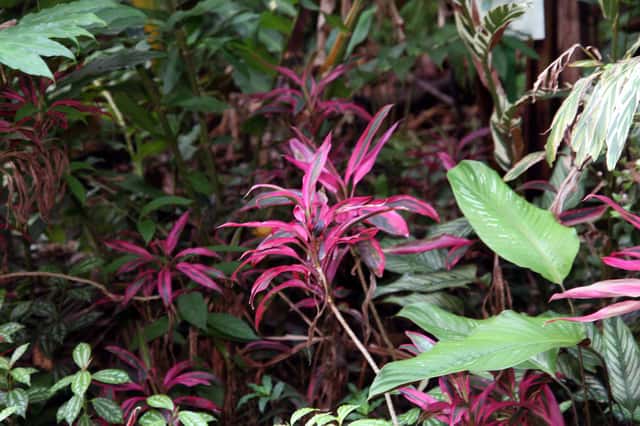
Cordyline terminalis, commonly known as the Ti Plant or Hawaiian Ti, is a striking tropical ornamental in the family Asparagaceae, native to Southeast Asia and the Pacific Islands. It is celebrated for its bold, sword-shaped leaves that come in a stunning range of colors — from deep greens to rich burgundy, red, and pink. Revered as sacred in Hawaiian and Polynesian cultures, it symbolizes good luck and spiritual protection. Note: it is toxic to cats, dogs, and humans if ingested (contains saponins).
How to Propagate Ti Plant?
Stem cuttings
Air layering
How Big Does Ti Plant Grow?
TLDR: Ti Plant can reach up to 3.0m tall with Medium growth rate.
Max height
3.0m
Spread
1.2m
Growth rate
Medium
Foliage
Evergreen
Warning: Toxic Plant
This plant can be toxic if ingested. Keep out of reach of:
Plant Uses
Ornamental
Great for decoration
Is your plant showing symptoms?
Click on the symptom to discover possible causes:
What Diseases Commonly Affect Ti Plant?
TLDR: Ti Plant is susceptible to 12 known diseases. Monitor regularly for early detection.
Root Rot
Root rot is a serious fungal disease that affects the root system of plants, causing them to decay and die. It is primarily caused by overwatering, poor drainage, or soil-borne fungi such as Pythium, Phytophthora, Rhizoctonia, and Fusarium. The disease thrives in waterlogged conditions where roots are deprived of oxygen, making them susceptible to fungal infection.
Leaf Spot
Leaf spot is a common fungal disease caused by various pathogens including Alternaria, Ascochyta, Colletotrichum, Septoria, and Venturia. It primarily affects leaves, causing discolored spots that can lead to premature leaf drop if left untreated.
Fusarium Wilt
Fusarium wilt is a serious fungal disease caused by the soil-borne fungus Fusarium oxysporum. The fungus invades roots and blocks the water-conducting vessels (xylem) of the plant, causing progressive wilting and eventual death. Host-specific forms of the pathogen exist that attack different plant species.
Anthracnose
Anthracnose is a fungal disease caused by fungi in the genus Colletotrichum that affects many plants, including vegetables, fruits, and trees. The disease thrives in cool, wet conditions, causing dark, sunken lesions on leaves, stems, flowers, and fruits.
Meaning & Symbolism
In Hawaiian and Polynesian tradition, the ti plant is considered sacred, associated with good fortune, spiritual protection, and connection to ancestors. It has been used in hula ceremonies, religious rituals, and traditional crafts for centuries.
Fun Facts
In Hawaiian culture, planting a ti plant at the corners of your home is believed to ward off evil and bring good luck.
Ti plant canes (stem sections) can be stored out of soil for months and still root successfully when replanted — they were historically traded across Pacific islands this way.
The large leaves of the ti plant were traditionally used to make hula skirts, food wrappers, roof thatching, and even sleds for children in Hawaii.
Despite being toxic to pets, some ti plant varieties are used in traditional medicine and even in the production of a Hawaiian fermented beverage called okolehao.
Frequently asked questions
Is the ti plant toxic to cats and dogs?
Why are my ti plant leaf tips turning brown?
How much light does a ti plant need?
Compare with similar plants
| Attribute | Difficulty | Light | Watering | Pet Safe |
|---|---|---|---|---|
| Dark Fieldcap | Medium | Low light | 2d | ⚠️ |
| Azalea | Medium | Partial shade | 3d | ⚠️ |
| Bougainvillea | Medium | Direct sun | 7d | ⚠️ |
| Wild Lettuce | Medium | Direct sun | 7d | ⚠️ |



