Rosaceae
Virginia Rose (Rosa virginiana)
Rosa virginiana
Plant Virginia rose in full sun to light shade and well-draining sandy or loamy soil. It tolerates poor, sandy, and even salty coastal soils once established, and needs only moderate watering. Prune out dead or crowded canes in late winter and manage suckers to control spread.
Every 7 days
Bright indirect
-34° - 35°C
% - %
Categories
What is Virginia Rose?
Virginia Rose (Rosa virginiana) is a easy-care plant from the Rosaceae family. Rosa virginiana, commonly known as Virginia rose or prairie rose, is a hardy, suckering deciduous shrub native to the eastern United States and eastern Canada, from Newfoundland south to Virginia and west to the Great Lakes. Growing 4 to 6 feet (occasionally to 10 feet) tall, it forms dense, thicket...
Virginia Rose grows up to 1.8m, spread of 150cm, watering every 7 days, -34°C – 35°C. It is not suitable for indoor environments and safe for pets.
Unlike many tropical plants, Virginia Rose tolerates watering mistakes. Best for beginners. Unlike many popular species, Virginia Rose is safe to keep around pets.
How to Care for Virginia Rose?
TLDR: Virginia Rose needs Bright indirect, watering every 7 days, and temperatures between -34-35°C with 40-70% humidity.
How Often Should You Water Virginia Rose?
Water deeply once a week during the first growing season to establish roots; afterward, this drought-tolerant shrub needs supplemental water only during extended dry spells. Avoid waterlogged soil, which encourages root and crown diseases.
How Much Light Does Virginia Rose Need?
For the best flowering and fall color, plant in full sun (6+ hours of direct light). It will still bloom, though less vigorously, in partial shade.
What Is the Best Soil for Virginia Rose?
Virginia rose is adaptable to sandy, loamy, or even clay soils as long as drainage is good. It prefers slightly acidic to neutral pH and tolerates salt spray, making it a good choice for coastal plantings.
What Pot Should You Use for Virginia Rose?
Best grown directly in the ground as a landscape or hedge shrub; if container growing is necessary, use a large (60+ cm / 15+ gallon) container with excellent drainage, as its suckering roots need room to spread.
What Is Virginia Rose and Where Does It Come From?
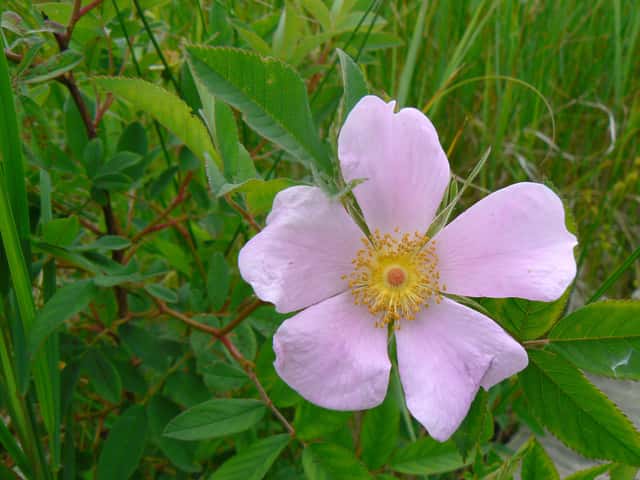
Rosa virginiana, commonly known as Virginia rose or prairie rose, is a hardy, suckering deciduous shrub native to the eastern United States and eastern Canada, from Newfoundland south to Virginia and west to the Great Lakes. Growing 4 to 6 feet (occasionally to 10 feet) tall, it forms dense, thicket-like colonies via underground suckers, making it valuable for naturalized borders, erosion control, and wildlife gardens. Its glossy, dark green pinnate leaves turn vivid shades of purple, red-orange, and yellow in autumn, while reddish canes armed with curved prickles provide winter interest and habitat. From June through August, the shrub produces fragrant, single pink blooms with five petals and bright yellow stamens, followed by showy red rose hips that persist into winter and provide food for birds and small mammals.
How to Propagate Virginia Rose?
Root sucker division
Virginia rose spreads readily by underground suckers, so division is the fastest and most reliable propagation method. Keep newly divided plants moist until established.
- 1 Locate a rooted sucker growing away from the parent plant
- 2 Dig around the sucker to expose its root connection to the main plant
- 3 Sever the sucker from the parent with a clean spade or pruners, keeping as many roots intact as possible
- 4 Transplant immediately into a prepared, well-draining site and water thoroughly
Materials needed:
Seed propagation from rose hips
Rose seeds have a hard seed coat and dormancy that make germination slow and unpredictable; division or cuttings are more reliable for gardeners.
- 1 Collect ripe red rose hips in late summer or fall
- 2 Extract and clean the seeds from the pulp
- 3 Cold-stratify seeds in moist sand in the refrigerator for 10-14 weeks
- 4 Sow stratified seeds in a prepared outdoor bed or seed tray in early spring
Materials needed:
Softwood stem cutting
Use a clean, sharp blade and take cuttings early in the day when stems are fully hydrated.
- 1 Take a 10-15 cm softwood cutting from new growth in early summer
- 2 Remove lower leaves and dip the cut end in rooting hormone
- 3 Insert into a moist, well-draining rooting medium
- 4 Keep humid and out of direct sun until roots form
Materials needed:
How Big Does Virginia Rose Grow?
TLDR: Virginia Rose can reach up to 1.8m tall with Fast growth rate.
Max height
1.8m
Spread
1.5m
Growth rate
Fast
Foliage
Deciduous
Plant Uses
Ornamental
Great for decoration
Edible
Can be consumed
Aromatic
Pleasant fragrance
Medicinal Uses
- Rose hips are a traditional source of vitamin C, used in teas and syrups to support immune health
- Petals and hips have been used in folk medicine as a mild astringent for skin and digestive complaints
Culinary Uses
- Ripe rose hips are made into jams, jellies, syrups, and herbal teas
- Fragrant petals can be used to flavor teas, sugars, and desserts
Is your plant showing symptoms?
Click on the symptom to discover possible causes:
What Diseases Commonly Affect Virginia Rose?
TLDR: Virginia Rose is susceptible to 10 known diseases. Monitor regularly for early detection.
Black Spot
Black spot is the most serious fungal disease affecting roses, caused by the fungus Diplocarpon rosae. It is characterized by dark circular spots on leaves that progress to yellowing and premature leaf drop. The disease thrives in humid and cool conditions, especially early in the growing season.
Powdery Mildew
Powdery mildew is a common fungal disease caused by various fungi species including Erysiphe, Podosphaera, Oïdium, and Leveillula. It affects over 10,000 plant species worldwide. The disease thrives in warm, dry climates with high humidity and appears as a distinctive white powdery coating on plant surfaces.
Downy Mildew
Downy mildew is a fungal-like disease caused by oomycetes (water molds) that thrives in cool, wet conditions. It affects a wide range of plants, causing yellowing leaves with fuzzy white-gray growth underneath, leading to defoliation and reduced yields if left untreated.
Rust
Rust is a common fungal disease caused by fungi in the order Pucciniales that affects a wide variety of plants. The disease gets its name from the characteristic orange, yellow, or reddish-brown pustules that appear on leaves, resembling metal rust. This obligate fungal parasite requires living plants to survive and can cause significant economic losses in agricultural crops.
Meaning & Symbolism
In folklore and horticultural tradition, wild roses like Rosa virginiana symbolize simplicity, resilience, and untamed natural beauty; their thorny canes paired with delicate blooms evoke themes of protected love and endurance.
Fun Facts
Virginia rose spreads through underground suckers, forming dense thickets that stabilize soil on slopes and dunes.
Its rose hips can persist on the plant well into winter, providing an important food source for birds when other resources are scarce.
The species epithet "virginiana" refers to the Virginia Colony, where it was first described by early botanists, though its range extends much farther north and west.
Virginia rose is one of the parent species used in breeding many cold-hardy shrub rose cultivars.
Frequently asked questions
Is Virginia rose invasive?
How much sun does Rosa virginiana need?
When should I prune Virginia rose?
Are Virginia rose hips edible?
Is Rosa virginiana toxic to pets?
Compare with similar plants
| Attribute | Difficulty | Light | Watering | Pet Safe |
|---|---|---|---|---|
| Field Maple | Easy | Bright indirect | 14d | ✓ |
| Silver Birch | Easy | Direct sun | 14d | ✓ |
| Common Blanketflower | Easy | Direct sun | 10d | ✓ |
| Cushion Bush | Easy | Direct sun | 14d | ✓ |





