Asteraceae
Garden Cosmos Care Guide
Cosmos
Plant in full sun with well-draining soil; avoid rich, fertile soil, which produces foliage at the expense of flowers. Water deeply but infrequently once established -- Cosmos is quite drought tolerant. Deadhead spent blooms to encourage more flowers, and let a few go to seed at season's end for self-sowing next year.
Every 7 days
Direct sun
10° - 35°C
% - %
Categories
What is Garden Cosmos?
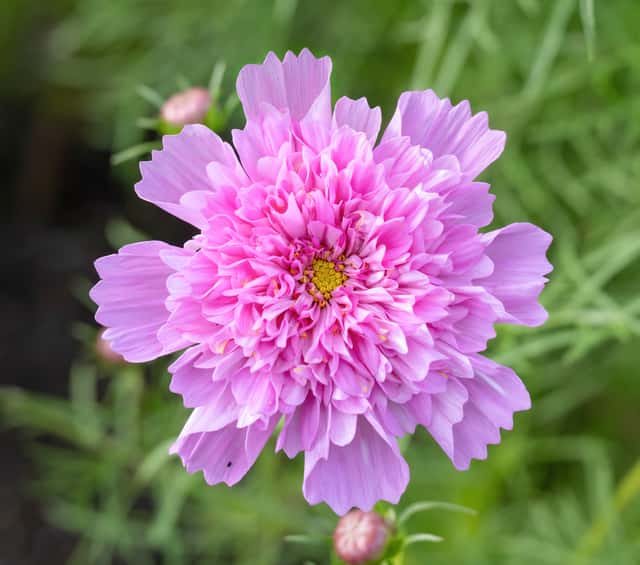
Garden Cosmos (Cosmos) is a easy-care plant from the Asteraceae family. Garden Cosmos (Cosmos spp.) is a fast-growing, sun-loving annual flower native to Mexico and the southwestern United States, prized for its airy, fern-like foliage and daisy-like blooms in shades of white, pink, purple, yellow and orange. The genus includes roughly 20-35 species, but almost all gard...
Garden Cosmos grows up to 1.2m, spread of 75cm, watering every 7 days, 10°C – 35°C. It is not suitable for indoor environments and safe for pets.
Unlike many tropical plants, Garden Cosmos tolerates watering mistakes. Best for beginners. Unlike many popular species, Garden Cosmos is safe to keep around pets.
How to Care for Garden Cosmos?
TLDR: Garden Cosmos needs Direct sun, watering every 7 days, and temperatures between 10-35°C with 40-70% humidity.
How Often Should You Water Garden Cosmos?
Water deeply about once a week during dry spells, letting the soil dry out between waterings. Established plants tolerate drought well and are prone to flopping or fungal issues if overwatered.
How Much Light Does Garden Cosmos Need?
Give Cosmos at least 6 hours of direct sunlight a day. Too much shade results in leggy plants with fewer flowers.
What Is the Best Soil for Garden Cosmos?
Cosmos prefers lean, well-draining soil with average to low fertility. Rich or heavily fertilized soil encourages foliage growth over blooms.
What Pot Should You Use for Garden Cosmos?
A wide, well-draining container with drainage holes works well for dwarf cultivars; taller varieties are best planted directly in garden beds.
What Is Garden Cosmos and Where Does It Come From?
Garden Cosmos (Cosmos spp.) is a fast-growing, sun-loving annual flower native to Mexico and the southwestern United States, prized for its airy, fern-like foliage and daisy-like blooms in shades of white, pink, purple, yellow and orange. The genus includes roughly 20-35 species, but almost all garden cultivation centers on Cosmos bipinnatus (pink, white and purple shades) and Cosmos sulphureus (yellow, orange and red shades). Cosmos thrives in poor, well-draining soil and full sun, blooming continuously from summer through fall with minimal care.
How to Propagate Garden Cosmos?
Sowing by seed
Cosmos self-seeds readily; let a few flowers go to seed at the end of the season for volunteer plants next year.
- 1 Sow seeds directly in the garden after the last frost date
- 2 Cover seeds lightly with about 6mm of soil
- 3 Keep soil lightly moist until germination
- 4 Thin seedlings to 30-45cm apart once they have true leaves
Materials needed:
How Big Does Garden Cosmos Grow?
TLDR: Garden Cosmos can reach up to 1.2m tall with Fast growth rate.
Max height
1.2m
Spread
75cm
Growth rate
Fast
Foliage
Deciduous
Plant Uses
Ornamental
Great for decoration
Is your plant showing symptoms?
Click on the symptom to discover possible causes:
What Diseases Commonly Affect Garden Cosmos?
TLDR: Garden Cosmos is susceptible to 9 known diseases. Monitor regularly for early detection.
Powdery Mildew
Powdery mildew is a common fungal disease caused by various fungi species including Erysiphe, Podosphaera, Oïdium, and Leveillula. It affects over 10,000 plant species worldwide. The disease thrives in warm, dry climates with high humidity and appears as a distinctive white powdery coating on plant surfaces.
Rust
Rust is a common fungal disease caused by fungi in the order Pucciniales that affects a wide variety of plants. The disease gets its name from the characteristic orange, yellow, or reddish-brown pustules that appear on leaves, resembling metal rust. This obligate fungal parasite requires living plants to survive and can cause significant economic losses in agricultural crops.
Gray Mold (Botrytis Blight)
Gray mold, caused by the fungus Botrytis cinerea, is a widespread necrotrophic pathogen affecting over 1,400 plant species. It thrives in cool, humid conditions and attacks weakened or aging plant tissues, causing soft rot and characteristic gray fuzzy growth.
Canker
Canker is a disease caused by various fungi and bacteria that create necrotic, sunken areas on bark of branches, stems, and trunks. Pathogens enter through wounds and natural openings, especially when plants are stressed. Canker can gradually weaken or kill branches by disrupting water and nutrient flow.
Meaning & Symbolism
In many cultures, Cosmos flowers symbolize order, harmony, and modesty -- a nod to the Greek root 'kosmos', meaning a well-ordered universe.
Fun Facts
The name Cosmos comes from the Greek word for 'order' or 'harmony', reflecting the neatly arranged petals of the flower.
Cosmos flowers are magnets for bees, butterflies, and other pollinators, making them a favorite in wildlife-friendly gardens.
Because Cosmos self-seeds so readily, a single planting can return year after year without being replanted.
Frequently asked questions
How often should I water Cosmos?
Do Cosmos flowers need fertilizer?
Is Cosmos toxic to pets?
How do I get Cosmos to bloom all summer?
Compare with similar plants
| Attribute | Difficulty | Light | Watering | Pet Safe |
|---|---|---|---|---|
| Field Maple | Easy | Bright indirect | 14d | ✓ |
| Silver Birch | Easy | Direct sun | 14d | ✓ |
| Common Blanketflower | Easy | Direct sun | 10d | ✓ |
| Cushion Bush | Easy | Direct sun | 14d | ✓ |
Choose & Compare
Sources & References
- Cosmos bipinnatus - NC State Extension Gardener Plant Toolbox
- Cosmos Flowers: Planting, Growing, and Caring for Cosmos - Almanac
- Cosmos bipinnatus Plant Care & Growing Basics - PlantIn
- Garden cosmos Care Guide: Pests, Diseases, Watering - ForwardPlant
- Troubleshooting Problems With Cosmos Plants - Gardening Know How
- Common Garden Cosmos Plant Diseases - Live to Plant
- Cuidados del Cosmos bipinnatus - Hola.com
- Cosmos - Cosmos bipinnatus - Jardineiro.net





